
| Catalog | Product Name | EC No. | CAS No. | Source | Price |
|---|---|---|---|---|---|
| DIA-145 | Native Microorganism Glucose-6-phosphate Dehydrogenase | EC 1.1.1.49 | 9001-40-5 | Microorganism | Inquiry |
| DIA-202 | Native Microorganism Hexokinase | EC 2.7.1.1 | Microorganism | Inquiry | |
| DIA-321 | Native Leuconostoc mesenteroides Glucose-6-phosphate Dehydrogenase | EC 1.1.1.49 | 9001-40-5 | Leuconostoc mesenteroides | Inquiry |
| DIA-681 | Creatine Kinase | 9001-15-4 | Inquiry | ||
| DIA-748 | Hexokinase (HsHKI) | EC 2.7.1.1 | 127-1-17 | Inquiry | |
| DIA-756 | Ketohexokinases (KHK-C) | EC 2.7.1.3 | 127-1-36 | Inquiry | |
| NATE-0141 | Native Human Creatine Kinase MB Fraction | Human heart | Inquiry | ||
| NATE-0142 | Native Human Creatine Kinase MM Fraction | Human heart | Inquiry |
Creatine kinase assays differ from many metabolite assays because creatine kinase is itself the analyte enzyme. In a typical kinetic method, the activity of creatine kinase in the sample initiates a coupled reaction, while reagent enzymes such as hexokinase and glucose-6-phosphate dehydrogenase convert that activity into a measurable NADPH signal.
Creative Enzymes supplies coupling enzymes for CK reagent development, CK-MM and CK-MB isoenzyme materials for assay evaluation, and a complete IFCC-method creatine kinase assay kit. This integrated product range supports projects from reaction design and raw-material screening to method verification and routine testing.
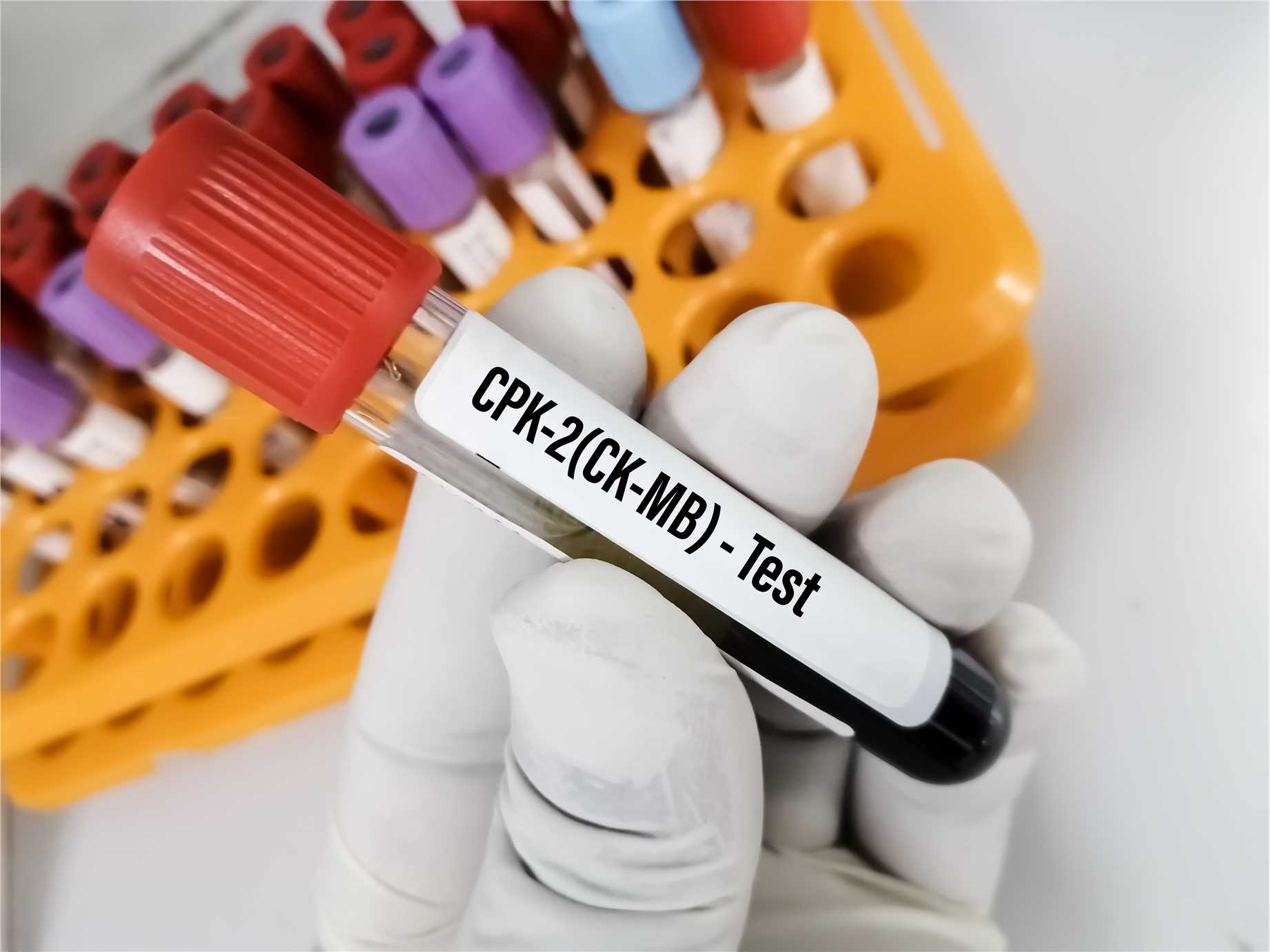
Creatine kinase (CK, EC 2.7.3.2) catalyzes the reversible transfer of a phosphate group between phosphocreatine and ADP. The reaction provides rapid buffering and regeneration of ATP in tissues with fluctuating energy demands, particularly skeletal muscle, cardiac muscle, and the nervous system.
Cytosolic CK is composed of muscle-type M and brain-type B subunits that form three principal isoenzymes:
Total CK activity reflects the combined contribution of CK isoenzymes in the sample. It does not, by itself, identify the tissue source of an elevated result.
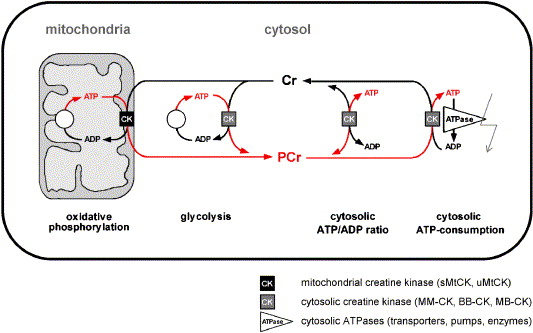 Figure 1. The creatine kinase/phosphocreatine system. (Schlattner et al., 2006)
CK activity cannot normally be measured by directly monitoring phosphocreatine or ATP on a routine clinical chemistry analyzer. Instead, ATP generated by the CK reaction is transferred into a two-enzyme indicator system.
The coupled method offers several practical advantages:
Because the reported result depends on the complete reaction sequence, the coupling enzymes must provide sufficient activity and stability without becoming rate-limiting.
In a commonly used IFCC-type reaction design, CK in the sample generates ATP. Hexokinase and glucose-6-phosphate dehydrogenase then convert ATP formation into NADPH formation, which can be monitored photometrically.
| Reaction Stage | Reaction | Analytical Function |
|---|---|---|
| 1. CK reaction | Phosphocreatine + ADP → Creatine + ATP | CK present in the sample initiates the reaction and generates ATP. |
| 2. Hexokinase coupling | ATP + Glucose → ADP + Glucose-6-phosphate | Hexokinase transfers the CK-generated ATP into glucose-6-phosphate formation. |
| 3. G6PDH indicator reaction | Glucose-6-phosphate + NADP+ → 6-Phosphogluconolactone + NADPH + H+ | Glucose-6-phosphate dehydrogenase generates the detectable NADPH signal. |
| 4. Kinetic measurement | Increase in absorbance at 340 nm | Under defined conditions, the rate of NADPH formation is proportional to CK activity in the sample. |
This reaction architecture makes enzyme balance especially important. Hexokinase and G6PDH should be present in sufficient excess so that the measured rate is controlled by sample CK rather than by an auxiliary reaction.
CK assay components should be selected according to their function in the method. CK isoenzyme preparations and coupling enzymes are not interchangeable, even though all of them may appear in a CK assay development workflow.
| Material Type | Role in the Assay | Typical Use |
|---|---|---|
| CK in the patient sample | The analyte being measured | Determination of total CK activity in serum or plasma |
| CK-MM or CK-MB material | Defined CK isoenzyme source | Method development, analytical recovery studies, control preparation, specificity assessment, and comparative testing |
| Hexokinase | First coupling enzyme | Conversion of ATP generated by CK into glucose-6-phosphate |
| Glucose-6-phosphate dehydrogenase | Signal-generating enzyme | Formation of NADPH for kinetic photometric detection |
| Complete CK assay kit | Configured reagent system | Routine quantitative determination of CK on a compatible analyzer |
Purified CK isoenzyme material is not automatically equivalent to a commutable clinical calibrator. Its intended use, assigned activity, matrix, stability, and traceability should be evaluated against the requirements of the final assay.
Coupling enzymes translate sample CK activity into a stable and measurable optical response. Important selection criteria include specific activity, residual background activity, cofactor compatibility, lot consistency, and stability in the final reagent matrix.
Alternative enzyme sources and specifications may be evaluated when the assay requires different activity, stability, formulation, or manufacturing characteristics.
Defined CK isoenzyme preparations can support assay characterization independently of the coupling enzymes. They are particularly useful when studying isoenzyme response, recovery, dilution behavior, or the influence of a candidate reagent formulation.
Additional creatine kinase preparations are available for projects requiring different biological sources or product formats. Please review the individual product specification before selecting a material for calibration or quality-control applications.
Total CK assays measure the combined catalytic activity of CK isoenzymes in the sample. They are commonly used when evaluating skeletal muscle injury, muscle disease, rhabdomyolysis, exercise-related muscle damage, or other conditions associated with altered CK release.
Total CK is sensitive to muscle injury but is not tissue-specific. Results should therefore be interpreted with clinical findings, sample history, reference intervals, and other laboratory tests.
CK-MB activity assays, CK-MB mass immunoassays, and total CK assays measure different quantities and should not be treated as equivalent methods. Likewise, a CK-MM preparation may be valuable for evaluating total CK response without serving as a universal clinical calibrator.
Cardiac troponin is generally preferred for the assessment of myocardial injury. CK-MB may still be used in selected laboratory workflows, but the intended clinical and regulatory context should be defined before assay development begins.
| Development Area | Why It Matters | Recommended Evaluation |
|---|---|---|
| Coupling-enzyme excess | Insufficient HK or G6PDH activity can restrict the reaction rate and underestimate sample CK. | Challenge the formulation across the intended CK measuring range and reagent shelf life. |
| CK activation | CK contains oxidation-sensitive sulfhydryl groups, and activity may depend on method-specific thiol activators. | Evaluate activation kinetics, reagent stability, and compatibility with other components. |
| Adenylate kinase interference | Endogenous adenylate kinase may generate ATP independently of CK and create a positive bias. | Assess method-appropriate inhibition and verify residual interference experimentally. |
| Reagent background | ATP, glucose-6-phosphate, NADPH, or contaminating activities may increase the reagent blank. | Control raw-material purity and monitor blank rate during stability studies. |
| Preanalytical variables | Hemolysis, exercise, muscle trauma, sample storage, and delayed processing can influence CK results. | Define sample acceptance criteria and validate handling conditions. |
| Isoenzyme response | A total CK method should provide an appropriate response to the CK isoenzymes relevant to its intended use. | Compare CK-MM and CK-MB recovery, dilution behavior, and reaction kinetics. |
| Calibration and traceability | Activity results depend on temperature, wavelength, reaction conditions, and the assigned value of the calibrator. | Document the measurement procedure and verify calibration across instruments and reagent lots. |
Whether the project requires an individual coupling enzyme, a defined CK isoenzyme material, or a complete IFCC-method reagent system, our team can help identify the most appropriate starting point for the intended assay format.
Discuss Your Creatine Kinase Assay Project
Q1. Is creatine kinase the reagent enzyme or the analyte in a CK activity assay?
Q2. Why are both hexokinase and G6PDH required?
Q3. Can CK-MM or CK-MB be used directly as a clinical calibrator?
Q4. Does a total CK assay distinguish CK-MM from CK-MB?
Q5. What can cause unexpectedly high background in a coupled CK reagent?
Q6. Should I choose individual enzymes or the complete CK assay kit?
Q7. Can Creative Enzymes support custom CK reagent development?
