
Metabolite conversion
A lyase converts an analyte or pathway intermediate into products that can be quantified by a coupled reaction.

| Catalog | Product Name | EC No. | CAS No. | Source | Price |
|---|---|---|---|---|---|
| DIA-545 | High Purity Pectate Lyase | 9015-75-2 | Aspergillus sp. | Inquiry | |
| DIA-732 | Glutamate Decarboxylase (EcGadB) | EC 4.1.1.15 | 141-1-15 | Inquiry | |
| DIA-739 | Hcyase | EC 4.4.1.2 | 9024-41-3 | Inquiry | |
| DIA-854 | Sialic Acid Aldolase (CgNal) | EC 4.1.3.3 | 41-3-34 | Inquiry | |
| DIA-855 | Sialic Acid Aldolase (EcNPL) | EC 4.1.3.3 | 41-3-39 | Inquiry | |
| DIA-890 | UDP-4- Keto-6-Deoxy-D-Glucose 3, 5-Epimerase/4-Reductase (ApmUGER) | EC 4.2.1.76 | 42-1-76 | Inquiry | |
| DIA-896 | UDP-Glucuronic Acid Decarboxylase (Atuxs3) | EC 4.1.1.35 | 41-1-35 | Inquiry | |
| NATE-1144 | Cystathionine gamma-lyase, Recombinant | EC 4.4.1.1 | Inquiry | ||
| NATE-1146 | Cystathionine β-lyase, Recombinant | EC 4.4.1.8 | Inquiry |
Lyases cleave or form chemical bonds without hydrolysis or oxidation, often creating a double bond or adding a group across one. In diagnostic reagent systems, they can convert metabolites, generate measurable products, or modify sample components before detection.
Lyases cover several distinct reaction types, including carbon–carbon cleavage, carbon–nitrogen cleavage, decarboxylation, dehydration, and addition to double bonds. The products can include ammonia, hydrogen sulfide, carbon dioxide, pyruvate, aldehydes, or other intermediates that feed an indicator reaction. The analytical design must account for every product that can influence the readout.
Many lyases depend on pyridoxal 5′-phosphate, metal ions, or other cofactors. Their apparent activity can also change with substrate tautomerization, competing elimination reactions, and nonenzymatic breakdown. For these reasons, selection requires the exact substrate, bond position, cofactor system, and detection chemistry—not the general lyase designation alone.
A lyase converts an analyte or pathway intermediate into products that can be quantified by a coupled reaction.
Cystathionine lyases can participate in enzymatic reaction chains used to process sulfur-containing amino-acid intermediates.
Aldolases and related enzymes cleave defined carbon–carbon bonds in sugars or sugar-acid pathways.
Polysaccharide lyases can alter viscous or structured sample components when that treatment is compatible with the target assay.
The substrate and bond type provide the most useful first division. Cofactor requirements and the chemistry of the released products then determine assay compatibility.
These enzymes cleave carbon–carbon bonds to form smaller metabolites that can be measured directly or through a coupled reaction.
Check: substrate stereochemistry, cleavage products, and reaction reversibility.
These lyases eliminate or add nitrogen-containing groups and may release ammonia or form unsaturated products.
Check: ammonia background, cofactor state, and side reactions.
Cystathionine-related enzymes cleave carbon–sulfur bonds and can generate sulfur-containing products and keto acids.
Check: substrate preference, PLP dependence, and sulfide handling.
Pectate and related lyases cleave uronic-acid polymers by elimination rather than hydrolysis.
Check: polymer composition, metal requirements, viscosity, and product detection.
These enzymes add or remove water across a double bond without the hydrolytic cleavage characteristic of hydrolases.
Check: reaction direction, equilibrium, and product stability.
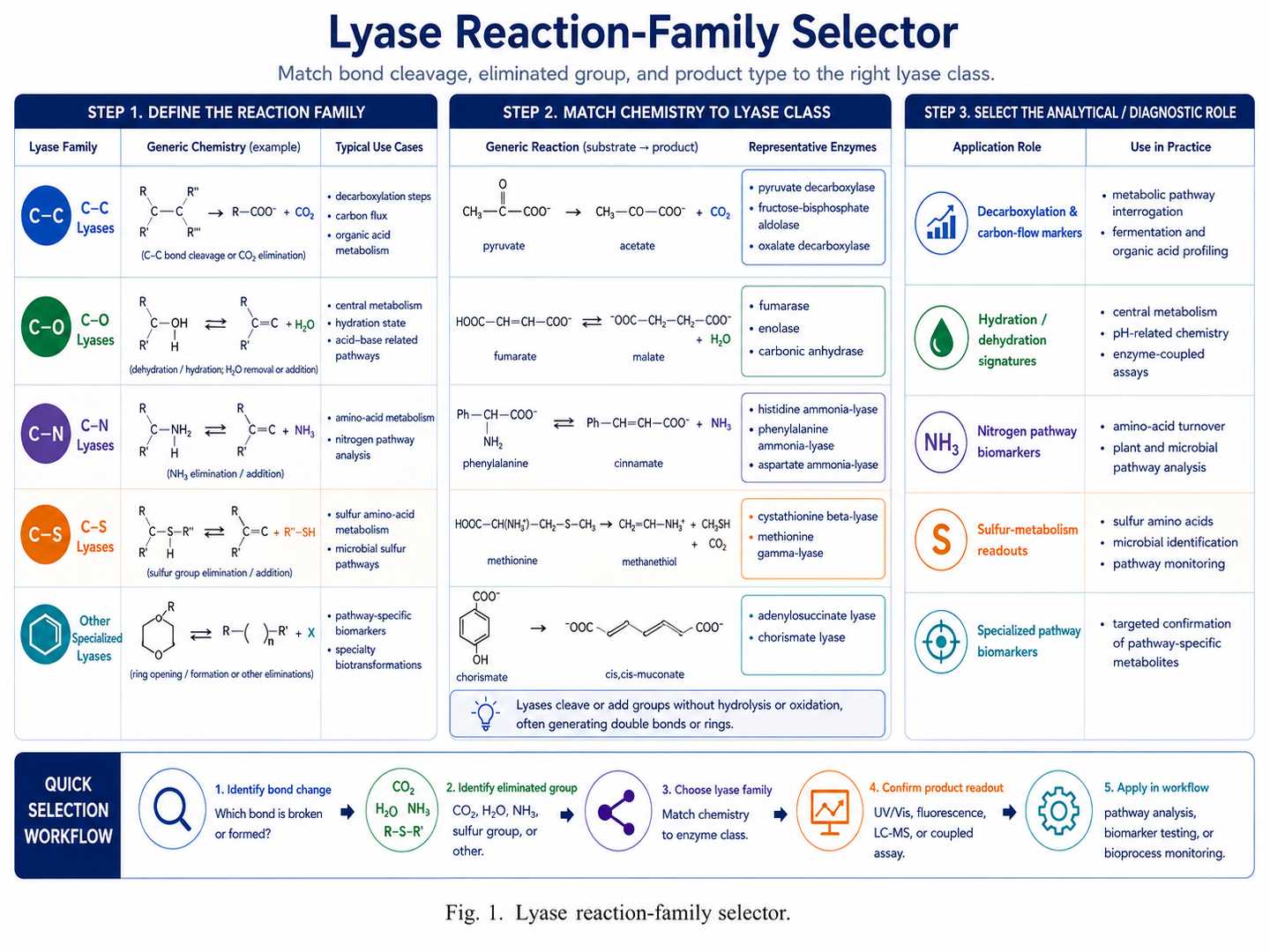 Fig 1. Lyase reaction-family selector.
(Creative Enzymes Diagnostic)
Assess the intended substrate and all reaction products under the final buffer and matrix conditions. A coupled indicator may respond to a side product or contaminant as well as to the intended conversion.
| Selection factor | How to evaluate it | Why it matters |
|---|---|---|
| Bond and substrate specificity | Define the exact substrate, bond position, stereochemistry, and acceptable alternative substrates. | Closely related lyases can generate different products or act at different positions. |
| Cofactor dependence | Confirm PLP, metal ions, or other required components and monitor their stability during storage and use. | Cofactor loss reduces conversion, while excess cofactor may add absorbance or interfere with partner enzymes. |
| Product chemistry | Measure the intended product and evaluate ammonia, sulfide, carbon dioxide, pyruvate, or other coproducts as relevant. | A coproduct can be the analytical signal, an interferent, or a source of reagent instability. |
| Reaction direction | Run time courses across substrate concentrations and confirm whether the reaction approaches equilibrium or continues to completion. | Reversibility and product accumulation determine the usable measurement window. |
| Matrix and blank response | Test no-enzyme, no-substrate, and matrix-only controls with the complete indicator system. | Endogenous metabolites and nonenzymatic decomposition may mimic lyase activity. |
| Coupled-reaction capacity | Titrate the lyase and each indicator component independently before fixing reagent ratios. | A limiting indicator reaction can compress the analytical range or conceal differences between enzyme lots. |
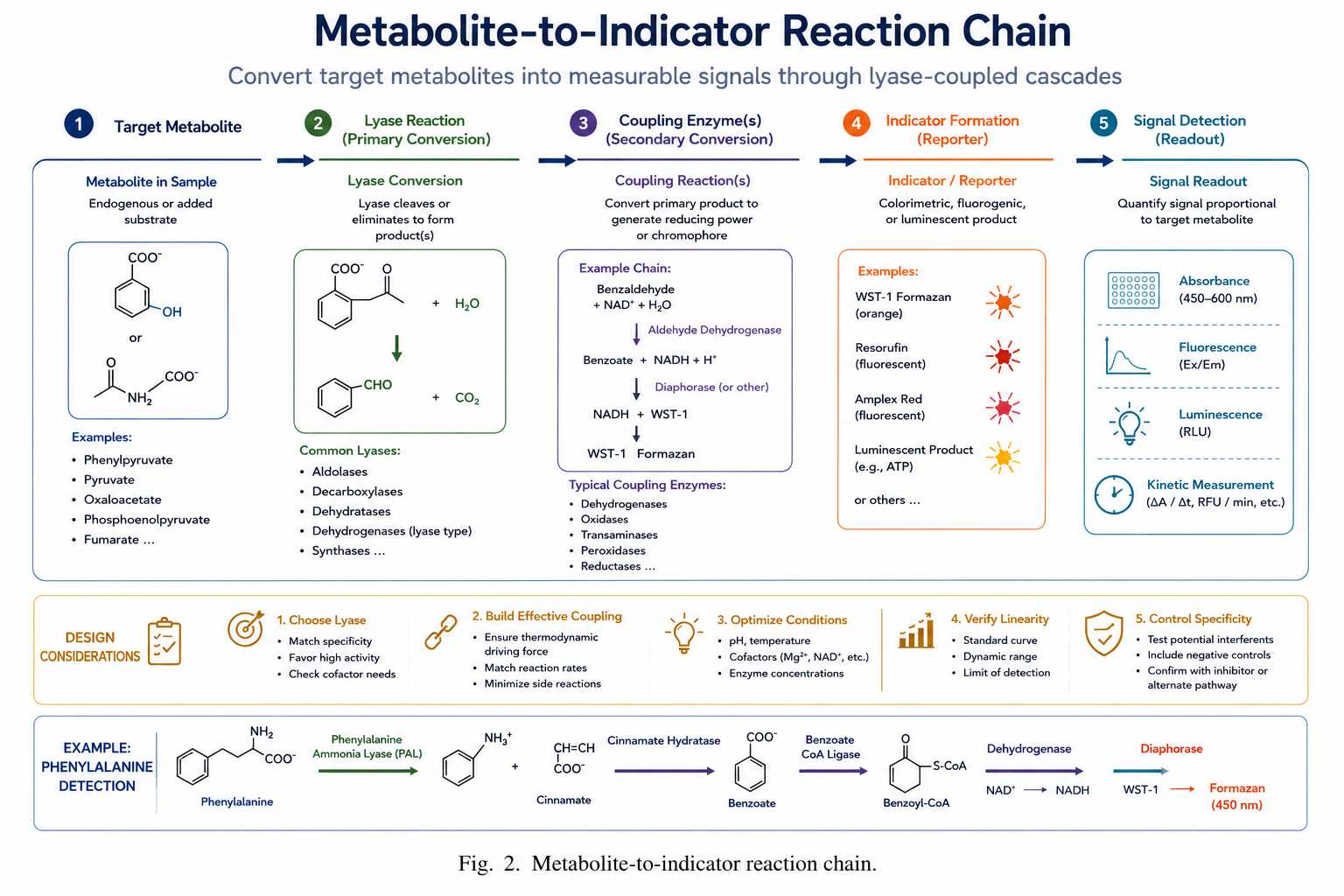 Fig 2. Metabolite-to-indicator reaction chain.
(Creative Enzymes Diagnostic)
Creative Enzymes supplies lyases for metabolite conversion, analytical research, and diagnostic reagent development. Select a product name to review its available information.
| Product | Catalog | EC number | Source | Activity |
|---|---|---|---|---|
| Cystathionine gamma-lyase, Recombinant | NATE-1144 | EC 4.4.1.1 | 11.25 KU/mg protein | |
| Cystathionine β-lyase, Recombinant | NATE-1146 | EC 4.4.1.8 | >500U/mg | |
| Native Microorganism N-Acetylneuraminic acid aldolase | DIA-182 | EC 4.1.3.3 | Microorganism | Grade III 15U/mg-solid or more (30U/mg-protein or more), (containing approx. 30% of stabilizers) |
| Native Escherichia coli N-Acetylneuraminic Acid Aldolase | NATE-0490 | EC 4.1.3.3 | Escherichia coli | > 20 units/mg protein (biuret) |
| High Purity Pectate Lyase | DIA-545 | Aspergillus sp. | ~ 200 U/mg (40 °C, pH 8.0 on polygalacturonic acid) |
Activity values use product-specific assay definitions. Review the stated method and test conditions before comparing unit values across materials.
Qualification should connect substrate conversion to the final analytical result. The test plan must distinguish enzyme-dependent signal from matrix background and from spontaneous product formation.
List the substrate, products, cofactors, proton balance where relevant, and the product used for detection.
Measure the intended product and major side products across the required substrate and time ranges.
Show that the indicator reaction is non-limiting and that sample components do not create an equivalent signal.
Set incoming activity, cofactor or formulation requirements, storage conditions, lot bridging, and functional acceptance criteria.
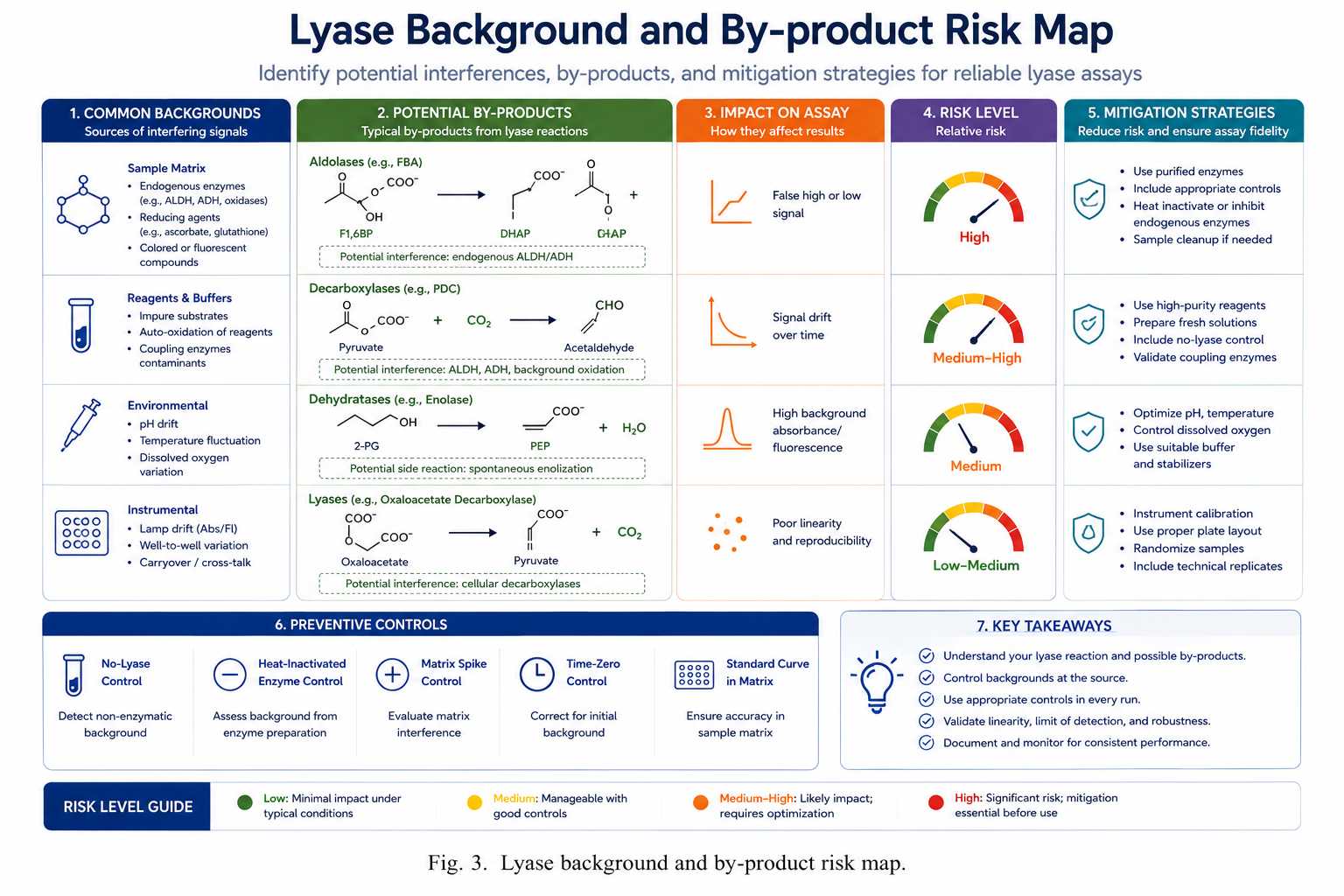 Fig 3. Lyase background and by-product risk map.
(Creative Enzymes Diagnostic)
Provide the substrate and bond position, expected products, cofactor system, sample matrix, indicator reaction, analytical range, reaction time, format, manufacturing scale, and required quality documentation.
Lyases cleave or form bonds without hydrolysis or oxidation. Hydrolases use water to cleave a bond. The difference changes both substrate chemistry and reaction products.
Coproducts such as ammonia, sulfide, carbon dioxide, or keto acids may drive the signal, consume reagents, or create interference.
Confirm cofactor requirement, cofactor stability, enzyme reconstitution, and any optical or chemical effect of PLP in the complete assay.
Only after confirming the unit method. Substrate, pH, temperature, cofactor, and endpoint can differ from the intended assay.
Use time-matched controls without enzyme and evaluate storage, temperature, pH, and matrix conditions that may generate the same product.
Provide exact substrate and products, cofactor requirements, matrix, detection method, target conversion, reaction time, format, quantity, and documentation needs.
These sources support the scientific classification and technical selection criteria. Product specifications must be confirmed in current Creative Enzymes documentation.