
| Catalog | Product Name | EC No. | CAS No. | Source | Price |
|---|---|---|---|---|---|
| BDE-007 | Recombinant Creatininase (CAH) | EC 3.5.2.10 | 9025-13-2 | Recombinant | Inquiry |
| BDE-008 | Recombinant Creatine Amidinohydrolase (CRH) | EC 3.5.3.3 | 37340-58-2 | Recombinant | Inquiry |
| BDE-009 | Recombinant Sarcosine Oxidase (SOX) | EC 1.5.3.1 | 9029-22-5 | Recombinant | Inquiry |
| BDE-012 | Native Lactate Oxidase from Microorganism | EC 1.1.3.2 | Microorganism | Inquiry | |
| BDE-014 | Native Creatinine Amidohydrolase from Microorganism | EC 3.5.2.10 | 9025-13-2 | Microorganism | Inquiry |
| BDE-015 | Native Creatine Amidinohydrolase from Microorganism | EC 3.5.3.3 | Microorganism | Inquiry | |
| BDE-017 | Native Uricase (UA-R) from Microorganism | EC 1.7.3.3 | Microorganism | Inquiry | |
| BDE-018 | Native Uricase (UA-T) from Microorganism | EC 1.7.3.3 | Microorganism | Inquiry | |
| DIA-190 | Native Rhizopus sp. Glucoamylase | EC 3.2.1.3 | 9032-08-0 | Rhizopus sp. | Inquiry |
Kidney assessment commonly combines blood- and urine-based measurements. Serum creatinine is widely used to calculate estimated glomerular filtration rate, while urine albumin and the urine albumin-to-creatinine ratio help evaluate kidney damage. Cystatin C may provide a complementary filtration marker when creatinine-based estimates are affected by factors such as muscle mass or other clinical conditions.
Enzymes support renal testing in several ways. They can convert creatinine, urea, uric acid, or related metabolites into measurable reaction products; act as reporter enzymes in immunoassays for protein biomarkers; or serve as the analyte in renal tubular injury tests.
Creative Enzymes supplies creatininase, creatinase, sarcosine oxidase, urease, glutamate dehydrogenase, uricase, peroxidase, N-acetyl-β-D-glucosaminidase-related reagents, and other auxiliary enzymes for clinical chemistry analyzers, colorimetric assays, immunoassays, biosensors, and diagnostic reagent development.
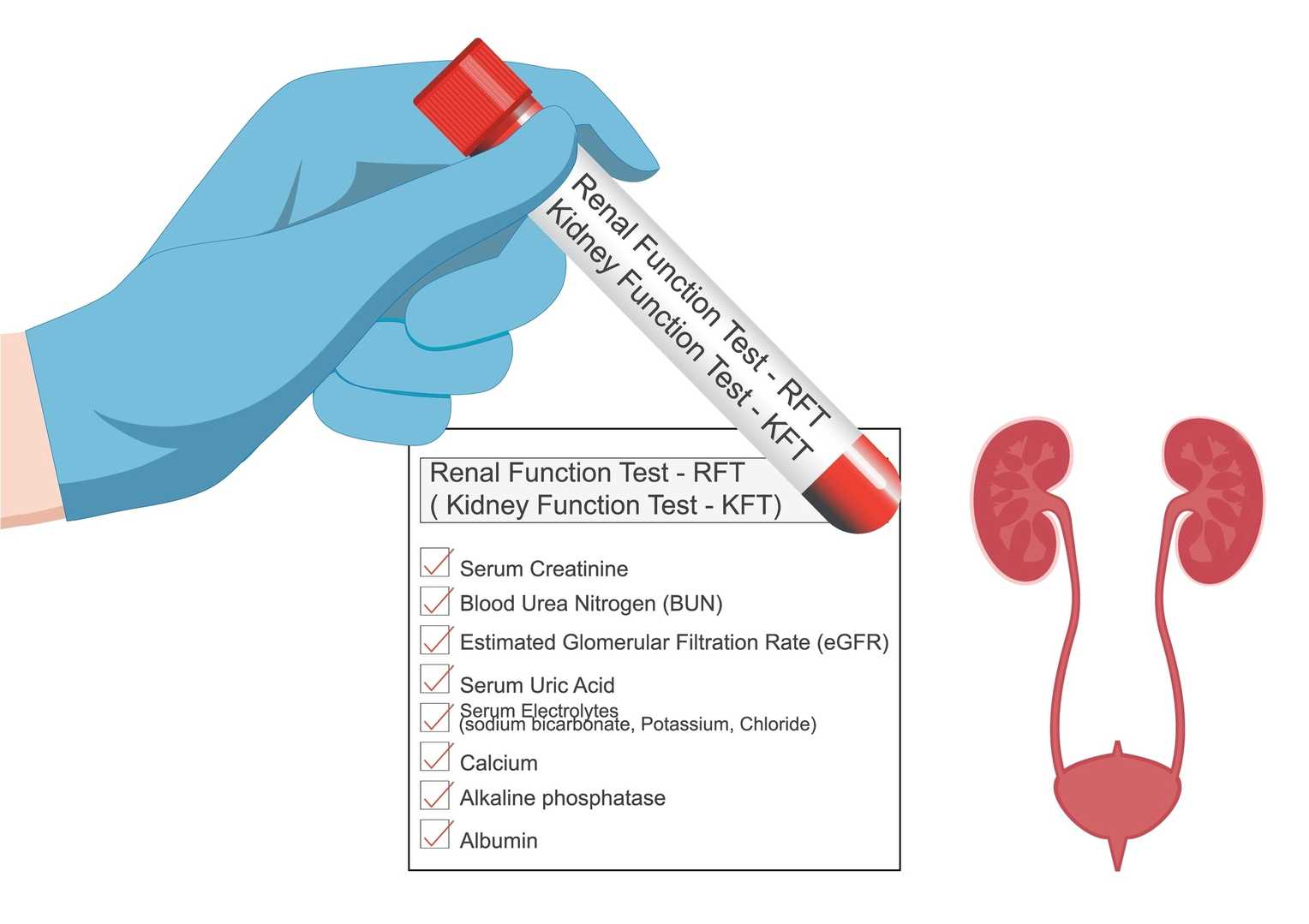
Creatinine is a metabolic waste product commonly measured in serum, plasma, and urine. Serum creatinine is used with demographic and clinical variables in equations that estimate glomerular filtration rate. The eGFR value is calculated rather than measured directly by the enzyme reagent, so analytical consistency in the creatinine assay is important for reliable estimation.
A common enzymatic creatinine assay uses a four-enzyme cascade:
This reaction architecture is used in cleared clinical chemistry creatinine assays.
Representative enzyme products include:
Some methods include a pretreatment step to reduce interference from endogenous creatine or sarcosine before creatinine is measured.
Urea is a major nitrogen-containing metabolic product. Urea or blood urea nitrogen testing may be used together with creatinine and other measurements in renal and metabolic assessment.
A common enzymatic method uses:
The resulting decrease in reduced cofactor absorbance is proportional to the amount of urea or urea nitrogen in the sample.
Relevant products include:
Because environmental ammonia or reagent contamination can increase assay background, urease and GLDH products should be selected together with careful control of ammonia impurities.
Uric acid is produced during purine metabolism and is eliminated partly through the kidneys. Although uric acid testing is not a direct measurement of glomerular filtration, it is frequently included in renal, metabolic, and gout-related testing workflows.
In a common enzymatic assay, uricase oxidizes uric acid and generates hydrogen peroxide. Peroxidase then uses the peroxide to produce a colorimetric signal.
Representative components include:
Uricase source, substrate specificity, peroxide yield, pH profile, and stability can affect performance in the final reagent system.
Urine albumin and eGFR are key markers used in chronic kidney disease assessment. A spot urine albumin-to-creatinine ratio is commonly used to evaluate and monitor albuminuria.
The two components of a UACR workflow are measured differently:
Enzymes used in urine albumin immunoassays may include:
The albumin and creatinine methods should be evaluated together because the final reported ratio depends on both analytical results.
Cystatin C is a low-molecular-weight protein used as an alternative or complementary filtration marker. Combined creatinine--cystatin C estimating equations may improve accuracy in selected situations compared with equations based on creatinine alone.
Cystatin C itself is not an enzyme. It is generally measured through immunoassay-based methods. Enzyme products relevant to cystatin C assay development therefore function mainly as:
Representative options include HRP, alkaline phosphatase, and β-galactosidase for ELISA, chemiluminescence, lateral flow, and other immunoassay formats.
Some urine tests measure enzymes released from or associated with renal tubular cells. One example is N-acetyl-β-D-glucosaminidase, a lysosomal enzyme whose increased urinary activity has been studied as an indicator of tubular injury.
NAG assay development may require:
Unlike cystatin C, NGAL, or KIM-1 immunoassays, a NAG activity assay measures catalytic activity directly. The assay substrate and activity definition must therefore match the intended method.
| Testing Objective | Typical Reaction Strategy | Representative Enzymes | Common Platforms |
|---|---|---|---|
| Serum or urine creatinine | Sequential conversion to sarcosine and hydrogen peroxide | Creatininase, creatinase, sarcosine oxidase, peroxidase | Clinical chemistry analyzers, colorimetric kits |
| Urea or BUN | Urease hydrolysis followed by ammonia-dependent NADH consumption | Urease, glutamate dehydrogenase | Automated chemistry, kinetic UV assays |
| Uric acid | Uricase oxidation with peroxide-dependent detection | Uricase, peroxidase | Automated chemistry, colorimetric assays, biosensors |
| Urine albumin | Antibody-based recognition with enzyme-generated signal | HRP, alkaline phosphatase, β-galactosidase | ELISA, CLIA, lateral flow |
| UACR | Separate albumin and creatinine measurements followed by ratio calculation | Creatinine cascade enzymes plus immunoassay reporter enzymes | Clinical chemistry and immunoassay systems |
| Cystatin C | Immunochemical detection | Reporter and signal-amplification enzymes | ELISA, turbidimetric or chemiluminescent systems |
| Urinary NAG | Direct measurement of endogenous enzyme activity | NAG reference enzyme and assay substrates | Colorimetric, fluorometric, electrochemical assays |
| Renal injury biomarkers | Immunoassay detection of proteins such as NGAL or KIM-1 | HRP, alkaline phosphatase, other reporter enzymes | ELISA, CLIA, rapid tests |
Determine whether the assay measures:
This determines whether the required product is a primary reaction enzyme, a coupling enzyme, a reference enzyme, or an immunoassay reporter.
Creatinine, urea, and uric acid are commonly measured through biochemical conversion reactions. Albumin, cystatin C, NGAL, and KIM-1 are proteins and are usually measured immunologically.
An enzyme selected for a biochemical activity assay will have different requirements from an enzyme conjugated to an antibody for immunoassay signal generation.
For multi-enzyme assays, evaluate:
In a creatinine assay, insufficient creatininase, creatinase, or sarcosine oxidase activity can limit the response even when the other enzymes are present in excess.
Renal chemistry assays may be affected by:
The relevant interference profile depends on the assay chemistry and sample matrix.
Important selection criteria include:
Need Help Selecting a Renal Assay Enzyme?
Share your target marker, reaction principle, sample type, analyzer platform, and formulation requirements with our technical team.
Request Product Selection Support →
Q1. Which enzymes are commonly used in enzymatic creatinine assays?
Q2. How is urea nitrogen measured enzymatically?
Q3. Is eGFR measured directly by an enzyme assay?
Q4. Why are both urine albumin and creatinine measured?
Q5. Is cystatin C an enzyme?
Q6. What is urinary NAG testing?
Q7. Can uricase products be used in both renal and metabolic testing categories?
Q8. Why is endogenous creatine important in creatinine assays?
Q9. Can you optimize a complete creatinine or BUN reagent system?
Q10. Are glycerol-free or lyophilized renal assay enzymes available?
