
Precision medicine aims to match a healthcare decision to the biological characteristics of an individual patient rather than relying only on an average response observed across a broad population. Companion diagnostics make that principle actionable. By measuring a defined biomarker and applying a validated interpretation rule, a CDx assay can help identify patients who are likely to benefit from a corresponding therapy, recognize patients at increased risk of a serious adverse reaction, or support treatment monitoring when the test is essential to safe and effective use.
This article explains how companion diagnostics connect molecular information with treatment decisions, why analytical performance matters, and how biomarker strategy, assay technology, enzyme performance, clinical evidence, and operational deployment must work together. For an overview of available reagents and development capabilities, visit the CDx Enzyme Platform for Precision Medicine.
Patients who share a disease label can differ in driver mutations, gene expression, protein abundance, immune context, metabolic state, and mechanisms of resistance. A targeted drug may therefore be effective only when a relevant molecular feature is present, while the same therapy may provide little benefit—or an unfavorable benefit-risk balance—in another subgroup. Precision medicine depends on finding the variation that matters and measuring it reliably enough to guide action.
The central CDx function: convert a biological observation into a predefined result that is interpretable for the use of a particular therapeutic product. The biomarker alone is not the decision; the complete test system, cutoff, intended specimen, workflow, and clinical evidence establish how the result should be used.
This distinction prevents a common misunderstanding. A research assay may show that a mutation or protein correlates with response, but a companion diagnostic must perform consistently in its intended context. Sample collection, extraction, reagent behavior, instrument settings, software, controls, and reporting can all influence the final classification. Development therefore requires coordinated work across the drug and diagnostic programs, as reflected in drug–diagnostic co-development.
A predictive biomarker can identify a population more likely to respond to a targeted agent. The test focuses treatment on patients for whom the biological mechanism and supporting evidence align.
A biomarker may indicate susceptibility to a serious treatment-related risk. Testing can exclude or separately manage patients whose risk profile changes the treatment decision.
When essential to the therapeutic use, a test can support monitoring and adjustment. This role must be distinguished from general disease monitoring that is not tied to the safe and effective use of one therapy.
CDx results can also improve clinical trial efficiency by enriching enrollment for patients with the relevant biology. Enrichment does not automatically guarantee a smaller or successful trial; prevalence, effect size, assay failure rate, tissue availability, and screen failure all affect feasibility. Early access to representative specimens and a stable assay helps the clinical program estimate these factors before pivotal decisions are locked.
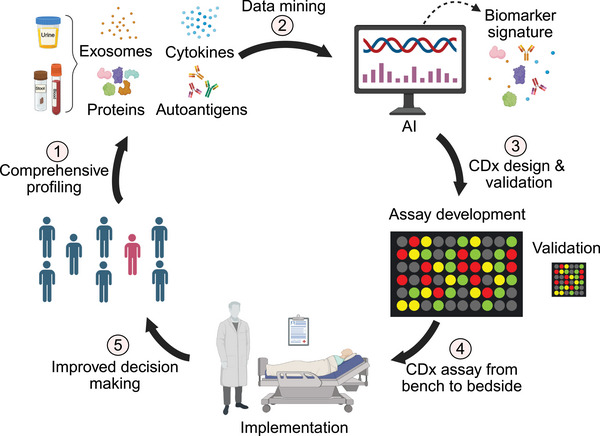
Figure 1. How a CDx assay connects patient biology with a therapy decision. (Wu et al., 2026)
The appropriate technology depends on the biomarker, specimen, prevalence, required sensitivity, clinical workflow, and interpretation model. No platform is universally superior. Molecular assays are often used for sequence variants, copy-number changes, rearrangements, expression signatures, and methylation patterns. Immunoassays and tissue-based methods can measure protein abundance, localization, or functional states. Emerging multiplex and digital methods can combine several signals when a single marker is insufficient.
| Biomarker question | Representative approach | Enzyme-dependent functions | Key development concern |
|---|---|---|---|
| Is a specific DNA variant present? | PCR, qPCR, digital PCR or sequencing | Polymerization, ligation, end repair and contamination control | Allele fraction, input quality and false-positive control |
| Is an RNA fusion or transcript expressed? | RT-qPCR or RNA sequencing | Reverse transcription and amplification | RNA integrity, isoform coverage and normalization |
| Is a protein present or overexpressed? | Immunoassay or tissue-based detection | Reporter conversion and signal amplification | Antibody specificity, heterogeneity and cutoff reproducibility |
| Does a multigene pattern support classification? | Multiplex PCR or NGS workflow | Library preparation and amplification | Algorithm control, coverage and lot consistency |
Enzyme quality can affect yield, bias, background, dynamic range, and robustness. Developers can evaluate enzymes for companion diagnostics, validated molecular workflow components such as Taq HS DNA Polymerase, or broader NGS enzymes and reagents according to the chosen platform and development stage.
A promising biomarker cannot support dependable patient selection if the assay measures it inconsistently. Analytical validation characterizes performance under the conditions expected for testing. Depending on whether the output is qualitative, quantitative, semiquantitative, or algorithmic, relevant studies may include analytical sensitivity, specificity, precision, accuracy or agreement, reportable range, linearity, cutoff behavior, interference, cross-reactivity, carryover, reagent stability, and robustness.
The decision boundary deserves special attention. Samples far from the cutoff may classify consistently even with moderate analytical variation, whereas near-cutoff samples can change category because of preanalytical variation, measurement uncertainty, or run-to-run shifts. Developers should characterize distributions around the boundary and use controls that monitor clinically meaningful regions rather than only obvious positive and negative extremes. Support for precision, linearity, and recovery evaluation and sensitivity optimization can help align experiments with the intended output.
Important distinction: validation of the measurement procedure and evidence for the biomarker’s clinical role answer different questions. Strong analytical performance does not by itself prove that the marker predicts therapeutic benefit, and a clinically compelling marker does not compensate for an unreliable test.
Because the test and therapy are interdependent, diagnostic development should begin early enough to inform trial design. Teams need a shared biomarker hypothesis, specimen plan, testing algorithm, data standards, decision responsibilities, and change-control process. A late platform change can alter analytical behavior and complicate comparison with samples tested earlier. Likewise, a cutoff chosen after seeing outcomes can create bias unless supported by an appropriate development and validation strategy.
A structured biomarker assay feasibility and prototype development program can expose technical limitations before clinical sample testing becomes the bottleneck. As the design matures, assay transfer and manufacturability assessment helps ensure that performance is not dependent on one scientist, one instrument, or one small reagent batch.
The same analytical method can behave differently across laboratories if specimen handling, equipment, calibration, environmental conditions, or operator steps vary. A CDx workflow must therefore be designed for the laboratories that will actually run it. Instructions should define acceptable specimen types, minimum input, rejection criteria, storage limits, control interpretation, repeat rules, and reporting conventions. External controls and process controls should reveal meaningful failures rather than merely confirm that an instrument produced a signal.
Reagent stability is part of this operational design. Enzyme activity may decline during shipping, repeated handling, or on-instrument residence before visible failure occurs. The result can be delayed amplification, compressed dynamic range, lower signal, or greater variability near the cutoff. Stability claims need evidence using the final formulation, container, closure, and workflow. When complex matrices are involved, interference and matrix-effect evaluation can identify conditions that alter classification.
Finally, precision medicine does not mean certainty for every individual. A test estimates whether a defined molecular feature is present under validated conditions; treatment response can still be influenced by tumor evolution, coexisting pathways, adherence, disease stage, and other clinical factors. Clear reports and labeling communicate what the assay establishes, what it does not establish, and how invalid or indeterminate results should be handled.
| Question | Evidence needed | Common risk |
|---|---|---|
| What treatment decision will the result support? | Defined intended use and therapeutic relationship | Developing a technically interesting test without a clear decision |
| Who and what will be tested? | Population, specimen and preanalytical specifications | Using convenient samples that do not represent clinical reality |
| How is the result generated? | Controlled reagents, instrumentation, software and algorithm | Untracked changes that shift performance |
| How reliable is classification? | Analytical validation, especially near the cutoff | Reporting only ideal-sample performance |
| Can the test be deployed consistently? | Manufacturing, transfer, training and stability evidence | A prototype that cannot be reproduced at scale |
The framework keeps precision medicine grounded in an end-to-end system. Biology determines what should be measured; assay engineering determines whether it can be measured; clinical evidence determines how the result relates to therapy; and operational controls determine whether the intended performance survives routine use.
Before a biomarker result is used to support precision treatment, the development team should ask whether the assay was validated for the actual specimen and population, whether the reported category matches the corresponding therapeutic context, and whether the sample passed all adequacy and process controls. It should also ask how measurement uncertainty behaves near the cutoff, what an invalid or indeterminate result means, and whether retesting the same specimen is scientifically appropriate.
Clinical users need equally clear boundaries. A positive biomarker result does not guarantee benefit, and a negative result does not describe every possible treatment option. The report should be interpreted with therapeutic labeling, clinical findings, specimen quality, and alternative explanations. These questions keep precision medicine from becoming an overly deterministic label and preserve the test’s role as one controlled source of information in a broader clinical decision.
Companion diagnostics enable precision medicine by turning a defined biomarker into a controlled, clinically interpretable treatment-selection tool. Their value depends on more than identifying an interesting marker. Biomarker relevance, specimen strategy, analytical performance, enzyme and reagent quality, cutoff design, clinical evidence, manufacturing, and laboratory deployment must remain aligned. When these elements are developed together, CDx testing can support more informed therapy selection while making the limitations and uncertainty of the decision process explicit.
Creative Enzymes supports biomarker-driven diagnostic programs with CDx-focused enzymes, assay feasibility work, enzyme engineering, analytical optimization, and development-to-transfer services.
