| Cat# | ENZD-QM07 |
| Specification | 100 rxns 500 rxns |
| Aplications | Gene Expression Analysis; Amplification of GC-Rich Templates |
| Description | Optimized for high GC templates to enhance amplification efficiency and detection sensitivity, suitable for complex or difficult-to-amplify samples. It has an integrated dUTP/UDG anti-contamination system, 2× premix form, simple operation, and supports fast amplification programs. |
| Features | 1. Suitable for GC-rich templates 2. Higher amplification specificity 3. Excellent amplification linearity 4. Good tolerance to impurities 5. Compatible with fast protocols, reducing detection time |
| Quality Control | 1. Better amplification performance 2. Introduction of dUTP/UDG anti-contamination system 3. Better stability |
| Components | 2 × Taq Pro HighGC U+ Multiple Probe qPCR Mix\n50 × ROX Reference Dye 1\n50 × ROX Reference Dye 2 |
| Shipping and Storage Conditions | Store at -30 ~ -15℃, transport at ≤0℃ |
| Download Datasheet: | 
|
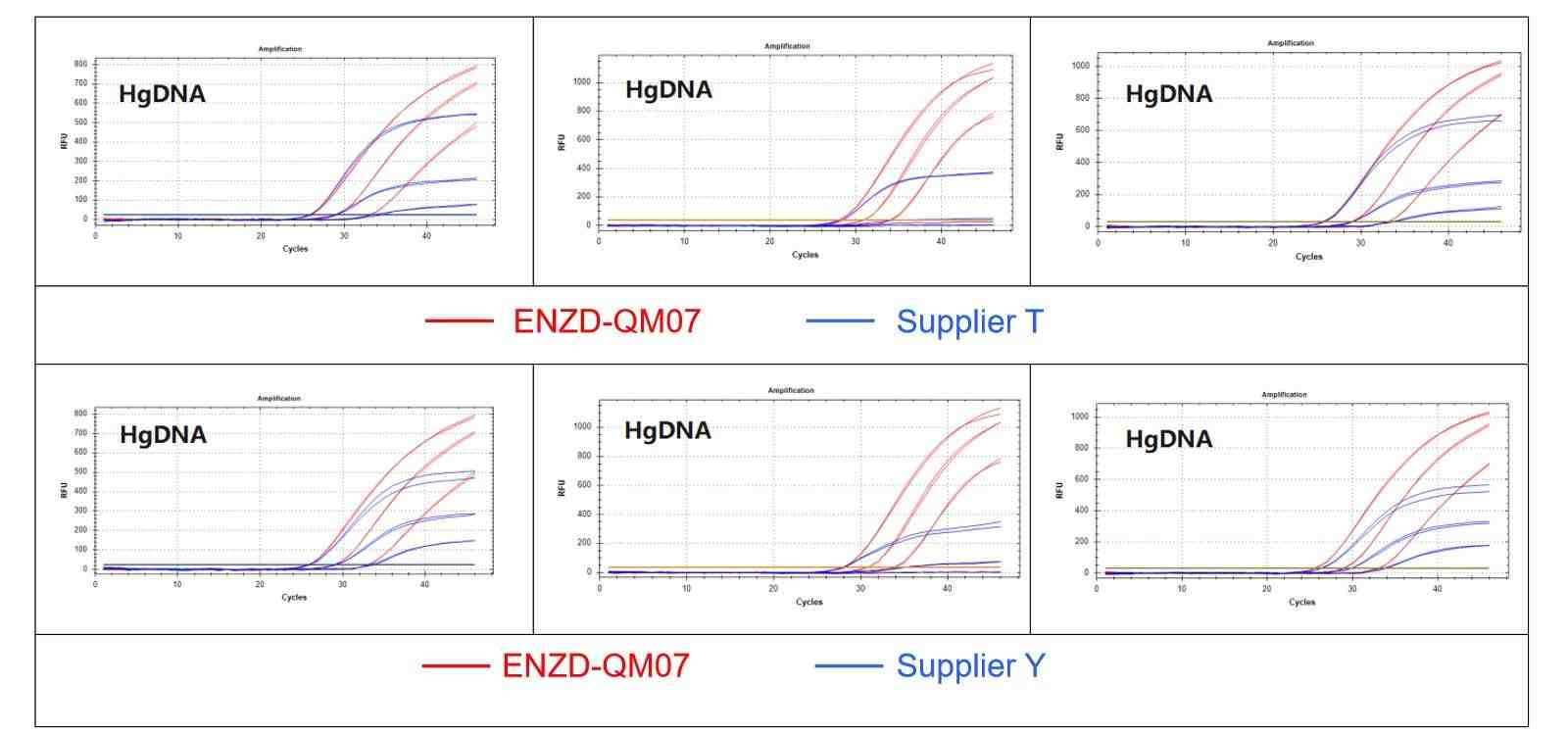
Human genomic DNA was used as the template to evaluate the amplification performance of ENZD-QM07 in comparison with multiple commercial qPCR reagents under the same reaction setup.
Results obtained across FAM, VIC, and CY5 channels showed that ENZD-QM07 delivered stronger fluorescence signals and higher plateau levels than competing products, indicating more efficient amplification and improved signal robustness in high-GC genomic DNA applications. Data sourced from internal validation studies evaluating amplification behavior in human genomic DNA systems.
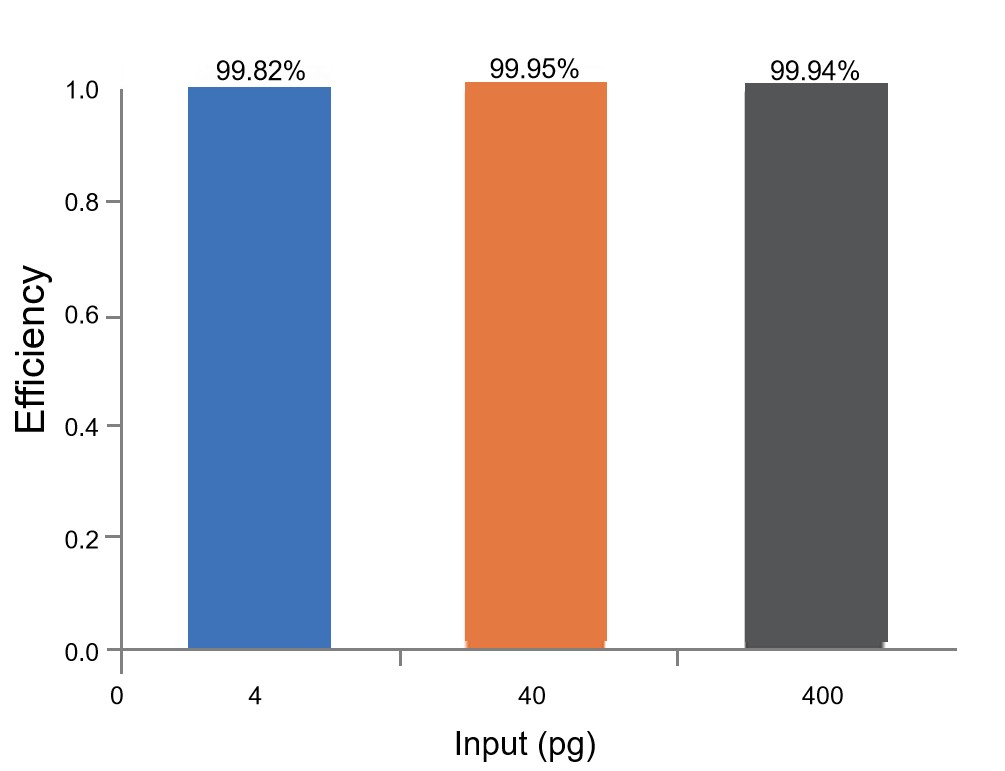
ENZD-QM07 incorporates a dUTP/UDG contamination control system designed to minimize carryover amplification signals in qPCR workflows.
When tested with low-copy templates (4 pg, 40 pg, and 400 pg), the system consistently achieved more than 99.9% removal efficiency of uracil-containing contaminant DNA, demonstrating highly effective suppression of background amplification under trace-template conditions. Data sourced from internal validation studies assessing carryover contamination removal efficiency at low DNA input levels.
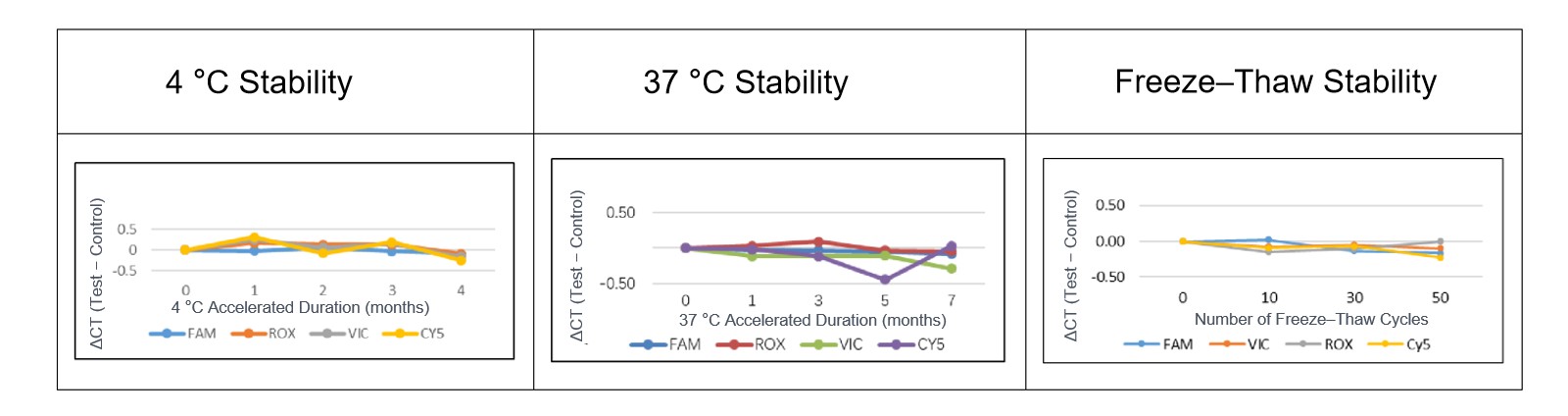
(a) Amplification Consistency Under Thermal and Mechanical Stress
ENZD-QM07 was evaluated under multiple stress conditions, including storage at 4°C for four weeks, incubation at 37°C for seven days, and repeated freeze–thaw cycles (10, 30, and 50 times).
Across FAM, ROX, VIC, and CY5 channels, Ct variation remained within ±0.5 compared with the -20°C reference, while overall amplification plateau differences stayed within 20%, reflecting stable reaction performance of the hot-start DNA polymerase system.
(b) Stability of UDG Functional Activity
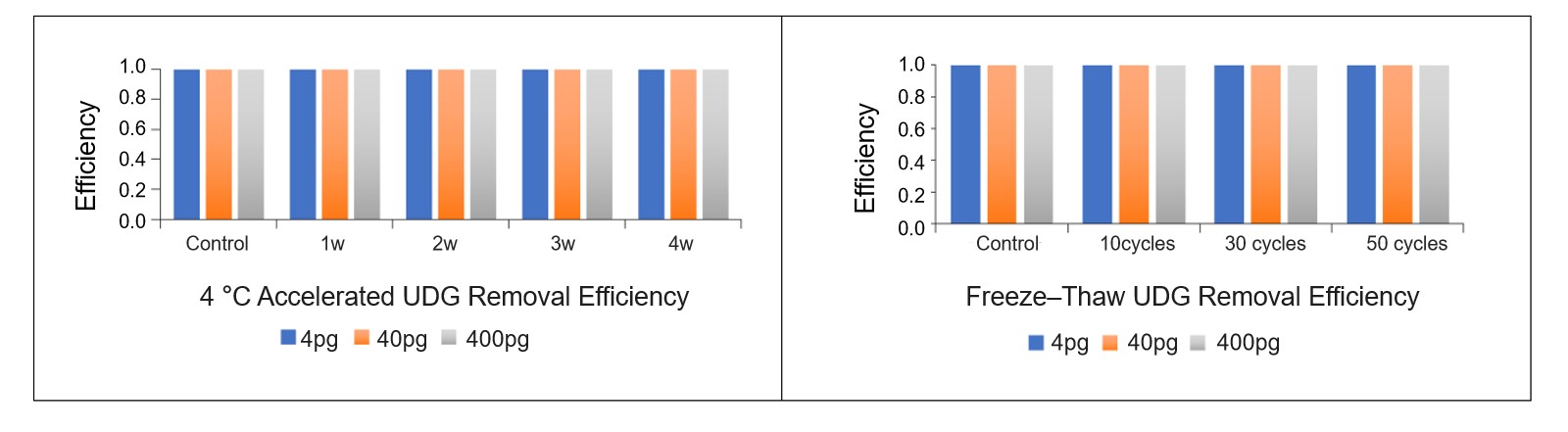
To further verify system robustness, ENZD-QM07 was tested for UDG activity after identical stress treatments. When challenged with 4 pg, 40 pg, and 400 pg uracil-containing templates, no noticeable difference in degradation efficiency was observed compared with the control condition.
These findings confirm that both amplification performance and contamination control function remain stable even after prolonged storage and repeated handling stress. Data sourced from internal validation studies evaluating system stability, freeze–thaw resistance, and functional integrity of the dUTP/UDG mechanism in ENZD-QM07.