| Cat# | ENZD-QM02 |
| Specification | 200 rxns 500 rxns |
| Aplications | Pathogen detection; biological product testing (related to E. coli) |
| Description | Designed specifically for multiple amplification of low DNA templates, possessing excellent anti-contamination capabilities and high specificity amplification performance. The optimized system can improve the stability of the premix, and includes a dUTP/UDG anti-contamination system, supporting a 5× Mix format for convenient operation. |
| Features | 1. Low host DNA residue: No detection of 16 common pathogens such as E. coli, Pseudomonas aeruginosa, and Staphylococcus aureus NTC genomic DNA in 48 wells. 2. Convenient and efficient use: Supports fully premixed primer-probe systems, stable performance after 37°C pressurization for 28 days and 50 cycles of freeze-thaw, reducing operational complexity and improving experimental success rates. 3. Good amplification efficiency: Within the linear range of 10~10^5 copies/μl, the amplification efficiency reaches 100%. 4. dUTP/UDG anti-contamination system: Effective at room temperature, reducing false positives and ensuring the authenticity and reliability of results. |
| Quality Control | Extremely low host DNA residue Excellent premix stability High amplification efficiency |
| Components | 5 × Super Multiple Low DNA qPCR PreMix(20 µl/run), including dNTP/dUTP Mix, Mg²⁺, EnzSmart Taq HS DNA Polymerase, Heat-labile UDG, etc. |
| Shipping and Storage Conditions | -30 ~ -15°C storage, ≤0°C transportation |
| Download Datasheet: | 
|
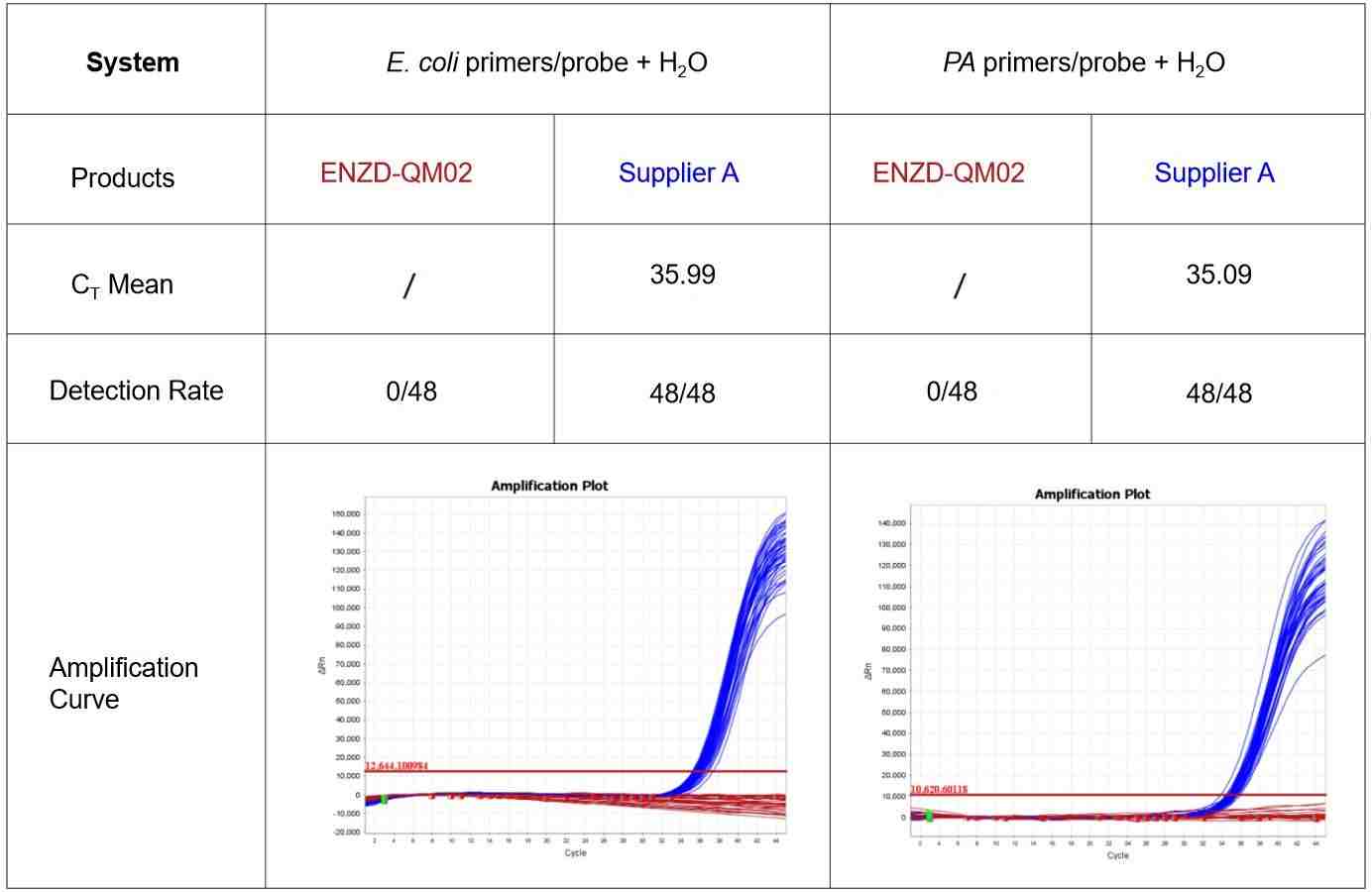
ENZD-QM02 was evaluated for residual host DNA contamination using no-template control (NTC) amplification assays in Escherichia coli and Pseudomonas aeruginosa systems, in comparison with a conventional commercial reagent (Reagent A).
The results showed no detectable amplification in all NTC reactions (48 replicates), indicating extremely low levels of residual host DNA background and ensuring high assay reliability. These findings are based on internal validation studies assessing residual host DNA background in bacterial detection systems.
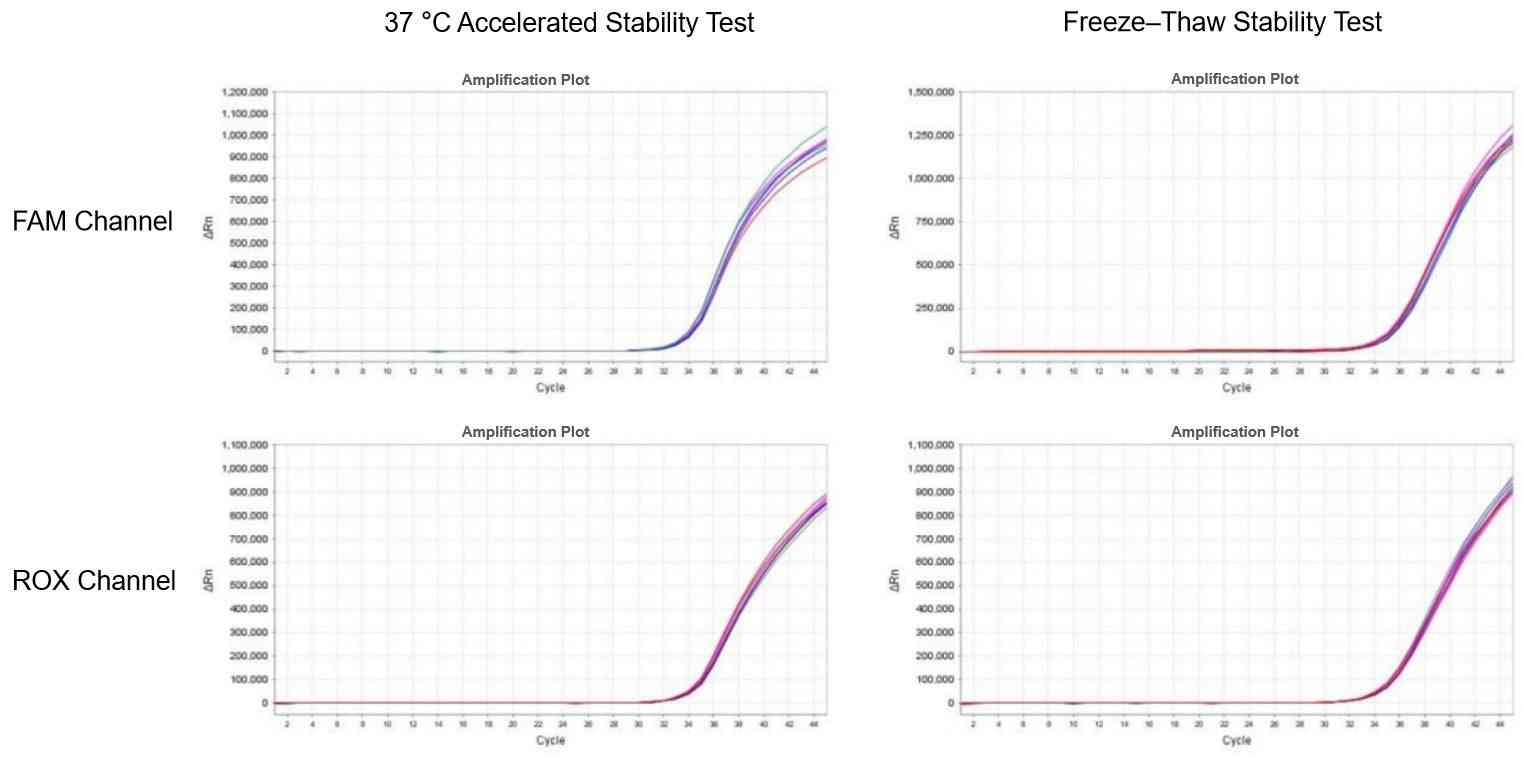
The premix stability of ENZD-QM02 was assessed after primer–probe pre-mixing under multiple stress conditions, including incubation at 37°C for 28 days and 50 freeze–thaw cycles.
Compared with the -20°C control group, no significant differences in amplification performance were observed, demonstrating strong stability of the premix system under long-term thermal stress and repeated handling conditions. These findings are based on internal validation studies assessing premix stability under thermal stress and freeze–thaw conditions.
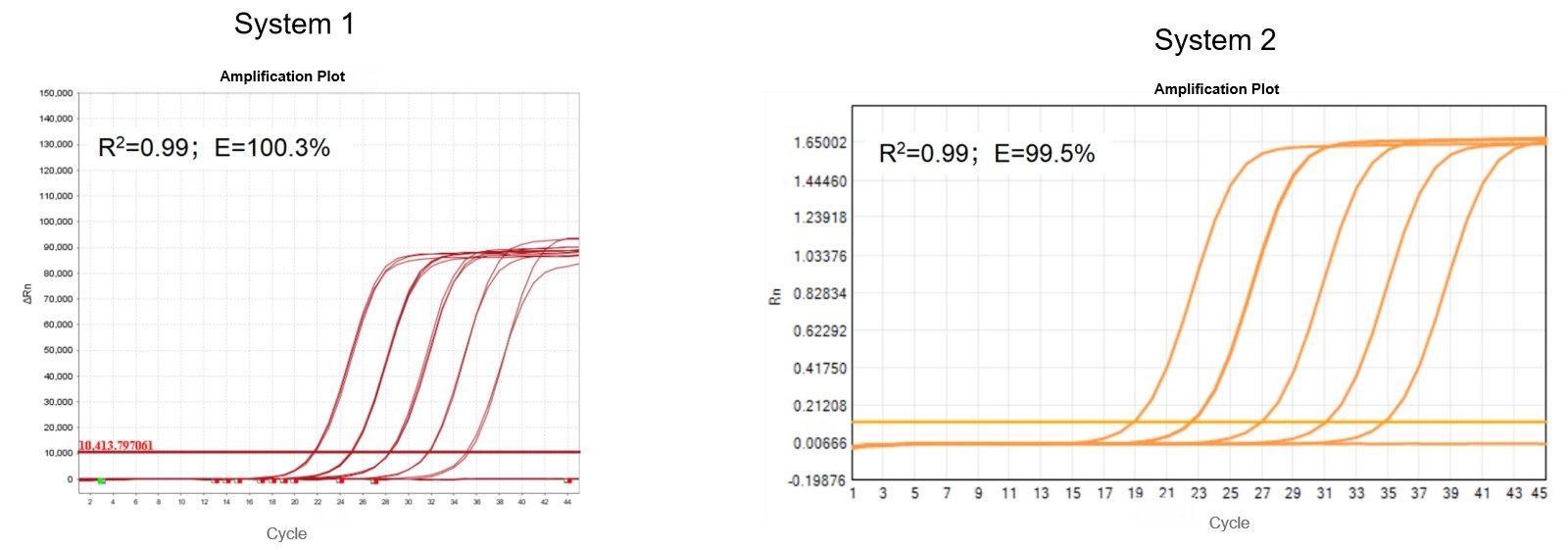
ENZD-QM02 was evaluated using a serial dilution of SD1–SD5 templates (10–105 copies/μL) to assess amplification efficiency and dynamic range performance.
The results demonstrated an amplification efficiency close to 100% across different systems, with a wide linear dynamic range, indicating robust quantification performance and strong assay linearity. These results are derived from internal validation studies of amplification efficiency and linear dynamic range performance.