| Cat# | ENZD-QM11 |
| Specification | 400 rxns 800 rxns |
| Aplications | Gene Expression Analysis; Virus Detection |
| Description | A premix solution for DNA probe-based detection, using upgraded hot-start technology to achieve efficient amplification and accurate release. It supports primer-probe premixing, is simple to operate, and has stable performance. |
| Features | 1. Convenient and efficient use: Supports fully premixed primer-probe systems, stable performance after premixing at 37°C for 7 days under pressure, and 30 freeze-thaw cycles, reducing operational complexity and improving experimental success rate. 2. Excellent detection sensitivity: Superior performance of hot-start Taq enzyme, combined with an upgraded buffer system, achieves high-sensitivity detection, effectively reducing the rate of missed detection. 3. Compatible with multiple reaction systems: Supports simultaneous detection of multiple targets. 4. Supports fast protocols: Compatible with fast protocols, completing detection within 40 minutes, effectively improving detection efficiency. 5.dUTP/UDG anti-contamination system: Heat-labile UDG functions at room temperature, reducing false positives and ensuring results are authentic and reliable. |
| Quality Control | 1. Premix stability 2. Amplification sensitivity 3. Compatibility with multiple reaction systems 4. Supports fast protocols |
| Components | × Animal Detection U+ Probe qPCR Super PreMix\n50 × ROX Reference Dye 1\n50 × ROX Reference Dye 2 |
| Shipping and Storage Conditions | Store at -30 ~ -15℃; transport at ≤0℃. |
| Download Datasheet: | 
|
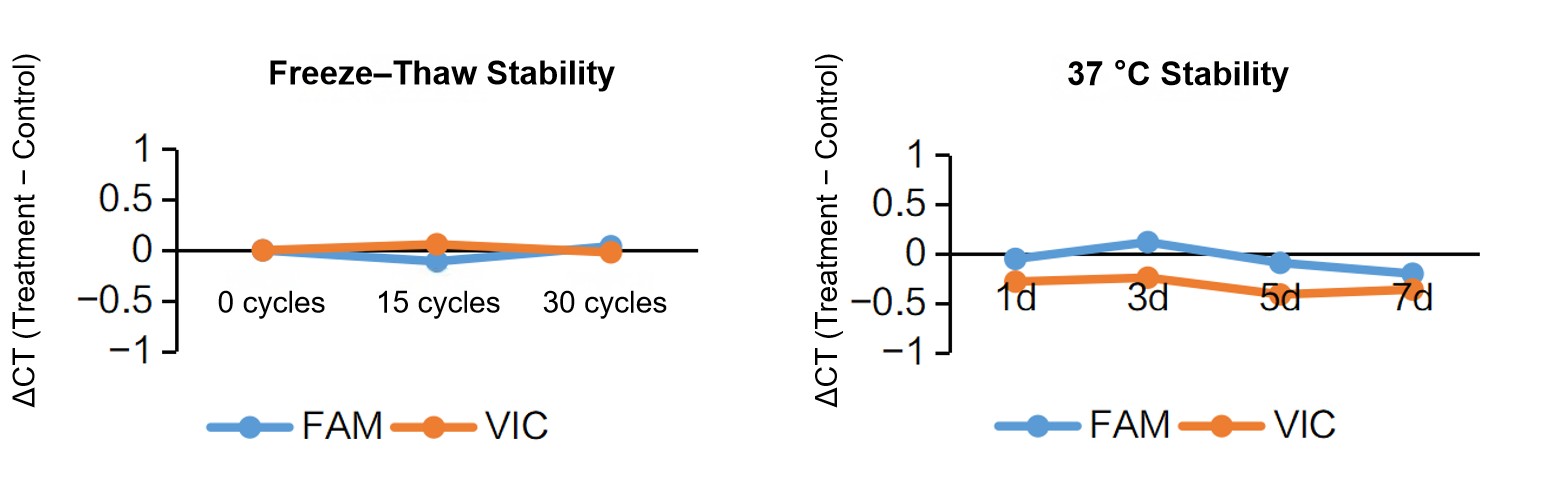
The stability of ENZD-QM11 was assessed using a premixed primer–probe setup under accelerated stress conditions, including 30 freeze–thaw cycles and incubation at 37°C for 7 days.
Across all conditions, no significant variation in amplification performance was observed compared with the control group, indicating strong formulation robustness. This stability is supported by a dual-quality control system and a hot-start DNA Polymerase framework developed by Creative Enzymes, ensuring consistent assay performance after extended handling.
In addition, the system integrates Heat-labile UDG to further enhance workflow reliability and contamination control performance. Data sourced from internal validation studies evaluating premix stability under thermal stress and repeated freeze–thaw conditions.
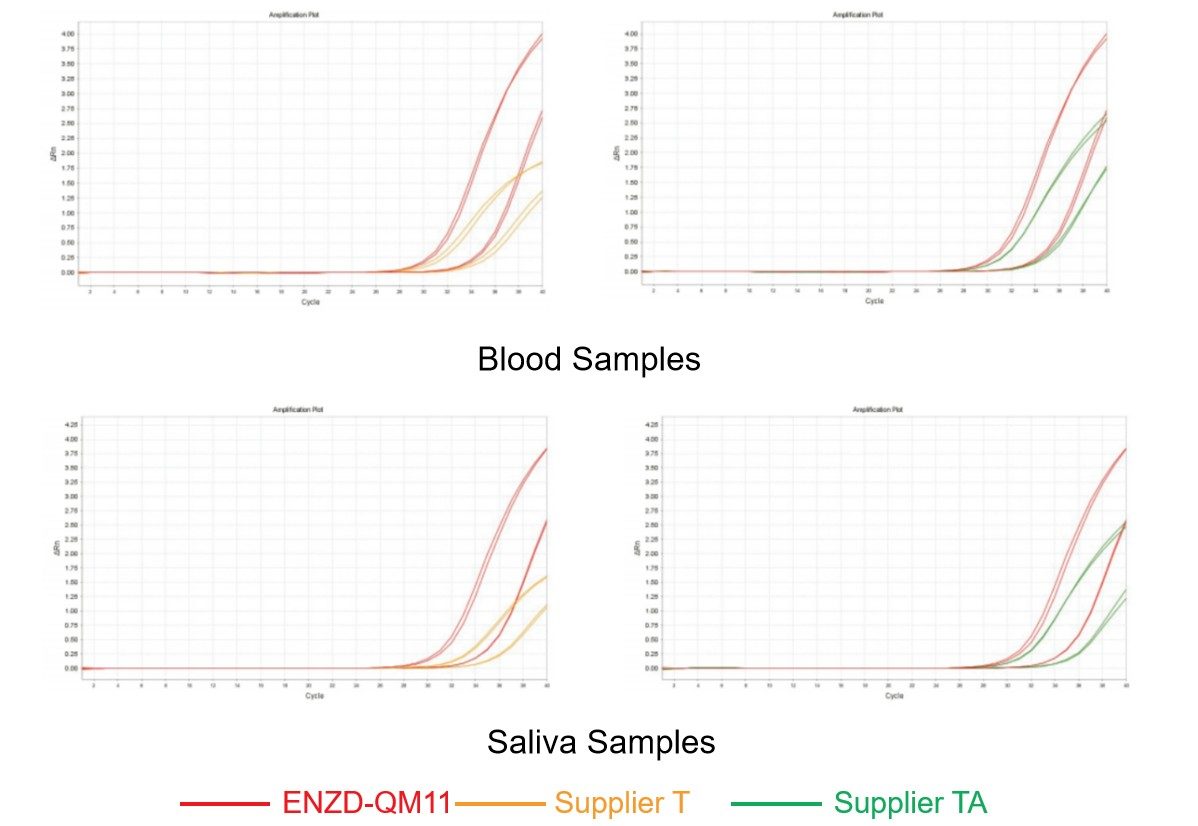
Using African swine fever virus (ASFV) DNA as the target template, ENZD-QM11 was compared with other commercial probe-based qPCR reagents under identical reaction conditions.
Results demonstrated that ENZD-QM11 delivered stronger fluorescence signals and improved amplification plateau levels, indicating enhanced detection sensitivity and more efficient target amplification. The system incorporates a hot-start DNA Polymerase architecture, contributing to improved reaction specificity and signal clarity. Data sourced from internal validation studies evaluating detection sensitivity using ASFV DNA templates.
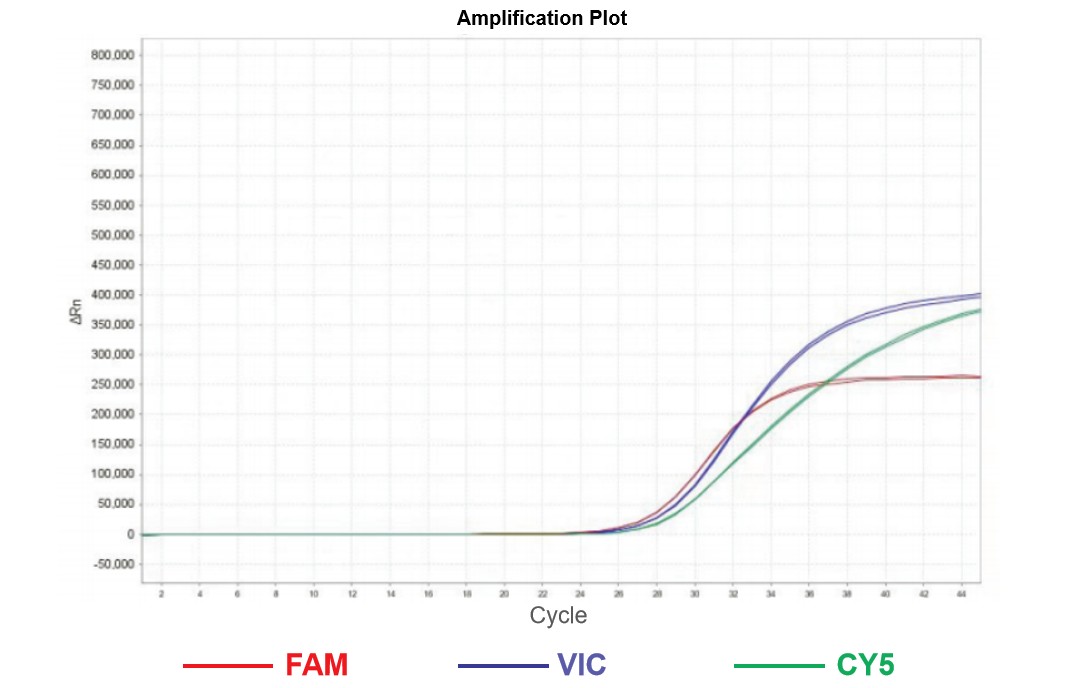
The performance of ENZD-QM11 was evaluated using ASFV DNA in multiplex qPCR reaction formats.
The results showed that ENZD-QM11 maintained stable amplification behavior in multiplex systems without observable signal interference, demonstrating strong compatibility for multi-target detection workflows. Data sourced from internal validation studies evaluating multiplex qPCR compatibility.
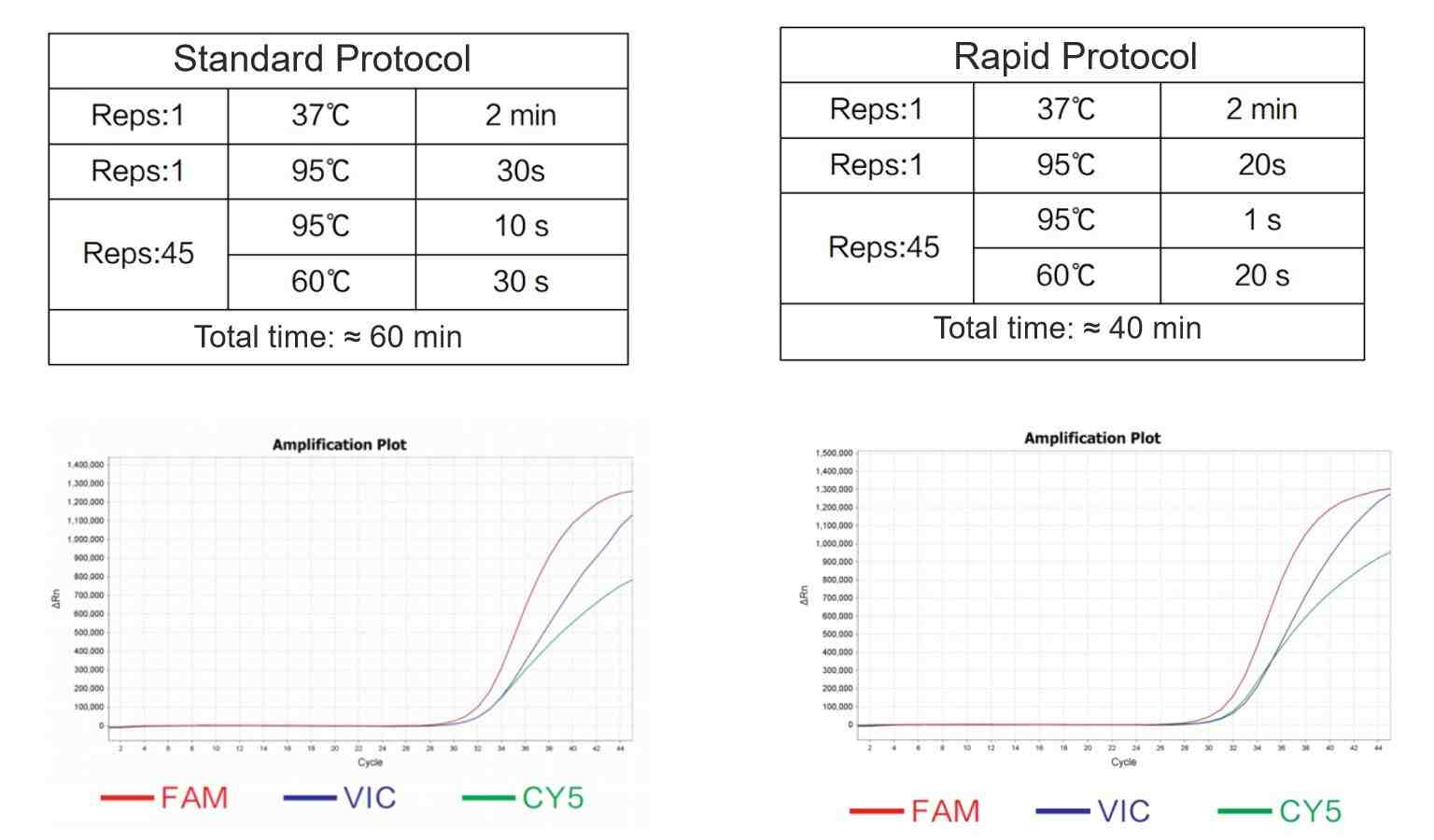
ASFV DNA was used to evaluate amplification performance under both standard and rapid qPCR cycling conditions.
Results showed highly consistent amplification curves between the two cycling modes in a triplex system, indicating that ENZD-QM11 supports rapid program workflows without compromising amplification efficiency or signal quality. Data sourced from internal validation studies evaluating rapid cycling compatibility in multiplex qPCR systems.