| Cat# | ENZD-QM06 |
| Specification | 100 rxns 500 rxns 2500 rxns |
| Aplications | Gene Expression Analysis |
| Description | Based on antibody-mediated hot-start Taq Pro HS DNA Polymerase, it improves the sensitivity and specificity of multiplex amplification, suitable for template detection such as DNA viruses. It contains a dUTP/UDG anti-contamination system, is compatible with fast programs, and requires only the addition of primers, probes, and template to complete the reaction. |
| Features | 1. Good amplification sensitivity with low template and S-shaped curve 2. Supports fast protocols 3. Supports multiplex qPCR 4. dUTP/UDG anti-contamination system |
| Quality Control | 1. Better amplification performance 2. Introduction of dUTP/UDG anti-contamination system 3. Better stability |
| Components | 2 × Taq Pro U+ Multiple Probe qPCR Mix\n50 × ROX Reference Dye 1\n50 × ROX Reference Dye 2 |
| Shipping and Storage Conditions | Store at -30 ~ -15℃, transport at ≤0℃ |
| Download Datasheet: | 
|
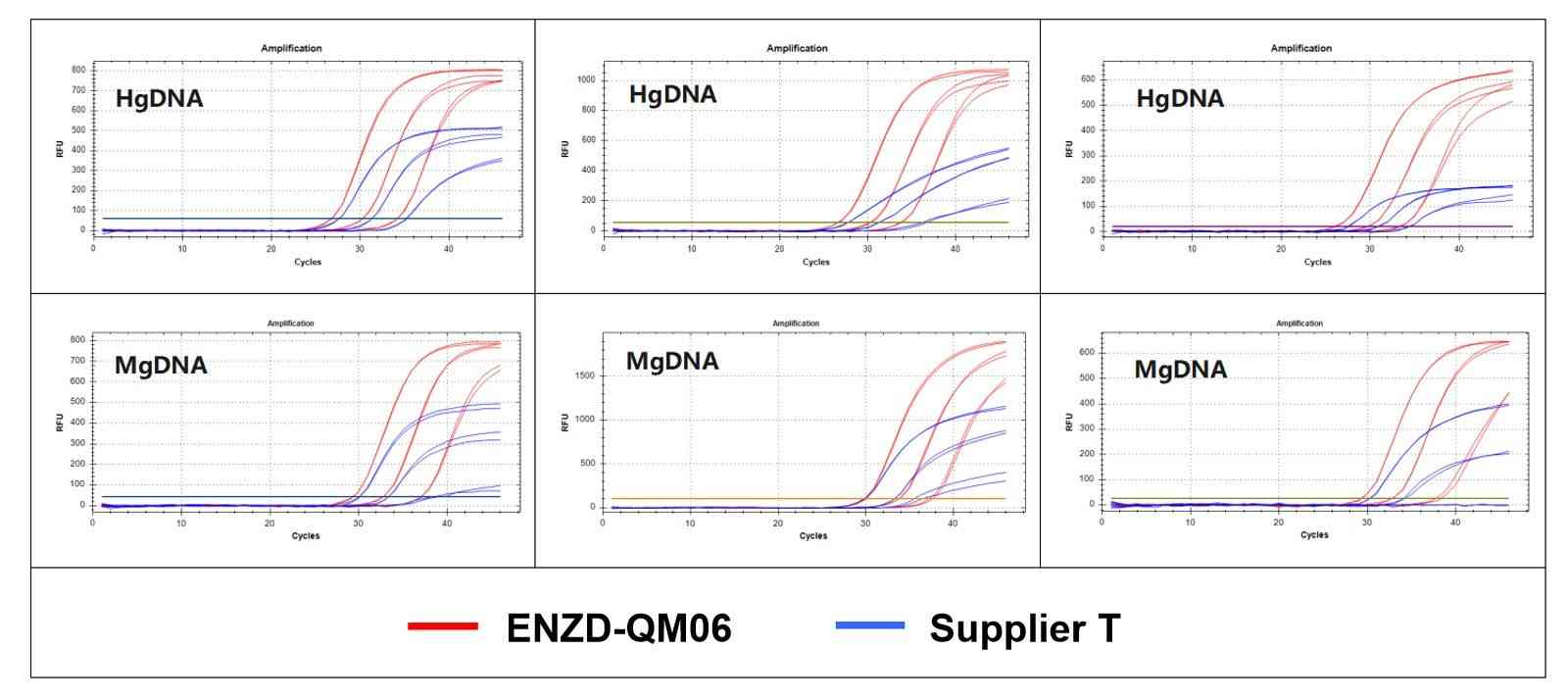
The performance of ENZD-QM06 was evaluated using both human and mouse genomic DNA templates and compared with a commercial T-brand qPCR reagent under identical reaction conditions.
Across FAM, VIC, and CY5 detection channels, ENZD-QM06 demonstrated improved sensitivity and higher amplification plateau signals, indicating enhanced signal output and more efficient target amplification. Data sourced from internal validation studies evaluating multiplex amplification performance using genomic DNA templates.
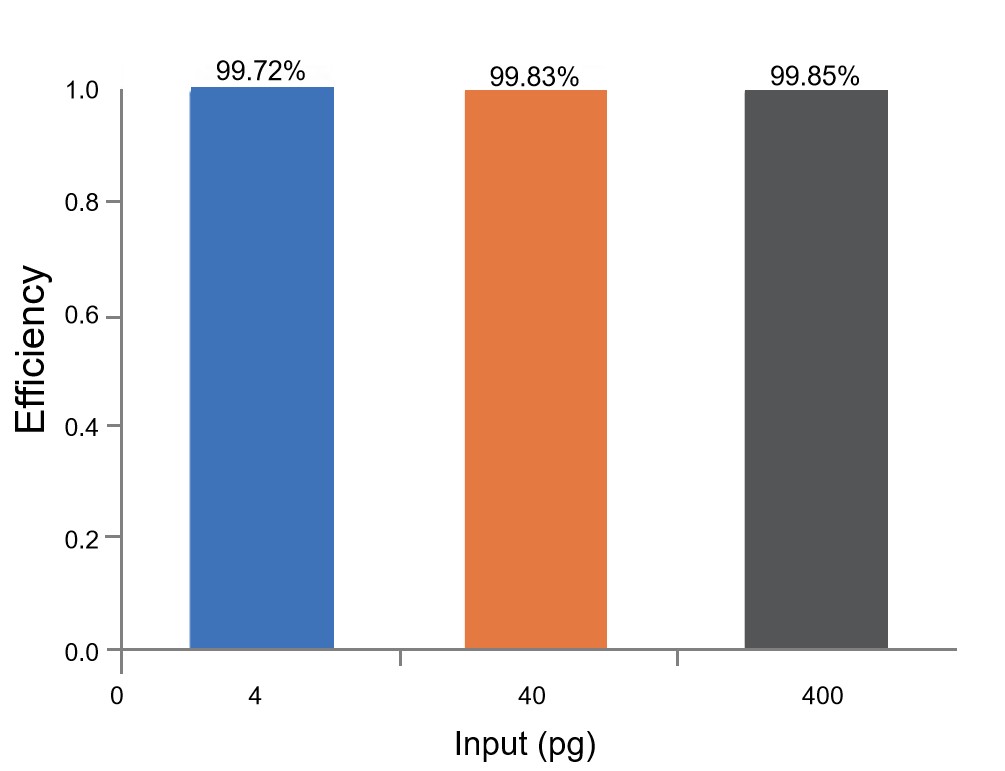
ENZD-QM06 integrates a dUTP/UDG contamination prevention system designed to eliminate carryover amplification signals from uracil-containing templates.
At template inputs of 4 pg, 40 pg, and 400 pg, the system consistently achieved >99.0% removal efficiency of contaminating DNA, demonstrating strong performance in preventing false-positive amplification in qPCR workflows. Data sourced from internal validation studies evaluating dUTP/UDG-mediated contamination removal efficiency.
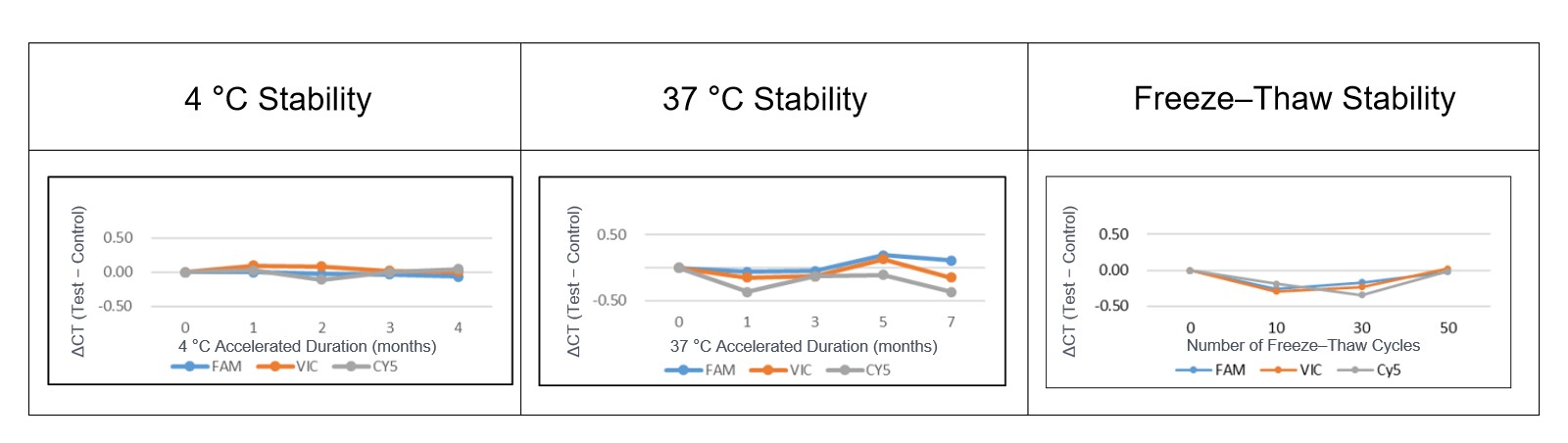
(a) Amplification Performance Stability
ENZD-QM06 was subjected to stress conditions including 4°C storage for 4 weeks, 37°C accelerated incubation for 7 days, and repeated freeze–thaw cycles (10, 30, and 50 cycles).
Across all conditions, CT variation remained within ±0.5 across FAM, VIC, and CY5 channels, with amplification plateau variation within 20% compared with the -20°C control, indicating strong formulation stability.
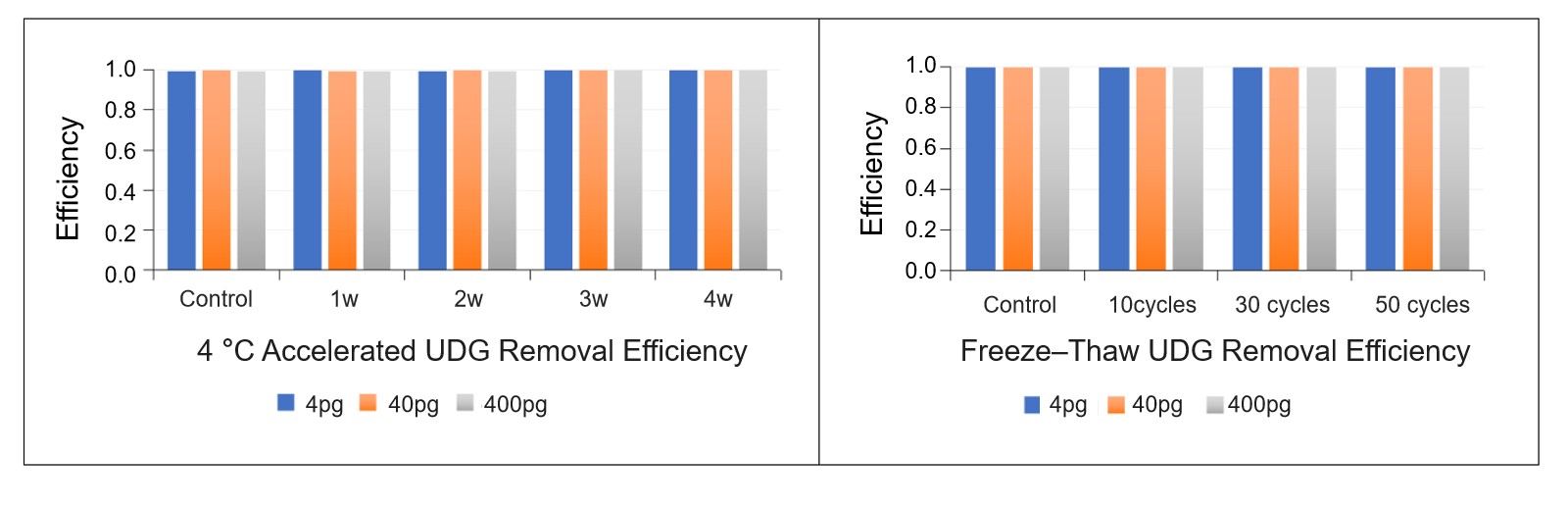
(b) dUTP/UDG Functional Stability
To further evaluate system robustness, ENZD-QM06 was tested after the same stress treatments for maintenance of dUTP/UDG activity. Reactions containing 4 pg, 40 pg, and 400 pg uracil-containing templates showed no significant difference in degradation efficiency compared with control conditions.
This confirms that both amplification performance and contamination control functionality remain stable under long-term storage and mechanical stress conditions. Data sourced from internal validation studies evaluating thermal stability, freeze–thaw robustness, and functional integrity of the dUTP/UDG system.