
Accelerated and Real-Time Stability Testing for Diagnostic Reagents provides a study-design guide that separates exploratory stress testing, accelerated stability, real-time shelf-life evidence, transport simulation, and in-use claims for IVD reagents. It is written for stability scientists, quality and regulatory teams, assay developers, and program managers. The central concern is protocol architecture, lot selection, timepoints, acceptance criteria, statistical interpretation, extrapolation limits, excursions, and change control.
For this topic, stability must be evaluated across define every stability claim, select lots and timepoints, and maintain the program after launch. Enzyme-centered measurements explain only part of the system: cofactors, substrates, reporters, contact materials, packaging, specimens, timing, and user operations may follow different failure routes. A formulation with excellent fresh activity can therefore have a poor practical margin.
This resource is a development framework for stability scientists, quality and regulatory teams, assay developers, and program managers; it is not a universal formula or an automatic storage claim. Study conditions, methods, limits, and conclusions must correspond to protocol architecture, lot selection, timepoints, acceptance criteria, statistical interpretation, extrapolation limits, excursions, and change control, using the intended reagent configuration and an explicitly defined assay and use environment.
Readers applying this guide may also use the following Creative Enzymes product and service categories as starting points for raw-material selection, formulation development, and verification:
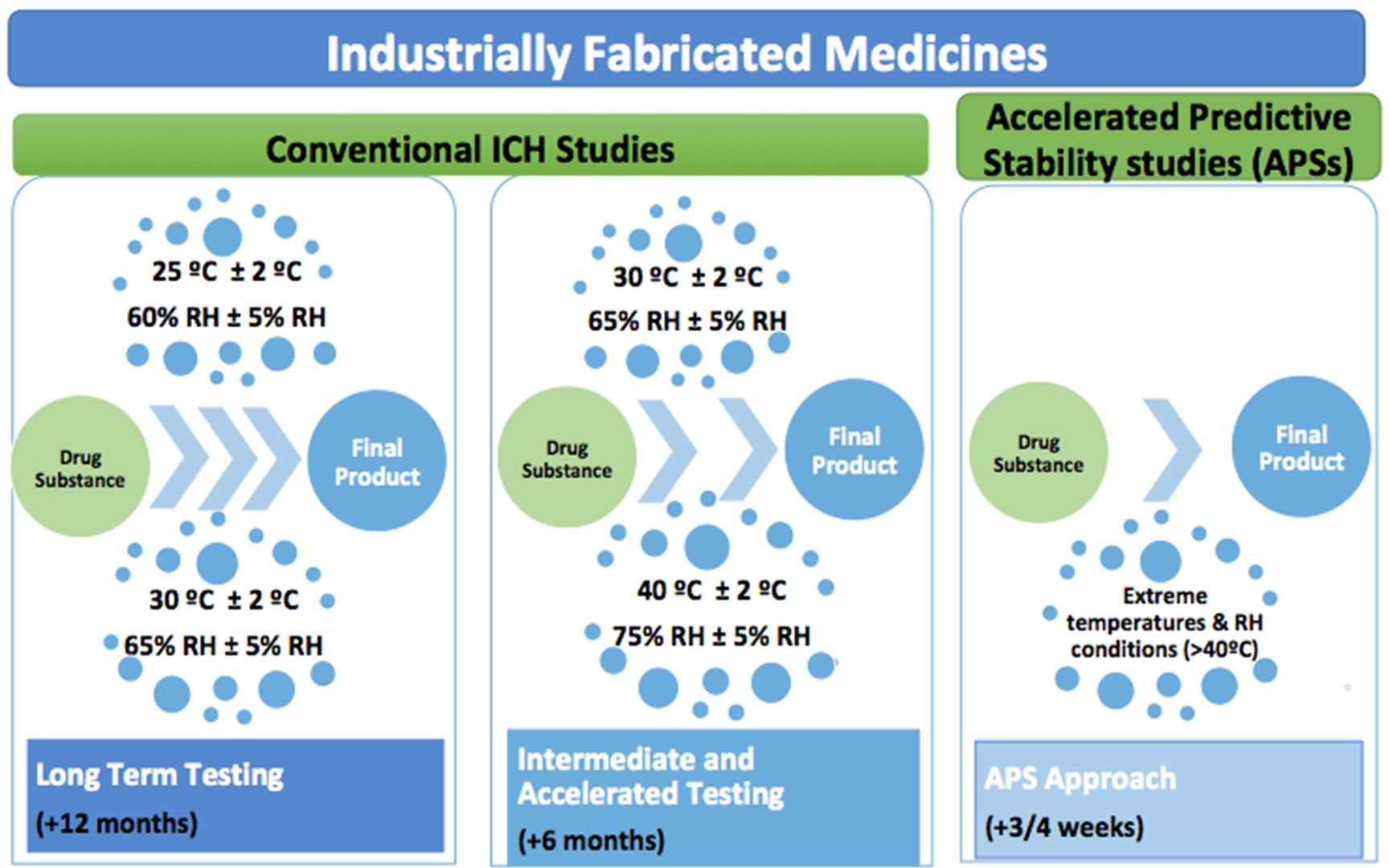 Figure 1. Drug stability: ICH versus accelerated predictive stability studies. (Sawant et al., 2021)
The process question is whether Shelf life, shipping tolerance, opened-vial life, onboard time, reconstituted stability, and freeze-thaw resistance describe different exposures and should not be supported by one undifferentiated study. One concern is that Define the starting event, labeled temperature and humidity, container state, allowable excursion, test interval, and endpoint for each claim. The decision should be supported by this action: A claim matrix prevents a strong sealed-package study from being incorrectly used to support repeated opening or instrument residence.
A stability protocol should make the claim testable: name the starting event, environmental condition, duration, package state, lots, methods, timepoints, statistical approach, and limits. Preserve individual-lot results and environmental records. The conclusion should state exactly which exposure and configuration the evidence supports.
The final design must account for the fact that Forced degradation and elevated-temperature studies can rank formulations, identify sensitive components, and select analytical methods. The claim becomes vulnerable if Accelerated data may support risk assessment or limited extrapolation only when degradation mechanisms remain relevant; dry-state transitions, moisture ingress, precipitation, or microbial effects can be nonlinear. The appropriate evidence is to Label exploratory studies clearly and continue representative final-packaged lots on real-time storage.
A stability protocol should make the claim testable: name the starting event, environmental condition, duration, package state, lots, methods, timepoints, statistical approach, and limits. Preserve individual-lot results and environmental records. The conclusion should state exactly which exposure and configuration the evidence supports.
The technical starting point is straightforward: Stability lots should represent the proposed formulation, process, fill, container closure, and manufacturing variability. The principal development risk is that Baseline, intermediate, claim-point, and beyond-claim observations help distinguish trend from analytical noise and provide information if the claim changes. Evidence should therefore be collected deliberately: Timepoints should be dense enough near expected failure or early development decisions, not simply copied from a pharmaceutical template.
A stability protocol should make the claim testable: name the starting event, environmental condition, duration, package state, lots, methods, timepoints, statistical approach, and limits. Preserve individual-lot results and environmental records. The conclusion should state exactly which exposure and configuration the evidence supports.
At this stage, The selected tests must respond to meaningful deterioration. Enzyme activity alone may miss rising reagent blank, altered calibration, matrix sensitivity, low-positive detection loss, or reconstitution problems. A misleading result can arise because A complete panel can include appearance, moisture, pH, activity, kinetics, precision, controls, calibration recovery, and system-level samples. A defensible experiment should address the issue directly: Method variability should be understood before interpreting small trends as degradation.
A stability protocol should make the claim testable: name the starting event, environmental condition, duration, package state, lots, methods, timepoints, statistical approach, and limits. Preserve individual-lot results and environmental records. The conclusion should state exactly which exposure and configuration the evidence supports.
The governing consideration is that Post hoc acceptance criteria create bias. Limits should reflect analytical performance, risk, method capability, and the relationship between raw-material change and reported result. The practical hazard is that Regression can estimate trends, but pooling lots or fitting a kinetic model requires justification; a statistically significant slope may be practically irrelevant, while a noisy nonsignificant slope may conceal risk. The most useful confirmation is to Evaluate confidence intervals, individual lots, outliers, missing data, and failure modes rather than reporting only an average.
A stability protocol should make the claim testable: name the starting event, environmental condition, duration, package state, lots, methods, timepoints, statistical approach, and limits. Preserve individual-lot results and environmental records. The conclusion should state exactly which exposure and configuration the evidence supports.
A robust approach recognizes that Ongoing stability verifies that routine production remains consistent with development evidence. Changes to enzyme source, excipient grade, container, desiccant, fill, cycle, instrument, or software may affect the claim. Development can fail when Deviation investigations should protect the original data trail and determine whether the event is analytical, environmental, packaging-related, or product-related. To reduce that uncertainty, A risk-based change-control plan identifies when targeted bridging is sufficient and when a new full study is needed.
A stability protocol should make the claim testable: name the starting event, environmental condition, duration, package state, lots, methods, timepoints, statistical approach, and limits. Preserve individual-lot results and environmental records. The conclusion should state exactly which exposure and configuration the evidence supports.
| Variable | Question to answer | Development implication |
|---|---|---|
| Claim type | Is the study supporting shelf life, transport, in-use, or excursion? | Write a separate protocol objective for each exposure. |
| Storage control | Are temperature and humidity continuously documented? | Use calibrated monitoring and investigate excursions. |
| Final package | Does the study use the marketed barrier and closure? | Laboratory containers do not establish package performance. |
| Lot representativeness | Do lots span expected material and process variability? | Avoid relying on a single optimized pilot lot. |
| Baseline | Is time zero tested after final manufacture and packaging? | Anchor every trend to a defined product state. |
| Timepoints | Can the schedule detect curvature or early failure? | Place observations according to risk and expected kinetics. |
| Endpoints | Are methods stability indicating? | Include functional and physical measures. |
| Low positives | Could partial loss be hidden at high analyte levels? | Challenge performance near relevant decision levels. |
| Controls | Can assay drift be separated from sample instability? | Use qualified controls and retained comparators. |
| Statistics | Is the model appropriate to the data? | Inspect lots and residuals before pooling. |
| Excursions | How will unplanned exposure be assessed? | Link duration and temperature to available evidence. |
| Ongoing program | How are commercial lots monitored? | Trend results and trigger timely investigation. |
The matrix should be converted into a protocol with named methods, sample numbers, lots, controls, timepoints, and acceptance rules. Not every variable needs an independent full-factor study, but an omitted variable should be omitted because the risk is understood—not because it is difficult to measure.
Accelerated results should be presented as measured exposure data unless a justified model and relevant degradation mechanism support extrapolation. Real-time lots, final package, claim-point observations, predefined limits, and confidence around trends provide the basis for shelf-life conclusions. Forced studies remain valuable for method selection and root-cause knowledge.
Review individual-lot slopes, confidence intervals, method precision, and failures near the claim point before pooling or extending a date. Trend direction can be informative before a specification is crossed, but method noise, sampling, and environmental records must be considered before assigning cause.
