
One-pot isothermal amplification and CRISPR detection aims to combine target amplification, programmable recognition, and reporter cleavage in a closed vessel. The format can reduce hands-on steps and amplicon exposure, but it creates a difficult biochemical design problem: amplification enzymes and Cas complexes may require different temperatures, salts, magnesium concentrations, nucleotides, reaction timing, and target structures.
A successful one-pot assay is therefore not defined by placing all components in one tube. It is defined by controlled coordination: the amplification module produces an accessible activator, the CRISPR module recognizes it at the right time, reporter signal remains separated from background, and the complete reaction tolerates the intended sample and device.
Amplification can consume primers, nucleotides, magnesium, and target intermediates. Cas enzymes and guide RNAs can bind or cleave products before amplification reaches sufficient yield. Reporters, dyes, detergents, crowding agents, and sample components can inhibit one module while appearing harmless to the other. Temperature compromise can slow both reactions or change specificity.
The design must also consider product geometry. Cas12 commonly recognizes a DNA activator and cleaves ssDNA reporters in trans. Many Cas12 variants recognizing double-stranded DNA require an appropriate PAM adjacent to the guide target. Cas13 recognizes RNA and cleaves ssRNA reporters, so a DNA amplification workflow may need a transcription step and promoter-bearing primer.
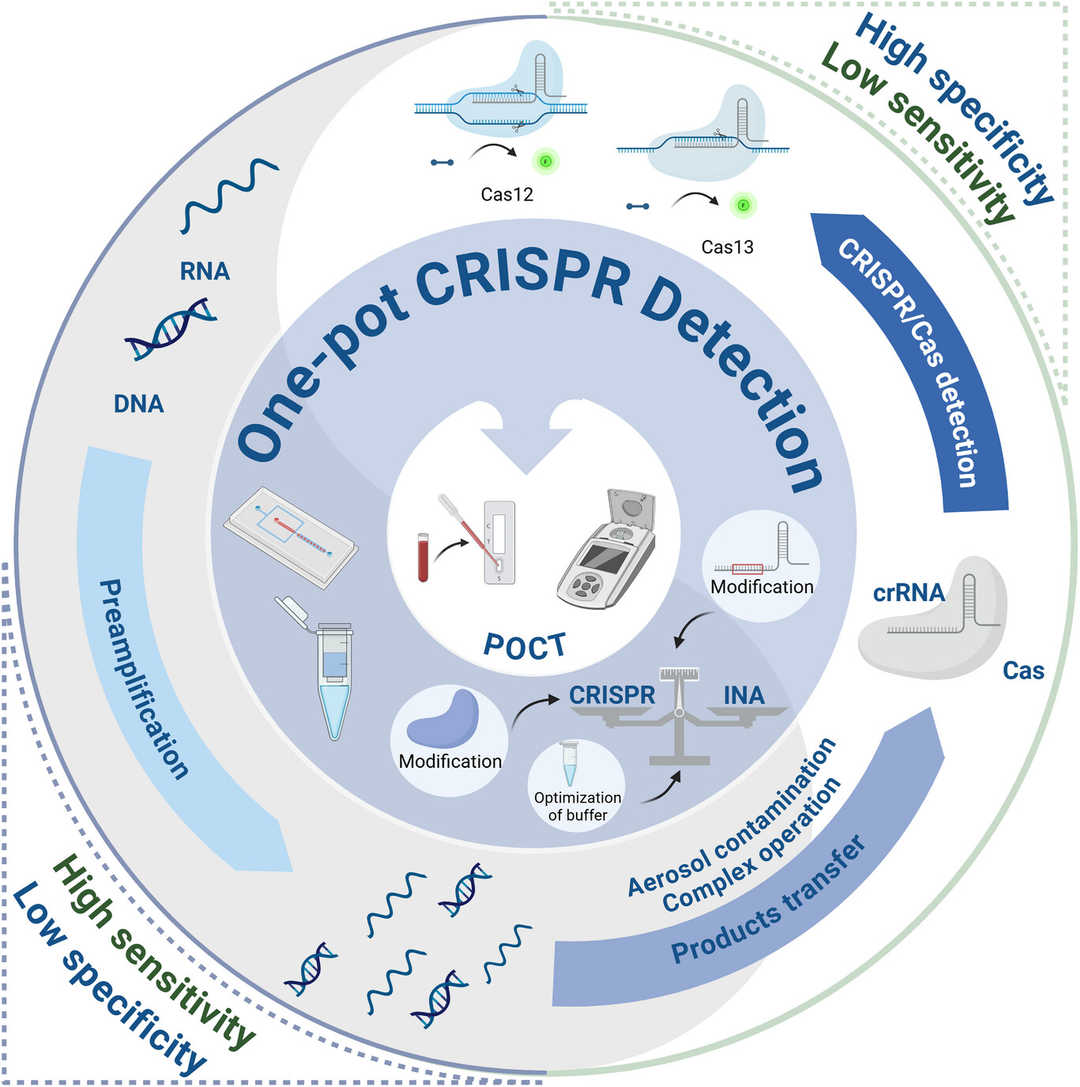 Figure 1. Overview of developing a one-pot CRISPR/Cas assay. (Liu et al., 2025)
| Architecture | How modules are coordinated | Strength | Main risk |
|---|---|---|---|
| Homogeneous concurrent | All components share one liquid phase from the start | Fewest operations | Direct enzyme competition and premature Cas activation |
| Temperature-staged | One temperature favors amplification, then another favors detection | Temporal control without opening | Hardware complexity and stability through transitions |
| Physical compartment | Cas reagents are held in cap, wax, membrane, pellet, or separate chamber until released | Independent initial environments | Release reproducibility, mixing, adsorption, and device tolerances |
| Chemically delayed or activatable | A critical cofactor, guide, enzyme, or reporter becomes available after a trigger | Potentially compact and programmable | Trigger leakage, added formulation complexity, and lot sensitivity |
RPA-type amplification is frequently paired with Cas12 because both can operate in relatively low-temperature ranges and RPA produces a defined DNA amplicon. LAMP produces high DNA yield and can also feed Cas12, but its typical temperature may exceed the optimum of some Cas enzymes. Cas12b variants with higher-temperature activity have been explored with LAMP-like amplification, although the suitability of a particular enzyme must be demonstrated.
Cas13 workflows often use RPA or another DNA amplification step followed by in vitro transcription to produce RNA activator. That additional enzyme and NTP system expands signal but also increases shared-buffer complexity. Alternatively, RNA-centered amplification can feed Cas13 more directly. Selection should minimize unnecessary handoffs while preserving required sensitivity and specificity.
The amplification primers and guide cannot be designed independently. The amplicon must contain an accessible guide target, applicable PAM or flanking requirements, and sequence conservation across intended variants. Primer-derived tails can add promoter or recognition sequences, but they may also create primer dimers or false activators.
The sequence-design review should include:
Magnesium is central to polymerases, recombinase systems, reverse transcriptases, and Cas nucleases. The free concentration changes as nucleotides, pyrophosphate, chelators, and sample components bind it. Salt affects primer hybridization, recombinase assembly, guide-target binding, and nuclease activity. Reducing agents and detergents can stabilize one protein while perturbing another.
A useful optimization strategy begins with independently characterized modules, then performs a compatibility matrix. The amplification module is tested with Cas components added one at a time; the Cas module is tested in amplification buffer and with expected amplicon concentrations. High-impact variables are then studied together. A one-pot formulation should preserve a broad operating region, not only one optimal ratio.
If Cas binds or cleaves amplification products too early, it can suppress product accumulation. If Cas activation is too late, total time to result increases and nonspecific amplification may accumulate. Time-course measurements of amplicon formation and reporter cleavage are more informative than one endpoint.
Staged-release designs can permit amplification to cross a threshold before detection begins. However, the release event must be robust across heater ramp, transport, reagent age, user orientation, and manufacturing tolerance. A laboratory pipetting step cannot stand in for the intended release mechanism.
| Control | Question answered |
|---|---|
| Amplification-only reaction | Does the amplification module function without Cas competition? |
| Cas-only reaction with synthetic activator | Does the detection module function in the shared buffer? |
| Guide-minus or non-targeting guide | Is reporter change dependent on programmed recognition? |
| Polymerase-minus or primer-minus reaction | Can target or reagent directly activate the Cas reporter? |
| Reporter-minus optical blank | Does the sample or device generate apparent signal independently? |
| Physical-release control | Does compartment opening or mixing occur reproducibly? |
A CRISPR signal can be analytically correct for the molecule that activated it while still being diagnostically wrong if upstream amplification produced the wrong amplicon. Intercalating-dye confirmation is insufficient. Product sequencing, guide-shift experiments, alternative primer sets, restriction patterns, or orthogonal amplification can confirm identity during development.
Reporter background may arise from nuclease contamination, unprogrammed Cas activity, guide degradation, or sample nucleases. Reporter-only matrix blanks and enzyme-lot comparisons help distinguish these routes from nonspecific amplification.
Fluorescence enables closed-tube real-time monitoring but needs controlled optics and threshold logic. Lateral flow can simplify visual interpretation, yet transfer after amplification can release high-copy product unless fully enclosed. Colorimetric and electrochemical reporters may reduce optical hardware but introduce pH, electrode, mediator, or matrix dependencies.
For a cartridge, surface adsorption, dead volume, bubbles, condensation, compartment release, and heater gradients should be evaluated with the final reagent. Miniaturization changes surface-to-volume ratio and can alter effective enzyme and guide concentrations.
A stage-gated program preserves mechanistic evidence:
A one-pot reagent may contain polymerase, recombinase or RT functions, Cas enzyme, guide RNA, reporter, primers, nucleotides, salts, and protective excipients. The most labile component can define shelf life, while degradation in one module may be hidden by excess capacity in another. Guide RNA and RNA reporters add nuclease and hydrolysis risks; fluorescent reporters can change optical background; compartment materials can fail to release after aging.
Stability studies should challenge the mechanism, not only the final endpoint. Amplification-only and Cas-only controls can identify which module changes. Useful endpoints include low-target detection rate, NTC behavior, time to signal, Cas response to synthetic activator, compartment release, reporter blank, rehydration, and package moisture. Accelerated exposure can rank formulations, but real-time data in the final package should support shelf-life claims.
Multiple guides or reporters can expand coverage, distinguish variants, or provide internal controls. In a homogeneous tube, shared reporters may indicate that at least one target is present without identifying which one. Distinct fluorescent channels, spatial zones, barcoded reporters, or sequential logic can preserve identity but add optical and chemical interactions.
Variant discrimination should be tested with matched target concentrations and complete sequence backgrounds. A guide mismatch can affect activation differently at high versus low amplicon concentration. Upstream primers may also amplify one variant preferentially, so observed discrimination must be decomposed between amplification and Cas recognition.
One-pot integration is valuable only if it improves the intended workflow without unacceptable loss of sensitivity, specificity, robustness, or manufacturability. A sealed two-chamber cartridge can retain closed handling while allowing different buffers and temperatures. In some cases, the additional internal transfer is more reliable than a homogeneous biochemical compromise. Product selection should compare total steps, contamination risk, device complexity, yield, invalid rate, and stability rather than treating “one pot” as an end in itself.
