
PCR and qPCR
Thermostable DNA polymerases extend primers through repeated denaturation, annealing, and extension cycles.

| Catalog | Product Name | EC No. | CAS No. | Source | Price |
|---|---|---|---|---|---|
| POL-001 | DNA Polymerase I Large (Klenow) Fragment | Inquiry | |||
| POL-002 | T4 DNA Polymerase | Inquiry | |||
| POL-003 | Pfu DNA Polymerase | Pyrococcus furiosus | Inquiry | ||
| POL-004 | Pfu DNA Polymerase II | Inquiry | |||
| POL-005 | phi29 DNA Polymerase | Bacillus subtilis phage phi29 (Φ29) | Inquiry | ||
| POL-006 | Advanced Hotstart Taq DNA Polymerase | Inquiry | |||
| POL-007 | Hotstart Taq DNA Polymerase | Inquiry | |||
| POL-008 | HotStart Direct Taq DNA Polymerase | Inquiry | |||
| POL-009 | HotStart High Tolerant Taq DNA Polymerase | Inquiry |
Polymerases synthesize DNA or RNA from a template. Product selection depends on the required template, synthesis mode, temperature, fidelity, processivity, strand-displacement behavior, and tolerance of the sample and reagent format.
Polymerases perform several different jobs in molecular workflows. Thermostable DNA polymerases drive PCR and qPCR; strand-displacing enzymes support isothermal amplification; proofreading enzymes improve copying accuracy; DNA polymerases with defined exonuclease properties support end processing and labeling; and RNA polymerases synthesize RNA from promoter-containing templates. These functions should be treated as separate selection problems.
A polymerase that performs well on purified control DNA may respond differently to crude lysate, high-GC targets, structured templates, inhibitors, modified nucleotides, or multiplex primer sets. Buffer composition and accessory proteins also influence specificity and yield. The enzyme must therefore be evaluated in the complete assay architecture.
Thermostable DNA polymerases extend primers through repeated denaturation, annealing, and extension cycles.
Strong strand displacement enables continuous synthesis without a high-temperature denaturation step.
Polymerases with defined polymerase and exonuclease activities can fill recessed ends, remove overhangs, or incorporate labeled nucleotides.
RNA polymerases synthesize RNA from promoter-bearing DNA templates for controls, standards, probes, and research workflows.
Choose the catalytic profile from the workflow, then assess amplification specificity, product quality, inhibitor tolerance, and formulation compatibility.
Controlled activation suppresses low-temperature extension and can reduce nonspecific PCR products before cycling begins.
Check: activation conditions, multiplex behavior, and real-time chemistry.
3′→5′ exonuclease activity can improve copying fidelity but may affect primer-end and probe designs.
Check: error profile, extension speed, and modified primer compatibility.
These enzymes synthesize through downstream duplex regions and support rolling-circle or other isothermal methods.
Check: temperature, displacement strength, nonspecific amplification, and product length.
Klenow fragment and T4 DNA polymerase provide defined synthesis and exonuclease functions for molecular preparation steps.
Check: which exonuclease activities are present and how the reaction is stopped.
Promoter-specific RNA polymerases generate RNA transcripts from DNA templates.
Check: promoter sequence, run-off ends, abortive products, and template removal.
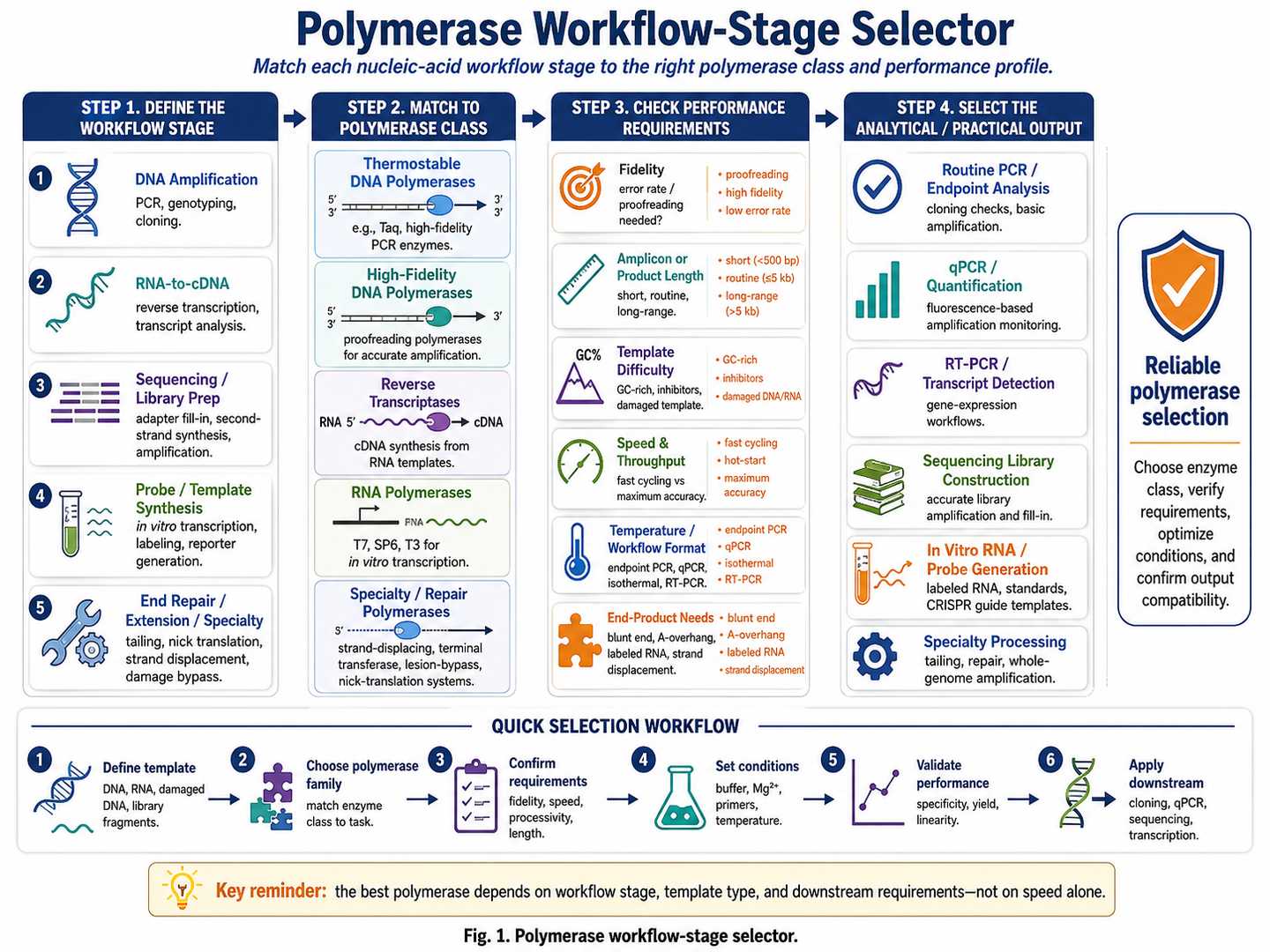 Fig 1. Polymerase workflow-stage selector.
(Creative Enzymes Diagnostic)
Compare candidates with the intended primers, template, buffer, detection chemistry, and thermal or isothermal profile. Yield alone does not establish specificity or quantitative performance.
| Selection factor | How to evaluate it | Why it matters |
|---|---|---|
| Synthesis mode | Define PCR, isothermal amplification, primer extension, end repair, labeling, or transcription. | Each mode requires a different balance of thermostability, displacement, exonuclease activity, and promoter or primer recognition. |
| Template and product | Specify nucleic-acid type, GC content, structure, length, copy number, and acceptable by-products. | Template complexity changes extension efficiency, pausing, and nonspecific synthesis. |
| Fidelity and exonuclease profile | Measure errors and confirm 3′→5′ or 5′→3′ exonuclease activities against the assay design. | Exonuclease functions can improve fidelity or damage primers, probes, and intended termini. |
| Specificity and background | Use no-template controls, off-target templates, primer-dimer analysis, and multiplex panels. | Nonspecific products can consume reagents and generate false fluorescence or downstream reads. |
| Matrix tolerance | Challenge inhibitors and representative extraction or direct-amplification matrices. | Salts, heme, anticoagulants, detergents, and sample-preparation residues can suppress synthesis. |
| Formulation and partners | Test magnesium, salts, dNTPs, enhancers, dyes, probes, accessory proteins, and dry-format recovery together. | The polymerase and formulation operate as one system; changing either can alter sensitivity and specificity. |
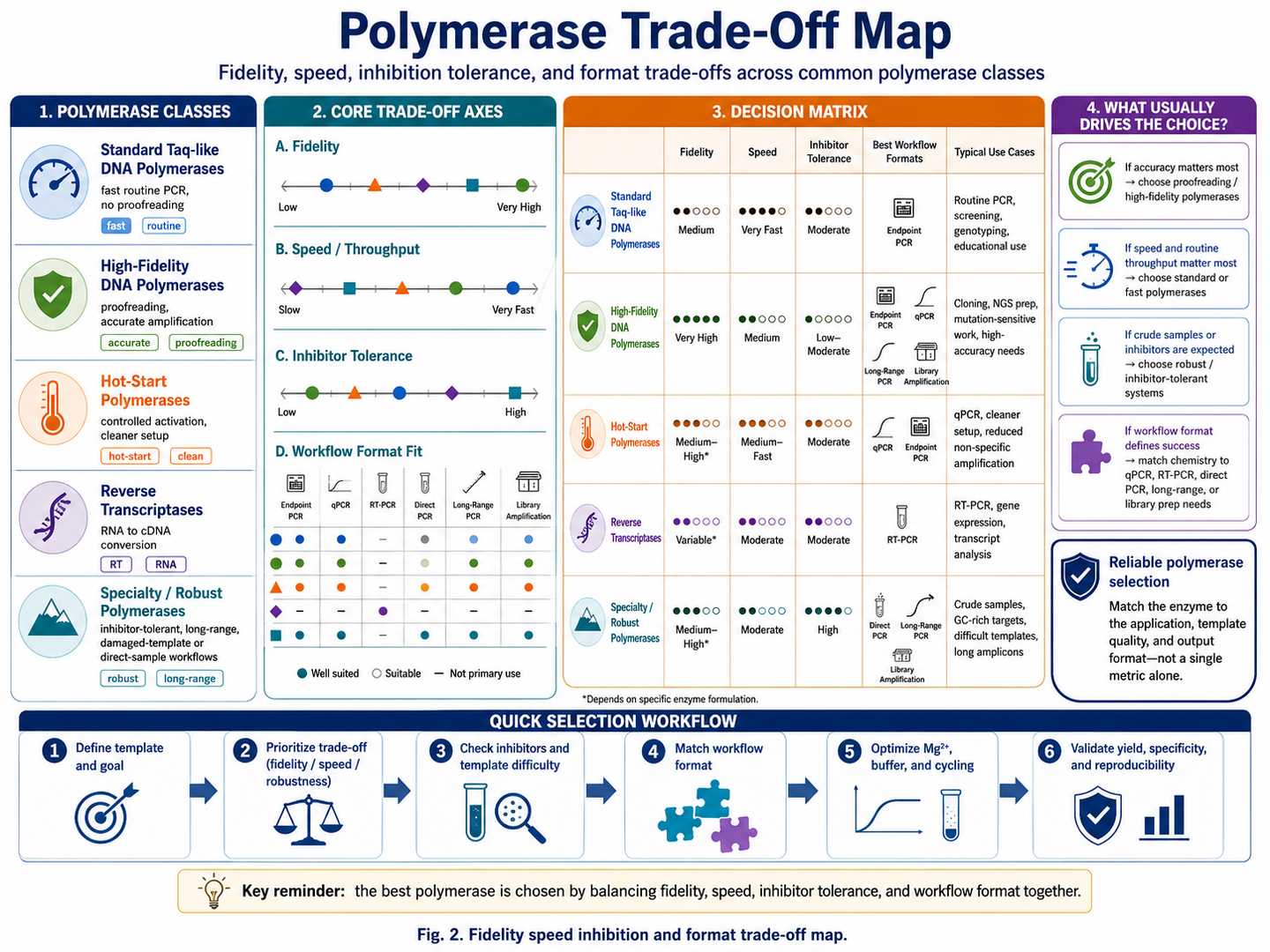 Fig 2. Fidelity speed inhibition and format trade-off map.
(Creative Enzymes Diagnostic)
Creative Enzymes supplies DNA and RNA polymerases for amplification, nucleic-acid synthesis, end processing, and molecular reagent development. Select a product name to review its available information.
| Product | Catalog | EC number | Source | Activity |
|---|---|---|---|---|
| DNA Polymerase I Large (Klenow) Fragment | POL-001 | 5 U/μL | ||
| T4 DNA Polymerase | POL-002 | 3 U/μL | ||
| Pfu DNA Polymerase | POL-003 | Pyrococcus furiosus | 5 U/μL | |
| phi29 DNA Polymerase | POL-005 | Bacillus subtilis phage phi29 (Φ29) | 10 U/μL | |
| Advanced Hotstart Taq DNA Polymerase | POL-006 | 20 U/μL | ||
| T7 RNA Polymerase | DIA-577 |
Activity values use product-specific assay definitions. Review the stated method and test conditions before comparing unit values across materials.
Qualification should measure the output that matters to the method: specific amplification, quantitative consistency, product integrity, or transcript quality. Total nucleic-acid yield is only one part of that assessment.
Set template range, amplicon or transcript properties, reaction time, temperature profile, and acceptance criteria.
Balance polymerase, primers, dNTPs, magnesium, additives, and detection reagents using the intended assay design.
Test low-copy targets, off-targets, no-template controls, multiplex panels, and representative sample matrices.
Define incoming activity, functional release testing, formulation, storage, lot bridging, and change notification.
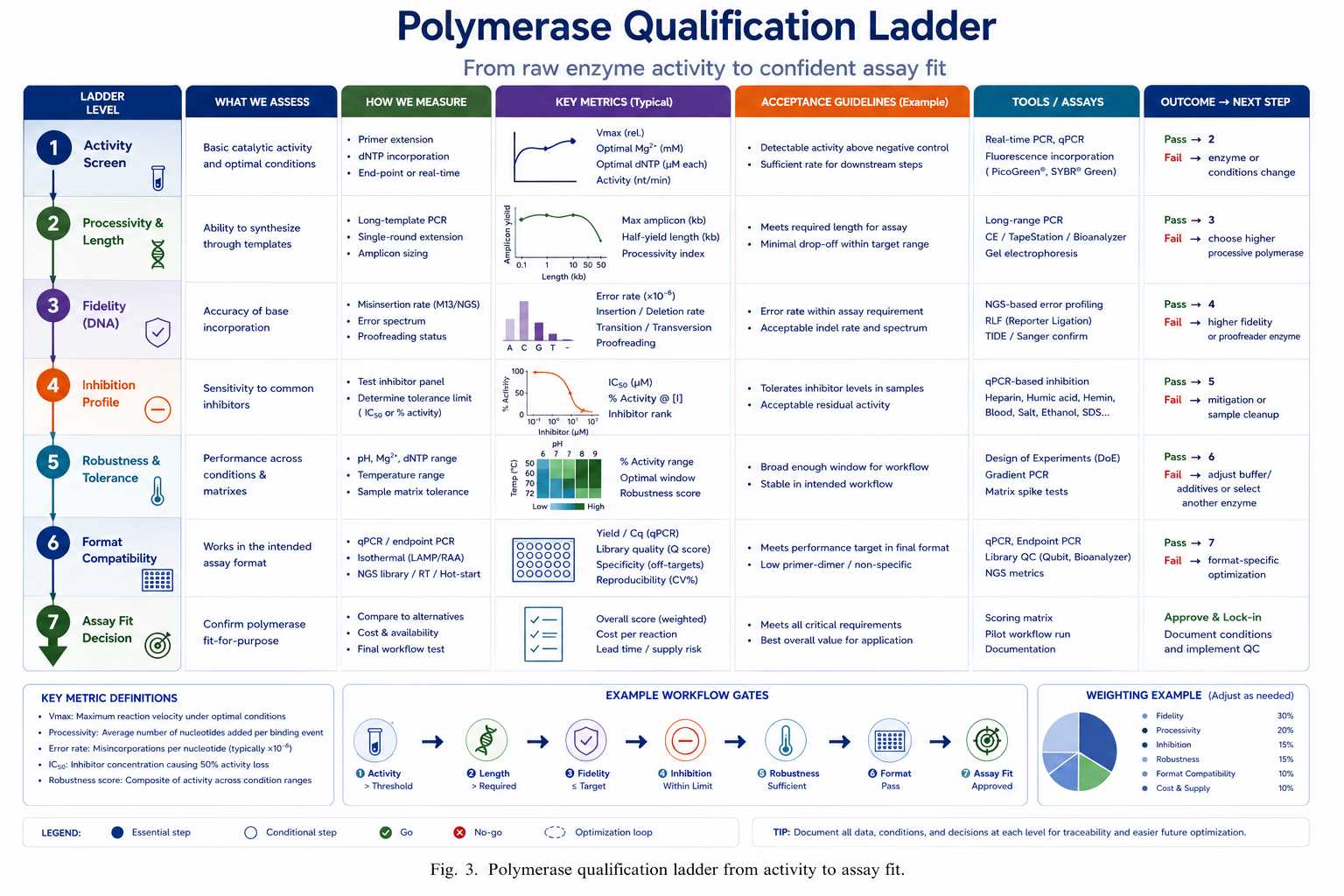 Fig 3. Polymerase qualification ladder from activity to assay fit.
(Creative Enzymes Diagnostic)
Provide the workflow, template type and range, primers or promoter, target length, temperature profile, fidelity and displacement requirements, sample matrix, detection chemistry, format, scale, and documentation needs.
Specificity, extension rate, processivity, fidelity, inhibitor tolerance, hot-start behavior, and compatibility with primers, probes, dyes, and cycling conditions all matter.
It is useful when sequence accuracy is important. The 3′→5′ exonuclease activity must also be compatible with primer-end modifications and assay design.
It can synthesize DNA while displacing a downstream strand, which enables several isothermal and rolling-circle amplification methods.
They reveal primer-dimer formation, contaminating template, and nonspecific amplification that can generate signal without the intended target.
Sometimes partially, but excess enzyme can alter specificity and cost. Matrix treatment, buffer design, and inhibitor-tolerant chemistry should be evaluated together.
Use the same complete assay across target levels, matrices, controls, and storage conditions, with predefined acceptance criteria for signal, specificity, and precision.
These sources support the scientific classification and technical selection criteria. Product specifications must be confirmed in current Creative Enzymes documentation.