Background
Horseradish peroxidase (HRP) remains the most widely adopted reporter enzyme in immunoassay development, dominating the diagnostic landscape for over four decades. Its small size (ca. 44 kDa), high turnover number, broad substrate compatibility, and the ability to generate chromogenic, chemiluminescent, or fluorogenic signals make it uniquely versatile across detection platforms. Unlike larger reporter proteins, HRP-conjugated antibodies exhibit minimal steric hindrance, preserving antigen-binding affinity while delivering robust signal amplification. The enzyme's stability under routine assay conditions, cost-effective production from horseradish roots, and well-established conjugation chemistries further cement its position as the gold standard for enzyme-linked detection systems.
However, the performance of an HRP conjugate is only as good as the chemistry used to assemble it. Suboptimal labeling ratios, random cross-linking, and inadequate purification can compromise assay sensitivity, increase background, and introduce lot-to-lot variability that undermines diagnostic reliability. Creative Enzymes Diagnostic offers a comprehensive HRP Conjugation Service that combines classical and next-generation coupling chemistries with rigorous quality characterization to deliver conjugates with precisely defined labeling ratios, preserved binding activity, and batch-to-batch consistency.
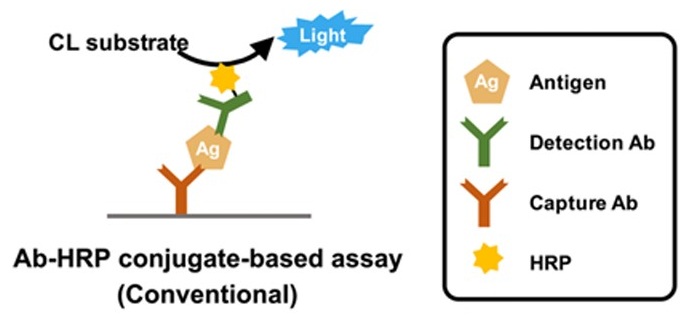 Figure 1. HRP conjugation strategies for antibody labeling in diagnostic immunoassays. (Adapted from Han and Kim, 2019)
HRP Conjugation Technologies
We employ a portfolio of conjugation chemistries, each selected based on the target antibody or antigen characteristics, the intended assay format, and the client's performance specifications. Our expertise spans traditional random-labeling methods and advanced site-specific approaches that yield homogeneous, well-defined conjugates.
Periodate Oxidation Method
- Oxidation of HRP carbohydrate moieties with sodium periodate to generate reactive aldehyde groups on the enzyme surface, preserving the protein core and enzymatic activity
- Schiff base formation between aldehyde-activated HRP and primary amines (lysine residues) on the antibody, followed by reductive amination with sodium cyanoborohydride to form stable secondary amine linkages
- Optimization of periodate concentration and oxidation time to balance activation efficiency against over-oxidation that can inactivate the heme prosthetic group or destabilize the enzyme fold
- Ideal for IgG and other proteins with accessible surface lysines; typically yields conjugates with 2–4 HRP molecules per antibody, suitable for high-sensitivity ELISA and Western blot applications
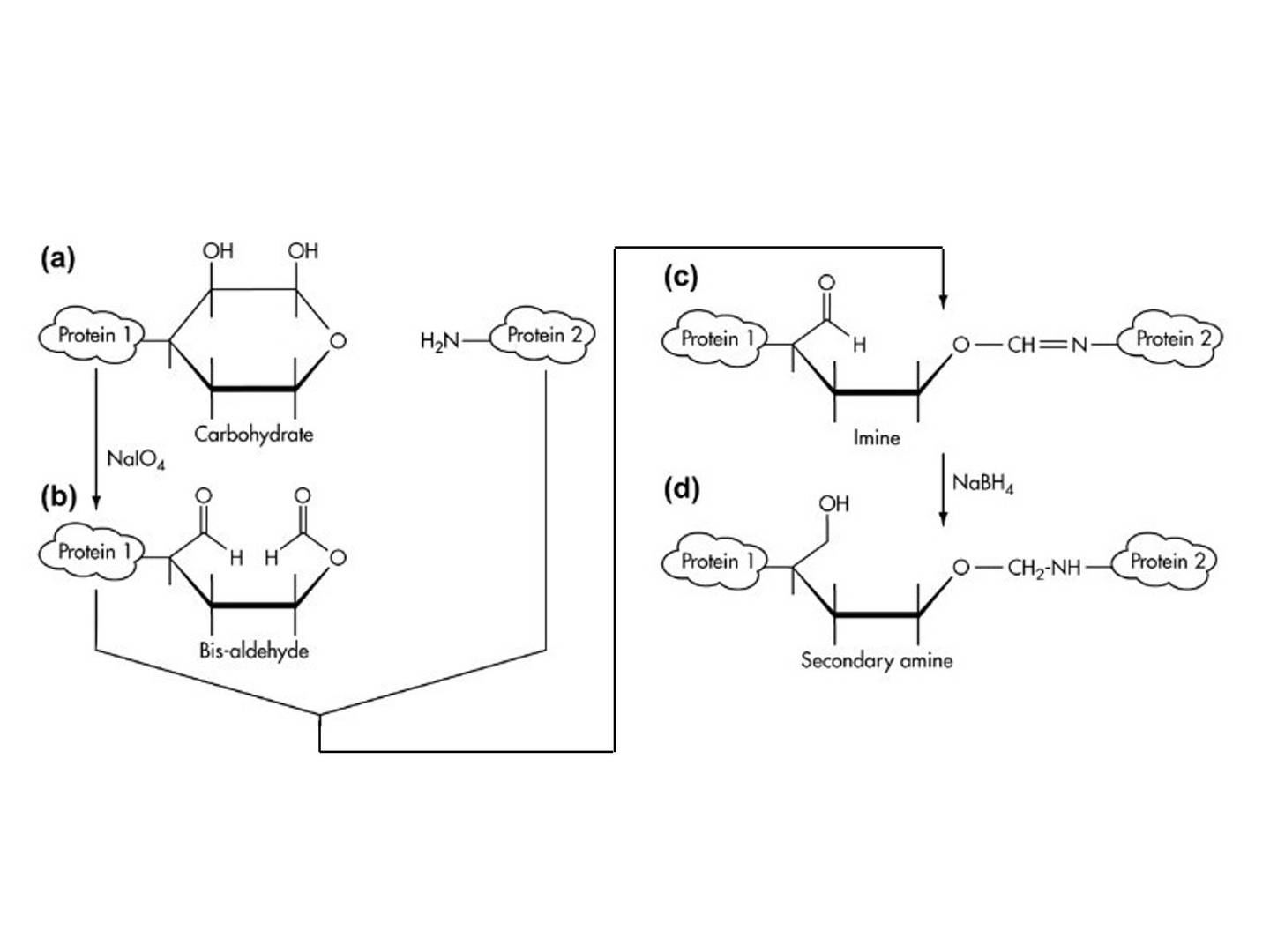 Figure 2. Periodate coupling: the carbohydrate group of one protein (a), shown in simplified form, contains a vicinal diol group; this is oxidized by periodate to yield a bis-aldehyde (b), which couples with the amine group of a second protein to form an imine link (c). This is frequently stabilized by reduction to a secondary amine (d). (Adapted from Dent, 2013)
Maleimide Coupling
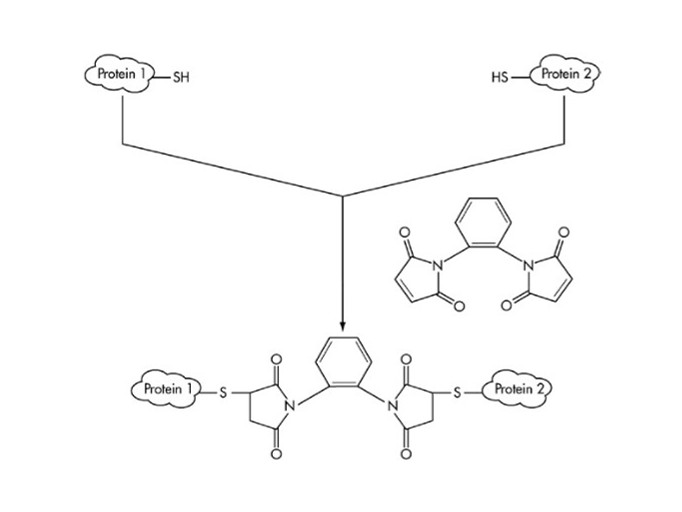 Figure 3. Bismaleimide reagents can be used for homobifunctional coupling of protein thiols. (Dent, 2013)
- Introduction of sulfhydryl groups onto HRP using heterobifunctional cross-linkers (e.g., SATA, Traut's reagent) or reduction of native disulfides, followed by reaction with maleimide-activated antibodies
- Alternatively, thiolation of antibodies and coupling to maleimide-activated HRP, enabling directional conjugation through hinge-region cysteines for improved consistency
- Controlled stoichiometry that limits the number of reactive thiols per antibody, reducing poly-conjugate formation and improving the homogeneity of the final product
- Particularly effective for Fab' and F(ab')2 fragments, where hinge thiols provide predictable, single-point attachment without interfering with antigen-binding paratopes
Amine Coupling Chemistry
- Zero-length cross-linking with EDC/NHS chemistry to form amide bonds between carboxyl groups on HRP (aspartate/glutamate residues) and primary amines on the antibody, or vice versa
- Use of homobifunctional (glutaraldehyde, DSS) or heterobifunctional (Sulfo-SMCC, GMBS) cross-linkers with defined spacer arm lengths to control the distance between enzyme and binding protein
- Careful optimization of cross-linker-to-protein ratios to minimize intermolecular aggregation and intramolecular cross-linking that can lead to activity loss and increased background
- Quenching of unreacted cross-linker and removal of free HRP and antibody by size-exclusion chromatography or affinity purification to ensure high purity
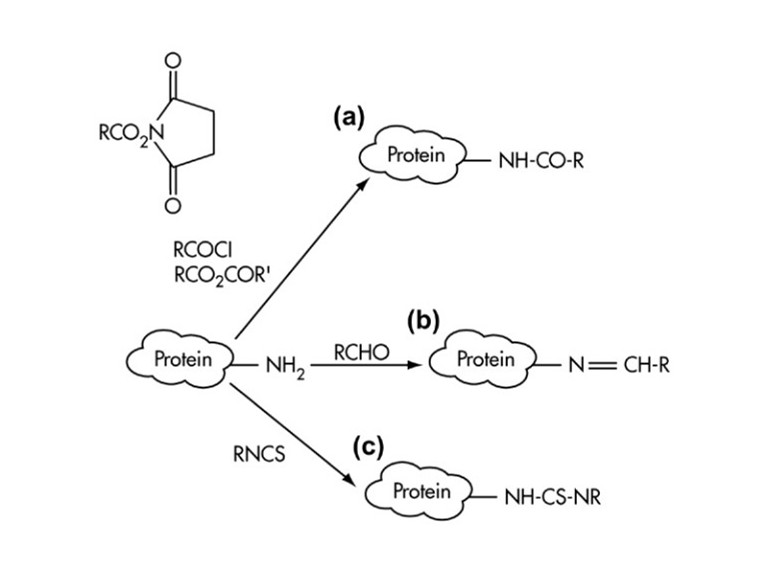 Figure 4. Some useful reactions of protein amines: (a) with an activated carboxyl derivative to form an amide; (b) with an aldehyde to form an imine, and (c) with an isothiocyanate to form a thiourea. (Dent, 2013)
Site-Specific Conjugation
- Enzymatic introduction of unique reactive handles (e.g., sortase-mediated ligation, transglutaminase labeling, or incorporation of unnatural amino acids with bioorthogonal reactivity) at defined positions on the antibody
- Genetic fusion of HRP to antibody Fc or light-chain C-termini via recombinant expression, yielding monodisperse 1:1 enzyme-to-antibody ratios with preserved binding and catalytic function
- Click chemistry (strain-promoted azide-alkyne cycloaddition, tetrazine ligation) for bioorthogonal, high-efficiency conjugation under mild aqueous conditions without interfering with native protein structure
- Delivery of highly homogeneous conjugate populations with defined stoichiometry, critical for quantitative assays, calibration standards, and regulatory-grade diagnostic reagents where batch consistency is paramount
Comparison of HRP Conjugation Technologies
| Technology |
Specificity |
Activity Retention |
Homogeneity |
Complexity |
Typical Applications |
| Periodate oxidation |
Medium |
High |
Medium |
Low |
ELISA, IHC, Western blot |
| Glutaraldehyde |
Low |
Medium |
Low |
Very low |
General research |
| EDC/NHS |
Low |
Medium |
Medium |
Low |
Protein conjugation |
| Maleimide-thiol |
High |
High |
High |
Moderate |
Diagnostic reagents |
| SMCC |
High |
High |
High |
Moderate |
Antibody labeling |
| Click chemistry |
Very high |
Very high |
Very high |
High |
Advanced diagnostics |
| Enzymatic conjugation |
Very high |
Very high |
Excellent |
High |
Site-specific conjugates |
| Streptavidin-biotin |
Non-covalent |
Excellent |
High |
Moderate |
Signal amplification, ELISA |
Conjugate Optimization
Beyond coupling chemistry, the functional performance of an HRP conjugate depends on optimization of labeling density, preservation of both enzymatic and binding activities, and formulation stability. Our optimization workflow addresses each parameter systematically.
Labeling Ratio Optimization
- Systematic screening of HRP-to-antibody molar ratios (typically 1:1 to 8:1) to identify the optimal degree of labeling (DOL) that maximizes signal output without causing aggregation or steric blocking of the antigen-binding site
- Assessment of conjugate hydrodynamic radius by dynamic light scattering (DLS) to detect aggregation induced by excessive cross-linking, with rejection of batches showing polydispersity index (PDI) > 0.2
- Correlation of DOL with assay signal-to-background ratio across multiple antigen concentrations to empirically determine the labeling ratio that delivers the best analytical performance for the specific assay format
Activity Preservation
- Kinetic characterization of HRP activity post-conjugation (kcat, KM for TMB, ABTS, and luminol substrates) to confirm that coupling chemistry has not compromised the enzyme active site or heme accessibility
- Antigen-binding validation by surface plasmon resonance (SPR) or ELISA titration to quantify any loss of affinity (KD shift) resulting from modification of residues near the complementarity-determining regions (CDRs)
- Selection of coupling strategies that avoid lysines within or adjacent to CDRs, or use of site-specific approaches that direct conjugation to the Fc region, preserving paratope integrity
Conjugate Stability
- Formulation screening with stabilizers (BSA, trehalose, glycerol, proprietary excipients) to prevent conjugate aggregation, precipitation, or activity loss during storage at 4°C or −20°C
- Accelerated stress testing (37°C, 45°C) with periodic activity and binding assessment to predict real-time shelf-life and identify optimal buffer compositions (pH, ionic strength, preservative compatibility)
- Evaluation of freeze-thaw stability and resistance to repeated pipetting cycles to ensure robust performance under routine laboratory and automated platform handling conditions
Purification Strategy
- Size-exclusion chromatography (SEC) to remove unconjugated HRP, free antibody, and high-molecular-weight aggregates, with fraction collection guided by UV/Vis absorbance at 403 nm (Soret band) and 280 nm
- Affinity purification (Protein A/G capture) to isolate antibody-containing species, followed by elution and buffer exchange into the client's specified formulation buffer
- Anion-exchange or hydrophobic interaction chromatography for high-resolution separation of conjugates with different DOL values, enabling delivery of narrowly defined subpopulations when required
Quality Characterization
Every HRP conjugate batch undergoes a comprehensive analytical characterization protocol to verify that enzymatic activity, binding function, labeling stoichiometry, and physicochemical properties meet predefined release criteria.
HRP Activity
- Spectrophotometric enzyme activity assay using TMB or ABTS substrate with hydrogen peroxide; initial reaction velocity measured at 450 nm or 405 nm to calculate specific activity (U/mg protein)
- Comparison of post-conjugation specific activity against unconjugated HRP reference standard to quantify the percentage of active enzyme retained after coupling chemistry
- Chemiluminescent activity assessment with luminol/enhancer system for conjugates intended for high-sensitivity CLIA applications, measuring relative light units (RLU) per microgram of conjugate
Binding Activity
- Direct ELISA titration against immobilized antigen to determine the effective concentration (EC50) and dynamic range of the conjugate, confirming that antibody affinity is preserved within specification limits
- Competitive binding assay or sandwich ELISA format validation to assess conjugate performance in the intended assay architecture, including hook effect evaluation and cross-reactivity screening
- Flow cytometry or immunohistochemistry staining on positive-control tissues or cell lines to verify binding specificity and signal localization for cell-based and tissue-based applications
Degree of Labeling
- UV/Vis spectrophotometric determination of DOL using the ratio of HRP absorbance at 403 nm (Soret band, ε = 102,000 M−1cm−1) to antibody absorbance at 280 nm, corrected for HRP contribution at 280 nm
- MALDI-TOF mass spectrometry or native mass spectrometry for site-specific conjugates to confirm exact molecular weight and 1:1 stoichiometry with mass accuracy within ±0.01%
- SDS-PAGE with Coomassie and TMB staining to visualize conjugate bands and estimate HRP-to-antibody ratios by band intensity correlation with known standards
Batch Consistency
- Release testing of every production lot against a qualified reference standard, with acceptance criteria for activity, binding, DOL, purity (≥95% by SEC-HPLC), and endotoxin level (≤1 EU/mg or client-specified)
- Coefficient of variation (CV) monitoring across three or more consecutive lots for critical parameters (activity, EC50, DOL) to demonstrate manufacturing reproducibility
- Certificate of Analysis (CoA) provided with each batch, documenting all test results, specifications, and traceability information for regulatory and quality audit requirements
Applications
Our HRP conjugates are formulated and validated for optimal performance across the major immunoassay platforms used in clinical diagnostics, research, and biopharmaceutical quality control.
- ELISA: HRP-conjugated detection antibodies for sandwich, competitive, and indirect ELISA formats. Optimized for high signal-to-background ratios, broad dynamic range, and compatibility with TMB, ABTS, OPD, and chemiluminescent substrates. Suitable for quantitative cytokine profiling, infectious disease serology, and therapeutic drug monitoring.
- Western Blot: Secondary antibody-HRP conjugates for chemiluminescent (ECL) and chromogenic detection of target proteins in cell lysates and tissue homogenates. Low-background formulations with minimal cross-reactivity to immunoglobulins from common host species (mouse, rabbit, goat, rat).
- IHC: HRP-conjugated primary and secondary antibodies for immunohistochemical staining of formalin-fixed, paraffin-embedded (FFPE) and frozen tissue sections. Compatible with DAB, AEC, and permanent red chromogens, with formulations optimized for antigen retrieval conditions and tissue autofluorescence minimization.
- CLIA: High-specific-activity HRP conjugates for chemiluminescence immunoassay platforms, delivering the low detection limits and wide dynamic range required for high-sensitivity cardiac troponin, thyroid hormone, tumor marker, and infectious disease panels. Validated for automated analyzer integration.
FAQs
Q1. What is the typical degree of labeling (DOL) for your standard HRP-antibody conjugates?
A1. For random conjugation methods (periodate oxidation, amine coupling), the typical DOL ranges from 2 to 4 HRP molecules per IgG antibody. This ratio balances signal intensity with preserved binding affinity and colloidal stability. For site-specific conjugates, we typically deliver a defined 1:1 stoichiometry. The optimal DOL is empirically determined based on the assay format and sensitivity requirements, and can be customized during project scoping.
Q2. Will conjugation affect my antibody's antigen-binding affinity?
A2. Our conjugation protocols are designed to minimize affinity loss. By avoiding modification of complementarity-determining region (CDR) residues and optimizing cross-linker chemistry, we typically preserve >90% of native binding affinity as measured by SPR or ELISA. Site-specific conjugation to the Fc region eliminates paratope interference entirely. We provide binding activity data for every batch to confirm that affinity remains within specification.
Q3. Can you conjugate HRP to non-antibody proteins, peptides, or small molecules?
A3. Yes. Our conjugation chemistries are applicable to any macromolecule or hapten containing suitable reactive groups (amines, thiols, carboxyls, or engineered handles). We have successfully conjugated HRP to streptavidin, protein A/G, lectins, aptamers, peptides, and small-molecule haptens. The chemistry is adapted based on the target molecule's size, solubility, and functional group availability.
Q4. What substrates are compatible with your HRP conjugates?
A4. Our HRP conjugates are active with all standard HRP substrates, including chromogenic substrates (TMB, ABTS, OPD, 4-CN), chemiluminescent substrates (luminol/enhancer systems, acridan esters), and fluorogenic substrates (Amplex Red, tyramide signal amplification reagents). We can also validate conjugate performance with client-proprietary substrate formulations upon request.
Q5. What is the typical shelf-life of your HRP conjugates?
A5. When stored at −20°C in our standard stabilization buffer, HRP conjugates typically retain >90% activity for 24 months. At 4°C, shelf-life is generally 12 months. Lyophilized formulations for ambient-temperature shipping and storage are available upon request, with validated stability of 6–12 months at 25°C depending on the conjugate and excipient composition.
Q6. Do you offer GMP-compatible or ISO 13485 manufacturing for diagnostic-grade conjugates?
A6. Yes. We manufacture HRP conjugates under ISO 13485-certified quality management systems with full batch records, change control, and supplier qualification. Our processes can be adapted to meet GMP requirements for IVD raw materials, including controlled environment processing, validated analytical methods, and comprehensive documentation packages suitable for regulatory submissions (510(k), IVDR technical documentation).
Creative Enzymes Diagnostic combines decades of conjugation expertise with rigorous analytical characterization to deliver HRP conjugates that meet the exacting standards of modern immunoassay development. Whether you need a single research-grade conjugate or a validated diagnostic reagent manufactured at scale, our HRP Conjugation Service provides the quality, consistency, and technical support your program demands.
Contact our business development team today to discuss your specific conjugation requirements!
References
- Han GR, Kim MG. Design, synthesis, and evaluation of gold nanoparticle-antibody-horseradish peroxidase conjugates for highly sensitive chemiluminescence immunoassay(hs-CLIA). Biotechnol Bioproc E. 2019;24(1):206-214. doi:10.1007/s12257-018-0369-3
- Dent AH. Conjugation methods. In: The Immunoassay Handbook. Elsevier; 2013:301-313. doi:10.1016/B978-0-08-097037-0.00020-8
Related Services

