
Developing a companion diagnostic is a coordinated program that connects a therapeutic hypothesis, biomarker, specimen, measurement system, interpretation rule, clinical evidence, manufacturing process, and regulatory strategy. The process is iterative: results from feasibility can change the biomarker definition, clinical samples can reveal matrix effects, and scale-up can expose reagent variability that was invisible in a small research batch.
This step-by-step guide follows a practical path from intended use through lifecycle management. The exact sequence and evidence requirements depend on the assay, therapy, jurisdiction, and development stage, but the framework helps teams identify dependencies early and avoid treating the diagnostic as a late addition to the drug program.
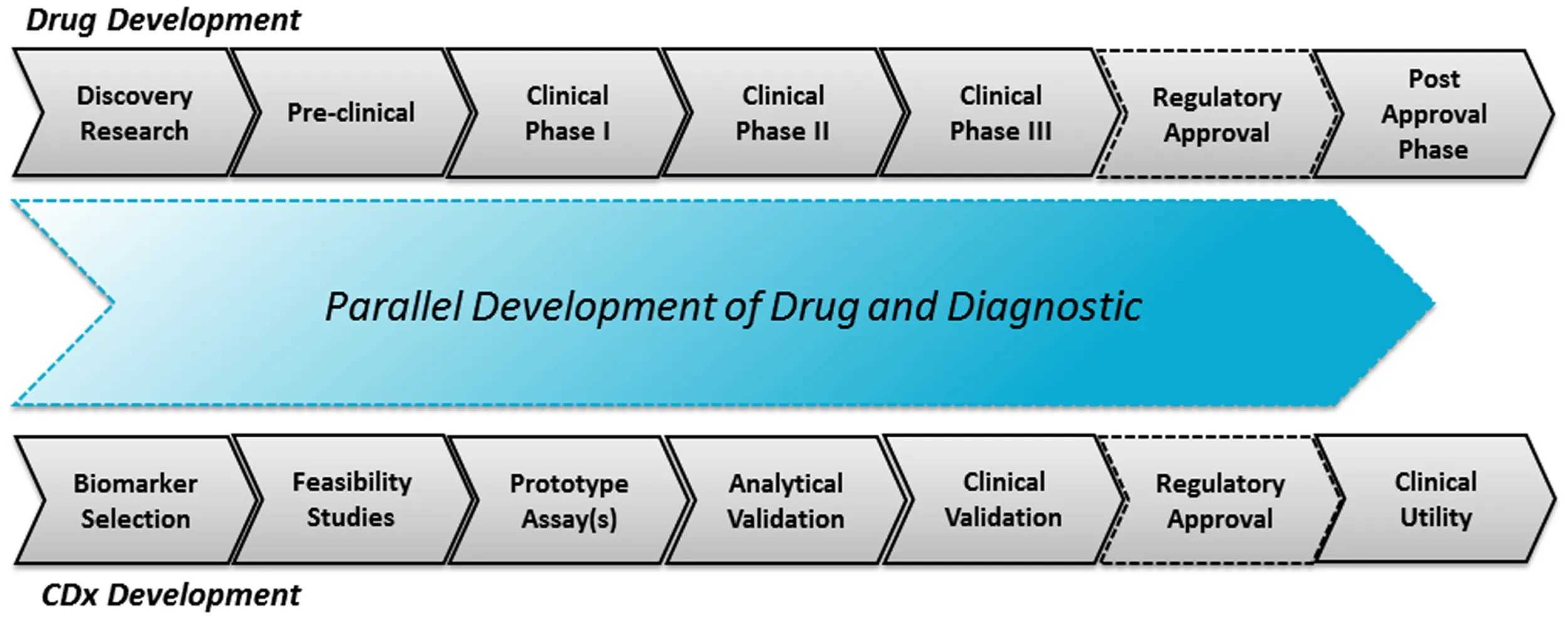
Figure 1. The drug–diagnostic co-development model. (Olsen and Jørgensen, 2014)
Start by describing what the assay result will do. Identify the corresponding therapy, patient population, disease context, specimen, analyte, technology, user, setting, and decision. Determine whether the result identifies likely benefit, increased risk of a serious adverse reaction, or an essential treatment-monitoring action. Avoid beginning with a broad claim such as “detects biomarker X” when the development program needs a specific therapy-linked classification.
A useful intended-use draft answers seven questions: who is tested, why they are tested, what specimen is used, what is measured, how it is measured, what result is reported, and how that result relates to the therapeutic product.
The draft establishes the basis for performance targets. A tissue-based mutation assay and a plasma-based low-frequency variant assay may measure the same gene but require different input controls, detection limits, and failure rules. Early alignment with drug–diagnostic co-development reduces the risk that the trial and assay answer different questions.
The biomarker must have a plausible and evidence-supported relationship to the therapeutic mechanism or risk. Teams review biological rationale, prevalence, heterogeneity, temporal stability, treatment effects, and specimen accessibility. They should distinguish prognostic information about disease outcome from predictive information about differential treatment response. A marker can have multiple roles, but each role needs a clear context.
Specimen strategy belongs here, not after assay design. Tissue fixation, ischemic time, decalcification, blood collection tubes, centrifugation, transport, freeze-thaw exposure, and storage duration can change analyte recovery. If paired specimens or longitudinal sampling will be needed, feasibility and logistics should be examined before the clinical protocol is fixed.
Technology selection translates the biomarker into a measurable output. qPCR may suit a focused variant or transcript; digital PCR can support low-level quantification; NGS can examine broader variant sets; immunoassays can measure soluble proteins; tissue-based methods can preserve spatial context. Choice depends on analyte biology, specimen input, multiplex needs, detection range, turnaround time, instrument availability, throughput, cost, and user environment.
| Question | Design implication |
|---|---|
| Is the target rare or heterogeneous? | Prioritize sampling adequacy, analytical sensitivity, and coverage. |
| Is the output binary, quantitative, or algorithmic? | Choose calibration, controls, and data analysis appropriate to the result. |
| Will several markers be combined? | Evaluate multiplex competition, normalization, missing data, and algorithm lock. |
| Where will testing occur? | Match instrument, operator steps, environmental tolerance, and turnaround time. |
| Can the platform be manufactured and supported? | Assess reagent supply, software control, serviceability, and transfer early. |
For enzyme-dependent systems, compare activity, specificity, purity, inhibitor tolerance, stability, and format compatibility. The CDx enzyme portfolio, PCR enzymes and premixes, and NGS enzymes and reagents provide starting points, but candidate components must be tested in the intended assay.
Feasibility asks whether the intended measurement is technically separable in representative samples. A minimal prototype defines sample input, preparation, reagents, reaction conditions, instrument settings, controls, raw-data processing, and preliminary interpretation. Experiments should address the largest risks rather than optimize every parameter at once.
Useful early materials include reference standards, cell lines, contrived matrices, residual clinical specimens, and orthogonally characterized samples. Each has limitations. Synthetic targets can establish reaction mechanics but may not reproduce fragmentation, extraction loss, or biological background. Clinical specimens provide realism but can be scarce and incompletely characterized. A planned material ladder uses simple standards for controlled development and increasingly representative samples for confirmation.
Can positives and negatives be distinguished at relevant concentrations or allele fractions?
Can users complete sample preparation and testing within practical time and handling limits?
Can critical enzymes, antibodies, controls, consumables, and instruments be sourced consistently?
Biomarker assay feasibility and prototype development can combine these questions before design lock.
Optimization establishes a practical performance margin. Variables can include primer and probe concentrations, enzyme loading, buffer composition, cofactors, incubation conditions, conjugation ratio, substrate, wash steps, membrane treatment, sample volume, mixing, and analysis thresholds. Designed experiments are useful when variables interact, but the responses must reflect the intended output.
Controls should identify where failure occurred. A nucleic acid workflow may use specimen adequacy, extraction, internal amplification, positive, and no-template controls. An immunoassay may use blanks, calibrators, low and high controls, and process checks. Control concentrations should include the vulnerable region; a very strong positive may not detect gradual reagent deterioration.
Optimization is complete when the assay meets predefined targets with acceptable robustness, not when the best experimental result has been observed. Services such as limit-of-detection and sensitivity optimization, interference resistance optimization, and signal system optimization address common limitations.
Freeze the design deliberately. Record reagent identities, lots, formulations, procedures, instrument settings, software versions, and acceptance criteria before formal validation begins.
The cutoff connects an analytical measurement to a reported category. It may be based on variant detection, concentration, percentage staining, composite score, or a multivariable algorithm. Cutoff development should consider biomarker distribution, analytical variation, specimen quality, and the clinical consequences of misclassification. Near-cutoff samples require repeated measurements because a single result does not characterize classification stability.
Analytical and clinical cutoff work are related but different. Analytical studies show how measurement uncertainty affects classification. Clinical studies evaluate how the classification relates to the therapeutic outcome or risk. The cutoff should not be chosen solely to maximize apparent separation in one dataset without controlling overfitting. Prespecification, independent validation, or justified statistical procedures protect credibility.
Algorithms require the same change control as physical reagents. Input definitions, normalization, quality flags, variant annotation sources, software code, and output rules must be versioned. Missing or low-quality inputs need predefined handling rather than discretionary interpretation.
Analytical validation demonstrates that the locked assay is fit for its intended measurement. The program depends on assay type but may cover accuracy or agreement, precision and reproducibility, analytical sensitivity, analytical specificity, reportable range, linearity, recovery, interference, cross-reactivity, carryover, contamination, specimen stability, reagent stability, instrument equivalence, and robustness.
| Study area | CDx-focused question | High-risk omission |
|---|---|---|
| Precision | Does classification remain consistent across sites, users, days, instruments and lots? | Testing only far-from-cutoff samples |
| Sensitivity | What detection probability is achieved at relevant low inputs? | Claiming a limit from the lowest observed positive alone |
| Specificity | Do related targets, wild-type background or nonspecific binding create false results? | Using an incomplete challenge panel |
| Interference | Do endogenous, exogenous or processing-related substances affect calls? | Testing unrealistic concentrations or one matrix |
| Stability | Does the complete kit retain decision-relevant performance over its lifecycle? | Relying only on bulk enzyme activity |
Acceptance criteria should be written before data review and tied to intended-use risk. Precision, linearity, and recovery evaluation and interference and matrix-effect evaluation can complement platform-specific studies.
Clinical evidence evaluates whether the assay-defined biomarker group supports the proposed therapeutic use. The diagnostic and therapeutic statistical plans should align on populations, endpoints, missing results, retesting, specimen exclusions, and handling of assay failures. Investigational testing must be controlled so that site and time do not become hidden sources of bias.
Clinical samples should be representative of intended use. Archived specimens may be valuable, but preservation, selection, missingness, and differences from current workflow require evaluation. If a clinical trial assay differs from the final commercial design, a bridging strategy may be needed to establish comparability. Discordant analysis can reveal whether differences arise from sampling, biology, reference method limitations, or assay error.
Clinical utility should not be inferred from analytical sensitivity alone. The relevant question is whether use of the result in the defined context supports a better-informed treatment decision. Therapeutic efficacy, safety, biomarker prevalence, alternative treatments, and consequences of incorrect classification all shape the evidence.
Transfer converts a development method into a controlled process that other operators and sites can reproduce. Documentation includes bills of material, procedures, reagent specifications, instrument settings, software versions, control rules, training, deviations, and acceptance criteria. Pilot lots should challenge scale-dependent factors such as mixing, hold time, fill accuracy, drying uniformity, conjugation, and packaging.
CDx assay transfer and manufacturability assessment helps locate steps that depend on tacit knowledge. Technical documentation support can organize the evidence connecting design inputs, risks, verification, validation, manufacturing, and labeling.
Development does not end at launch. Complaint trends, invalid rates, proficiency data, lot performance, instrument updates, new variants, scientific evidence, and therapeutic labeling changes may require review. Change control asks whether a proposed change can affect the claimed result and what bridging evidence is appropriate. Critical raw materials should have supply continuity and notification plans.
CDx assay development is an evidence chain. Intended use defines the treatment decision; biomarker and specimen strategy define what must be measured; technology and enzyme systems generate the result; analytical and clinical studies establish reliability and relevance; and manufacturing, documentation, and lifecycle controls preserve performance. Managing these elements as one coordinated program is more important than following a rigid linear sequence.
Creative Enzymes supports CDx programs from enzyme selection and biomarker feasibility through assay optimization, analytical evaluation, transfer, scale-up, and technical documentation.
