
Freeze-Thaw Stability of Diagnostic Enzymes provides an experimental guide to stresses created by ice formation, freeze concentration, cold surfaces, thawing gradients, repeated cycling, partial freezing, and post-thaw handling. It is written for enzyme suppliers, quality-control laboratories, reagent developers, sample-management teams, and manufacturing scientists. The central concern is studies that specify rate, temperature, container, fill, hold, thaw method, mixing, and endpoints instead of reporting only a cycle count.
For this topic, stability must be evaluated across why cycle count is insufficient, control container and fill, and investigate loss mechanistically. Enzyme-centered measurements explain only part of the system: cofactors, substrates, reporters, contact materials, packaging, specimens, timing, and user operations may follow different failure routes. A formulation with excellent fresh activity can therefore have a poor practical margin.
This resource is a development framework for enzyme suppliers, quality-control laboratories, reagent developers, sample-management teams, and manufacturing scientists; it is not a universal formula or an automatic storage claim. Study conditions, methods, limits, and conclusions must correspond to studies that specify rate, temperature, container, fill, hold, thaw method, mixing, and endpoints instead of reporting only a cycle count, using the intended reagent configuration and an explicitly defined assay and use environment.
Readers applying this guide may also use the following Creative Enzymes product and service categories as starting points for raw-material selection, formulation development, and verification:
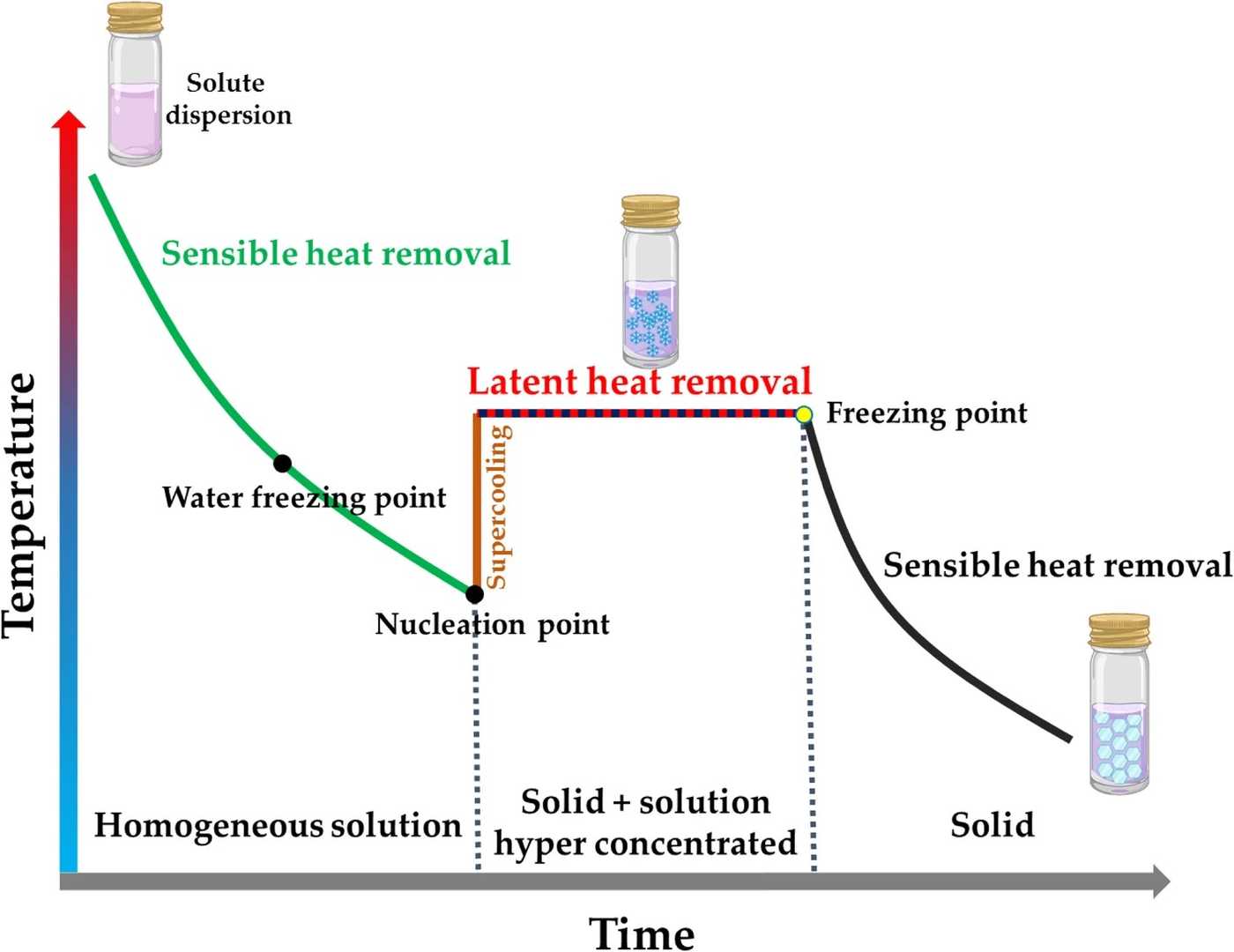 Figure 1. Typical freeze-thaw time-temperature curve. (Bernal-Chávez et al., 2023)
At this stage, Samples both labeled three cycles can experience different nucleation, cooling rates, minimum temperatures, frozen holds, thaw times, and mixing. A misleading result can arise because Slow freezing creates large crystals and extensive freeze concentration; rapid freezing changes interface area and gradients; partial freezing is highly variable. A defensible experiment should address the issue directly: Report the complete profile as a controlled process parameter.
Freeze-thaw evidence is meaningful only when thermal histories are reproducible. Place probes in representative fills, define complete thaw, restore concentration uniformity before sampling, and distinguish cycle damage from frozen-hold damage. Investigate particles or precipitation even when the average activity result remains acceptable.
The governing consideration is that As water crystallizes, enzyme and solutes concentrate in remaining liquid, changing local salt, pH, cofactor, surfactant, and preservative levels. The practical hazard is that Proteins may unfold or aggregate at ice interfaces, precipitates may form, and containers may promote nucleation or adsorption. The most useful confirmation is to Measure activity with turbidity, particles, aggregation, concentration recovery, or another structure-sensitive endpoint.
Freeze-thaw evidence is meaningful only when thermal histories are reproducible. Place probes in representative fills, define complete thaw, restore concentration uniformity before sampling, and distinguish cycle damage from frozen-hold damage. Investigate particles or precipitation even when the average activity result remains acceptable.
A robust approach recognizes that Material, wall thickness, treatment, headspace, fill volume, and orientation affect heat transfer and surface exposure. Development can fail when Small aliquots freeze rapidly but have high surface-to-volume ratios; bulk vessels thaw nonuniformly and create concentrated zones. To reduce that uncertainty, Study intended shipping, working, and process containers.
Freeze-thaw evidence is meaningful only when thermal histories are reproducible. Place probes in representative fills, define complete thaw, restore concentration uniformity before sampling, and distinguish cycle damage from frozen-hold damage. Investigate particles or precipitation even when the average activity result remains acceptable.
The process question is whether Room-temperature, refrigerated, water-bath, and controlled thawing create different gradients and exposure; vortexing can add foam and interface stress. One concern is that Testing an unmixed top layer can suggest loss or gain because solutes are nonuniform. The decision should be supported by this action: Define endpoint temperature, maximum time, mixing, inspection, and post-thaw hold.
Freeze-thaw evidence is meaningful only when thermal histories are reproducible. Place probes in representative fills, define complete thaw, restore concentration uniformity before sampling, and distinguish cycle damage from frozen-hold damage. Investigate particles or precipitation even when the average activity result remains acceptable.
The final design must account for the fact that A controlled single thaw, repeated aliquot use, frozen shipping, and accidental freezing of a refrigerated product require different protocols. The claim becomes vulnerable if The profile should represent the claimed or foreseeable event, including incomplete thaw and refreezing when plausible. The appropriate evidence is to Write separate acceptance rules for intended and accidental exposure.
Freeze-thaw evidence is meaningful only when thermal histories are reproducible. Place probes in representative fills, define complete thaw, restore concentration uniformity before sampling, and distinguish cycle damage from frozen-hold damage. Investigate particles or precipitation even when the average activity result remains acceptable.
The technical starting point is straightforward: Compare frozen hold without cycling, one long thaw, rapid cycles, surface-to-volume changes, and candidate protectants. The principal development risk is that If assay changes without activity loss, examine precipitated salts or substrates, cofactor integrity, matrix interaction, and concentration gradients. Evidence should therefore be collected deliberately: Use findings to improve formulation and handling instructions.
Freeze-thaw evidence is meaningful only when thermal histories are reproducible. Place probes in representative fills, define complete thaw, restore concentration uniformity before sampling, and distinguish cycle damage from frozen-hold damage. Investigate particles or precipitation even when the average activity result remains acceptable.
| Variable | Question to answer | Development implication |
|---|---|---|
| Cooling rate | How fast does the center freeze? | Monitor representative fills. |
| Minimum temperature | Is the sample fully frozen? | Distinguish partial freezing. |
| Frozen hold | Does duration contribute? | Separate hold from cycling. |
| Thaw rate | Are concentrated zones prolonged? | Standardize method. |
| Cycle definition | What constitutes one cycle? | Document boundaries. |
| Container | Does geometry change recovery? | Use intended vessels. |
| Headspace | Does surface exposure promote damage? | Bracket fills. |
| Mixing | How is uniformity restored? | Define adequate gentle mixing. |
| Aliquoting | Can single-use units prevent exposure? | Compare operational options. |
| Particles | Does aggregation precede activity loss? | Use sensitive methods. |
| Functional assay | Is final-system performance preserved? | Test complete reagent. |
| Instructions | How many cycles are permitted? | Base limits on a defined protocol. |
The matrix should be converted into a protocol with named methods, sample numbers, lots, controls, timepoints, and acceptance rules. Not every variable needs an independent full-factor study, but an omitted variable should be omitted because the risk is understood—not because it is difficult to measure.
A freeze-thaw statement should specify container, fill, freezing rate, minimum temperature, frozen hold, thaw method, mixing, and number of cycles. Without these details, another laboratory cannot reproduce the exposure. Retained mean activity should be interpreted alongside particles, precipitation, variability, and the complete diagnostic reaction.
Inspect variability as well as averages, because sporadic particles or nonuniform thawing may precede a clear mean activity decline. Trend direction can be informative before a specification is crossed, but method noise, sampling, and environmental records must be considered before assigning cause.
