
Smartphones are increasingly used as optical readers, user interfaces, analysis engines, data recorders, and communication gateways for field-deployable molecular diagnostics. At the same time, compact heaters, microfluidic cartridges, paper devices, isothermal amplification, and CRISPR reporters are moving more of the molecular workflow outside centralized laboratories.
The most important trend is not the phone camera alone. It is system integration: sample preparation, temperature control, reagent storage, image capture, calibration, result algorithms, connectivity, cybersecurity, and user instructions must operate as one controlled measurement procedure. A visually compelling prototype is not equivalent to a validated diagnostic device.
| Role | Function | Key limitation |
|---|---|---|
| Optical detector | Captures color, fluorescence, chemiluminescence, or lateral-flow signal | Camera sensor, lens, exposure, white balance, focus, and compression vary |
| Analysis engine | Segments reaction zones, subtracts background, applies thresholds, or classifies images | Algorithm drift, training-set bias, device dependence, and version control |
| User interface | Guides sample steps, timers, heater status, and invalid-result recovery | Language, literacy, screen size, interruptions, and accessibility |
| Data gateway | Stores and transmits results, metadata, quality controls, and geolocation where permitted | Connectivity, privacy, consent, cybersecurity, and data ownership |
| Instrument controller | Communicates with heater, fluorescence module, pump, or cartridge | Operating-system updates, pairing, battery, and hardware compatibility |
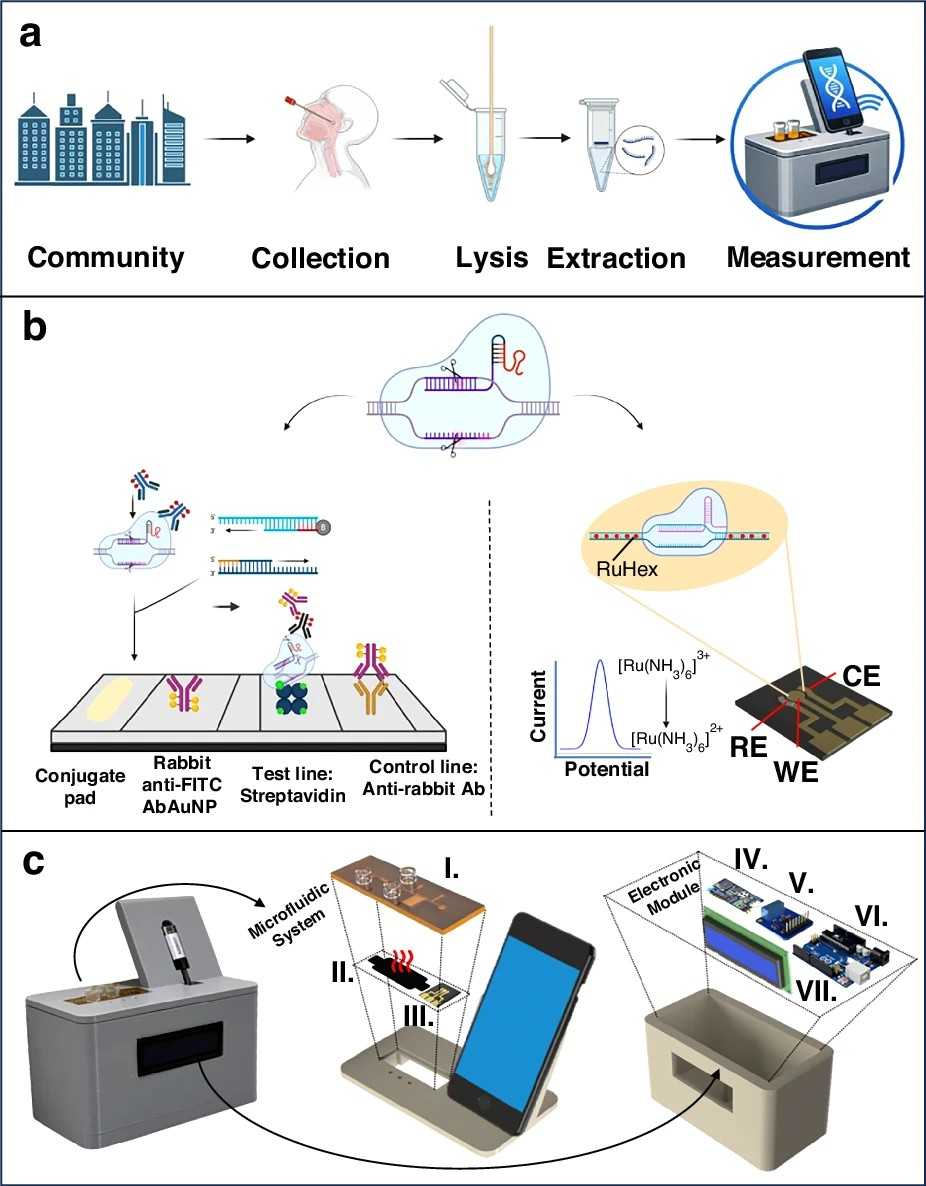 Figure 1. Schematic of testing workflow and system architecture. (Zhou et al., 2026)
Early concepts often photographed a color reaction under ambient light. Current development increasingly uses an enclosure, fixed distance, optical filters, reference colors, and controlled LEDs. This reduces variation from sunlight, room lighting, shadows, reflections, and camera angle.
Device-independent color measurement remains difficult because phones apply proprietary image processing. Raw image access, exposure lock, reference standards, and calibration transfer can improve consistency. The diagnostic claim should specify supported phone or reader configurations rather than assuming every camera is equivalent.
Machine learning and computer vision can identify reaction zones, classify fluorescence, or interpret lateral-flow lines. These tools may improve faint-signal consistency, but they can also learn lighting, device, batch, or background artifacts. Training and test sets should represent devices, users, lots, matrices, environments, and clinically relevant negatives.
An algorithm should detect invalid images, saturation, blur, misalignment, and missing controls before producing a result. Locked models and continuously updated models create different verification and change-control requirements. Performance must be assessed at the complete system level.
Portable devices increasingly combine an isothermal heater with fluorescence or color imaging. The phone may supply the interface and analysis while a dedicated module supplies consistent optics and temperature. This division reduces dependence on uncontrolled phone flash and ambient conditions.
Heater mapping, warm-up, lid temperature, condensation, battery state, and ambient temperature remain critical. Reaction time should begin from a defined thermal event, not simply when the user presses a software button.
Smartphone imaging can count fluorescent partitions or droplets, potentially supporting digital LAMP. Partitioning can provide concentration estimates and reduce dependence on bulk time-to-positive, but it introduces droplet generation, volume assignment, occupancy statistics, imaging depth, segmentation, and false-partition classification.
Quantitation requires traceable volume and calibration. A high count of bright objects is not sufficient if partition volume, merging, evaporation, or thresholding changes across devices.
Cas12 and Cas13 reporters can be read by compact fluorescence attachments, chemiluminescent cartridges, lateral flow, or colorimetric interfaces. Smartphone analysis can normalize reporter intensity and retain control images. Published studies demonstrate feasibility for infectious-disease and other targets.
The phone cannot correct biochemical false activation. Guide specificity, upstream amplification identity, reporter nuclease contamination, and negative-control behavior remain primary. Optical analysis should support—not replace—molecular controls.
Field systems are moving toward simplified lysis, integrated filtration, and closed cartridges. Sample preparation remains a major bottleneck because crude specimens introduce inhibitors and variable target release. The most promising systems co-design collection, lysis, amplification, and readout rather than attaching a reader to a clean-template assay.
Phone-guided timing and step verification can reduce user variation, but the consumable must prevent incorrect order, underfilling, cross-contamination, and leakage where possible.
A field diagnostic should produce and store a valid result when connectivity is absent if that matches intended use. Synchronization can occur later. Data architecture should define which information remains on the device, what is transmitted, how identity is protected, and how duplicate or delayed records are resolved.
Connectivity can support surveillance and quality monitoring, but geolocation and patient-linked data create privacy and consent obligations. Data minimization and role-based access are preferable to collecting every available phone sensor value.
| Variable | Possible effect | Control strategy |
|---|---|---|
| Camera model and operating system | Different color, noise, image processing, and app behavior | Supported-device list, calibration, representative verification |
| Exposure and white balance | Signal compression or apparent color shift | Locked acquisition or reference targets |
| Illumination and enclosure | Shadows, reflections, fluorescence variation | Fixed LEDs, optical filters, geometry and self-check |
| Reaction-zone positioning | Incorrect region measurement | Fiducials, automated alignment, invalid-image logic |
| Software update | Changed acquisition, analysis, communication, or compatibility | Version control, regression testing, controlled deployment |
Evaluation should extend beyond laboratory accuracy:
When smartphone software performs a medical-device function, applicable device-software requirements and regulatory policies may apply. The intended use, risk, device dependence, cybersecurity, human factors, and change process should be defined early. A general-purpose phone does not remove the developer's responsibility for the measurement system.
Algorithms trained on research images need independent validation. Result thresholds should be predefined and traceable to analytical and clinical evidence. If cloud processing is required, network failure and service availability become performance risks.
A published prototype may show analytical feasibility without demonstrating specimen preparation, clinical performance, shelf life, manufacturing consistency, or use by intended operators. When reviewing a new system, identify which steps were manual, which materials were purified, how many phone models were tested, whether controls were integrated, and whether the reported time includes sample preparation.
Useful trends are those that remove a verified bottleneck without creating a larger hidden dependency. A smartphone can reduce reader cost, but only if optical and software variation are controlled. A paper cartridge can simplify fluidics, but only if target recovery and reagent stability remain acceptable.
Academic prototypes commonly use manually prepared reagents, calibrated laboratory targets, a single phone model, and expert operators. Commercial translation must add reagent manufacturing, package stability, device tolerance, software distribution, technical support, quality controls, usability, service life, and post-market change management. These tasks can dominate the final schedule even when the core assay is already sensitive.
A field evaluation should report the complete time from sample collection to result, not only amplification time. Invalid and repeat rates, operator training, consumable failure, battery use, data loss, and environmental excursions are relevant outcomes. The comparator and discrepancy process should be predefined.
Likely developments include better standardized phone attachments, offline-first analysis, integrated dry reagents, sealed sample-to-answer cartridges, digital partition counting, and stronger linkage between molecular controls and software validity checks. CRISPR reporters may expand sequence logic, while improved extraction-free preparation may have greater practical impact than further reductions in amplification time.
Interoperability will remain important. Systems that depend on one discontinued phone, proprietary cloud service, or unavailable consumable can lose field utility despite strong analytical performance. Modular hardware, controlled calibration objects, exportable data, and documented update pathways can improve sustainability.
