
HDL cholesterol (HDL-C) and LDL cholesterol (LDL-C) assays estimate the amount of cholesterol associated with selected lipoprotein fractions. They do not directly measure lipoprotein particle number, particle size, apolipoprotein concentration, or the biological function of an individual particle population.
The cholesterol-detection cascade is well established, but fraction selectivity is method-dependent. A direct assay must suppress, remove, or delay the response of non-target lipoproteins while allowing cholesterol in the intended fraction to enter the enzymatic reaction.
Creative Enzymes supplies HDL-C and LDL-C assay kits together with cholesterol esterase, cholesterol oxidase, peroxidase, and development services for lipid-assay systems.
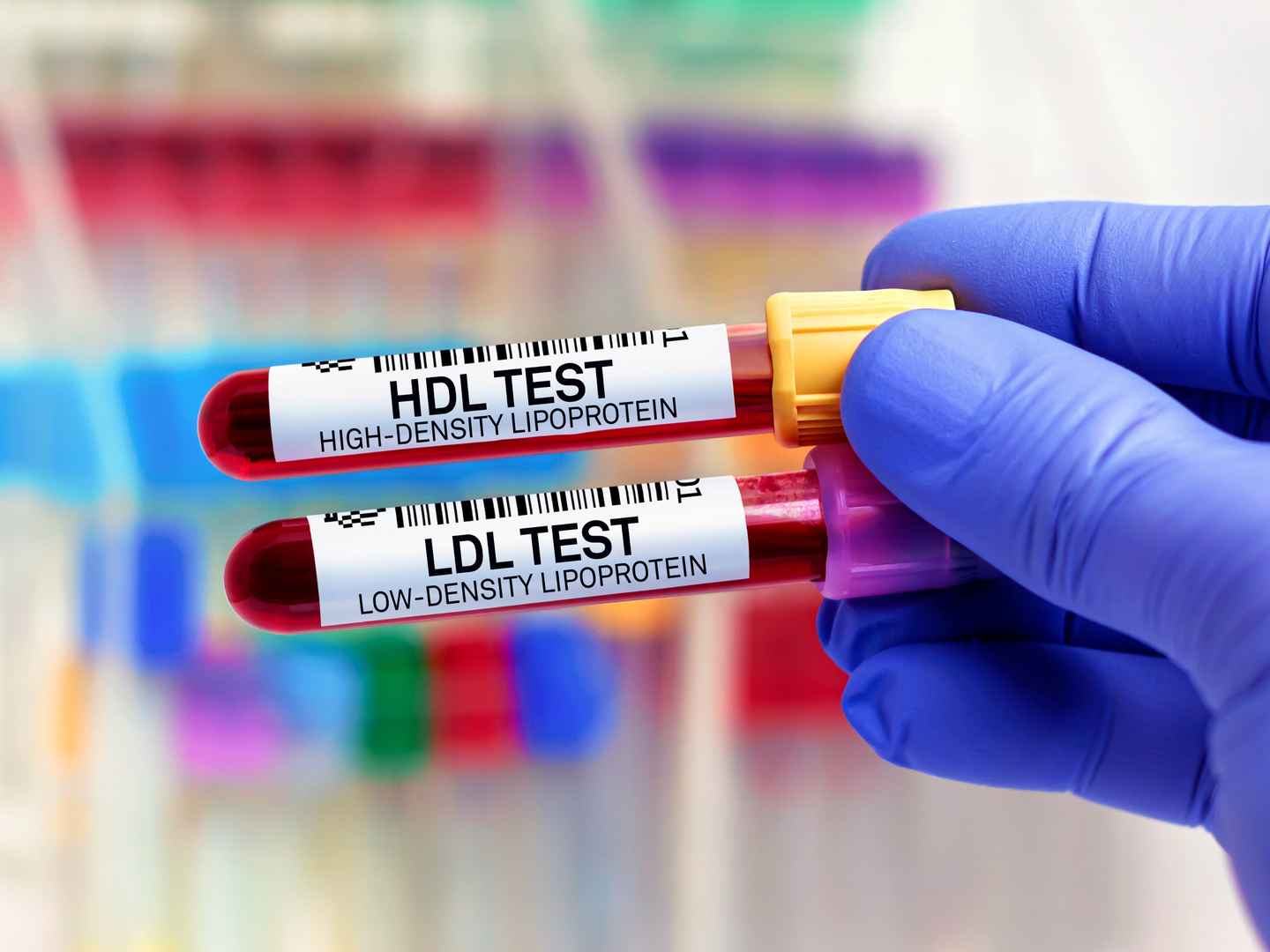
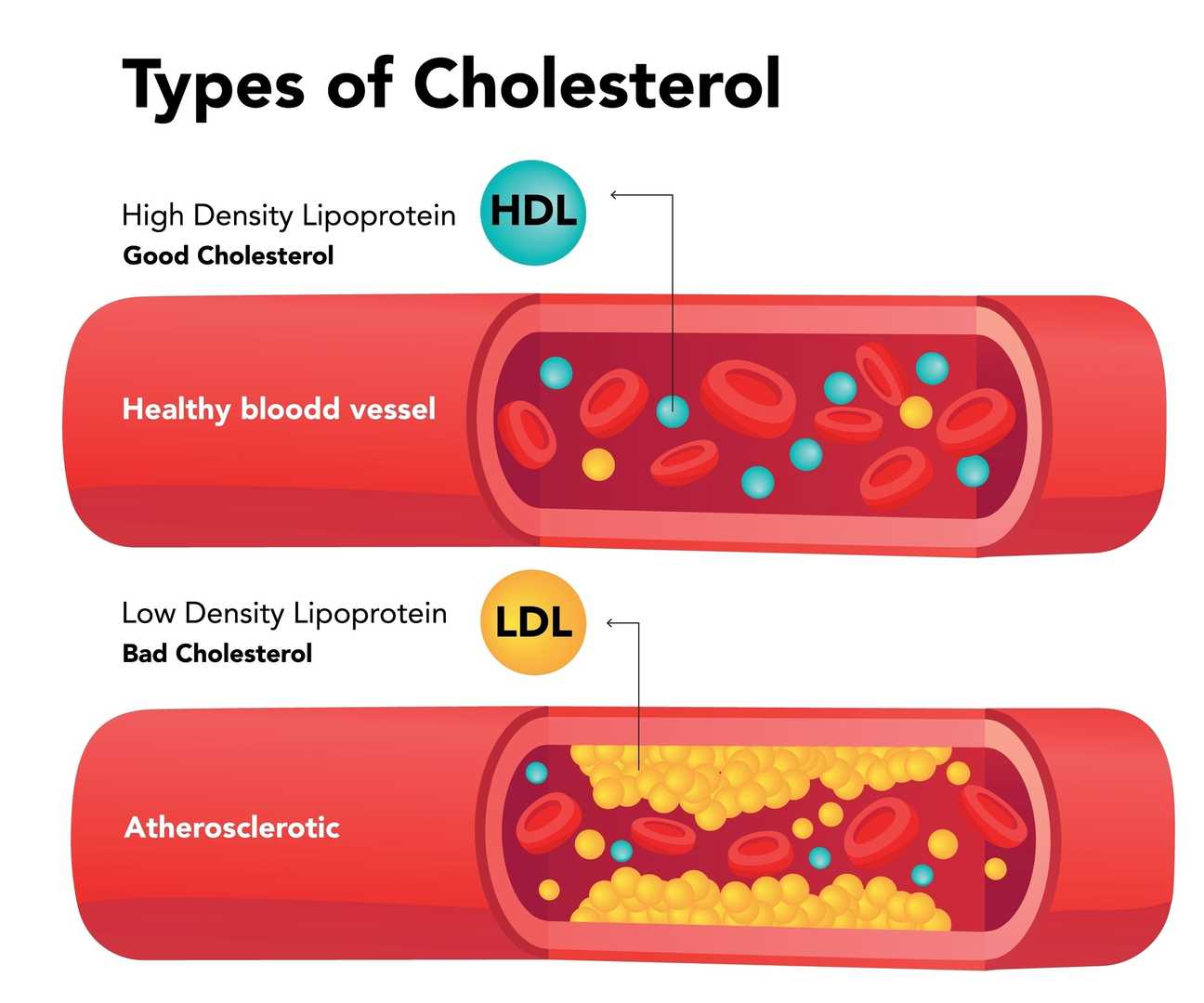
Because cholesterol is poorly soluble in water, it circulates within lipoprotein particles containing lipids and apolipoproteins. HDL and LDL are operational classes with distributions of size, density, composition, and surface properties rather than single uniform molecular species.
HDL-C and LDL-C report cholesterol mass associated with the fractions defined by a measurement procedure. These results are clinically useful components of a lipid profile, but they should not be described simply as “good” and “bad” cholesterol or treated as direct measures of particle function.
Cholesterol esterase and cholesterol oxidase can react with cholesterol from more than one lipoprotein class once the lipid is accessible. Selectivity must therefore be created before or during the enzymatic cascade by controlling which particles are separated, masked, protected, consumed, or selectively solubilized.
The method must be challenged with realistic mixtures, including triglyceride-rich lipoproteins and atypical lipoprotein distributions. Performance established with purified HDL or LDL alone does not fully predict behavior in patient specimens.
| Measurement Approach | What It Does | Key Limitations to Evaluate |
|---|---|---|
| Direct homogeneous HDL-C assay | Uses a selective reagent sequence so that HDL-associated cholesterol generates the reportable signal while non-HDL fractions are suppressed or separated functionally. | Incomplete exclusion of LDL, VLDL, chylomicron remnants, or other non-HDL particles; altered response in unusual lipoprotein distributions. |
| Direct homogeneous LDL-C assay | Protects or consumes non-LDL cholesterol before selectively exposing LDL-associated cholesterol to the detection cascade. | Cross-response from triglyceride-rich or remnant particles and incomplete masking of HDL-associated cholesterol. |
| Physical separation or precipitation | Separates selected lipoprotein fractions before cholesterol is measured in the retained or recovered phase. | Incomplete separation, recovery loss, turbidity, centrifugation variability, and workflow complexity. |
| Calculated LDL-C | Estimates LDL-C from other lipid measurements using a defined equation rather than measuring the LDL fraction directly. | Equation-specific assumptions, unit requirements, triglyceride effects, and population or specimen limitations. |
A direct LDL-C result and a calculated LDL-C result should not be assumed to be interchangeable across all specimens. Method comparison should include samples spanning the intended lipid distributions and measuring interval.
Once cholesterol in the target fraction has been made accessible, many colorimetric methods use three enzyme functions:
The observed color is downstream of both lipoprotein selection and cholesterol conversion. A result can therefore be biased by loss of fraction selectivity, incomplete ester hydrolysis, restricted cholesterol accessibility, insufficient oxidase activity, peroxide consumption, peroxidase inhibition, or chromogen interference.
Fraction-selective chemistry may use general classes of components such as antibodies, surfactants, polymers, charge-based modifiers, complexing agents, or selective enzyme timing. The appropriate mechanism depends on whether HDL-C or LDL-C is being measured and on the chosen reagent sequence.
The enzyme cascade must remain fast and complete under the same conditions that create lipoprotein selectivity. A surfactant or protective reagent that improves discrimination may inhibit cholesterol esterase, cholesterol oxidase, or peroxidase, so component screening should be performed in the complete system.
| Enzyme | Assay Function | Qualification Priorities |
|---|---|---|
| Cholesterol esterase EC 3.1.1.13 |
Hydrolyzes cholesteryl esters released from the target lipoprotein fraction. | Activity on relevant ester mixtures, surfactant tolerance, hydrolysis completeness, lipase side activity, and stability in the selective reagent. |
| Cholesterol oxidase EC 1.1.3.6 |
Oxidizes accessible free cholesterol and produces hydrogen peroxide for signal generation. | Cholesterol accessibility, detergent tolerance, peroxide yield, catalase contamination, kinetic capacity, and storage stability. |
| Peroxidase EC 1.11.1.7 |
Uses hydrogen peroxide to oxidize the selected chromogen system. | Chromogen turnover, resistance to inhibitors and reducing substances, blank rate, color stability, and compatibility with preservatives. |
Single-fraction experiments are useful for mechanism studies, but mixed-particle panels are needed to establish whether non-target cholesterol contributes to the final signal.
Interference may affect the chromogenic reaction, fraction selectivity, or both. A conventional dye-recovery experiment alone may not detect selective-response failure.
Aqueous cholesterol solutions do not reproduce the accessibility or selective behavior of cholesterol packaged within lipoprotein particles. Calibrators and controls should be evaluated for matrix properties, fraction assignment, commutability, stability, and response across reagent lots and analyzer applications.
| Evaluation Area | Representative Studies |
|---|---|
| Core analytical response | Precision, blank behavior, measuring interval, linearity, dilution recovery, analytical sensitivity, and carryover. |
| Fraction selectivity | Target recovery, non-target cross-response, mixed-lipoprotein challenges, and response across triglyceride concentrations. |
| Method comparison | Comparison with an appropriate reference or established measurement procedure using specimens representative of the intended population. |
| Interference and matrix | Hemolysis, icterus, lipemia, reducing substances, medications where relevant, anticoagulant compatibility, and specimen-type equivalence. |
| Stability and robustness | Real-time and accelerated stability, onboard stability, temperature sensitivity, reagent mixing, freeze-thaw stress, and lot comparison. |
| Product | Role |
|---|---|
| High-Density Lipoprotein Cholesterol (HDL-C) Assay Kit | A direct HDL-C assay kit listed with an antibody-separation method for serum or plasma testing. |
| Low-Density Lipoprotein Cholesterol (LDL-C) Assay Kit | A direct LDL-C assay kit listed with a protective-reagent method for serum or plasma testing. |
| L-Type Total Cholesterol Assay Kit | A related total cholesterol reagent system for lipid-panel development and method comparison. |
| Native Cholesterol Oxidase from Microorganism | A cholesterol oxidase product specifically listed for total cholesterol and HDL-C assay kits. |
| Native Cholesterol Esterase from Microorganism | A cholesterol esterase product for evaluation as the ester-hydrolysis component of cholesterol assays. |
| Cholesterol Oxidase from Microorganism | An additional cholesterol oxidase candidate for assay-reagent screening. |
| Cholesterol Esterase from Pseudomonas sp. | A cholesterol esterase candidate with activity and contaminant specifications stated on its product page. |
| Native Peroxidase from Microorganism | A peroxide-dependent coupling enzyme for colorimetric signal generation. |
| Service or Category | Project Relevance |
|---|---|
| Blood Lipids | Provides access to additional enzymes and materials associated with lipid analysis. |
| Cholesterol Reagent Kits and Enzymes | Connects to the broader cholesterol esterase, cholesterol oxidase, and cholesterol kit category. |
| Clinical Chemistry Reagent Kit Development Service | Supports assay architecture, reagent formulation, analyzer adaptation, calibration, and analytical verification. |
| Enzyme-Based Diagnostic Assay Kit Development Service | Supports enzyme qualification, coupled-reaction design, formulation, stability, and development-stage kit configuration. |
| Substrate, Cofactor and Coupled Reaction Design Service | Supports enzyme-ratio balancing, chromogen-system selection, peroxide-coupled reaction design, and blank reduction. |
| Assay Interference and Matrix Effect Evaluation | Supports optical interference, lipemia, reducing-substance, anticoagulant, and specimen-matrix studies. |
| Controls and Calibrators Development Service | Supports lipoprotein-matrix selection, value assignment, commutability, stability, and multi-level control design. |
Discuss an HDL-C or LDL-C Assay Development Project
Q1. What do HDL-C and LDL-C assays actually measure?
Q2. Why does an HDL-C or LDL-C assay need fraction-selective chemistry?
Q3. What roles do cholesterol esterase, cholesterol oxidase, and peroxidase play?
Q4. Is directly measured LDL-C the same as calculated LDL-C?
Q5. Why can high triglycerides challenge HDL-C and LDL-C assays?
Q6. Can an enzyme with high catalog activity be used directly in a selective cholesterol reagent?
Q7. Why is catalase contamination important in cholesterol oxidase?
Q8. What should be considered when developing HDL-C and LDL-C calibrators?
Q9. Can Creative Enzymes support both assay components and complete reagent development?
