
Lyophilized Enzyme Formulation Guide provides a stepwise framework for converting a functional liquid enzyme reagent into a reproducible freeze-dried presentation without treating cake appearance as a substitute for biochemical performance. It is written for formulation scientists, assay developers, process engineers, and quality teams. The central concern is protein conformation, freeze concentration, drying-cycle limits, residual moisture, reconstitution, final-package stability, and assay-level recovery.
For this topic, stability must be evaluated across define the target product profile, build the formulation around the enzyme, and establish stability in final packaging. Enzyme-centered measurements explain only part of the system: cofactors, substrates, reporters, contact materials, packaging, specimens, timing, and user operations may follow different failure routes. A formulation with excellent fresh activity can therefore have a poor practical margin.
This resource is a development framework for formulation scientists, assay developers, process engineers, and quality teams; it is not a universal formula or an automatic storage claim. Study conditions, methods, limits, and conclusions must correspond to protein conformation, freeze concentration, drying-cycle limits, residual moisture, reconstitution, final-package stability, and assay-level recovery, using the intended reagent configuration and an explicitly defined assay and use environment.
Readers applying this guide may also use the following Creative Enzymes product and service categories as starting points for raw-material selection, formulation development, and verification:
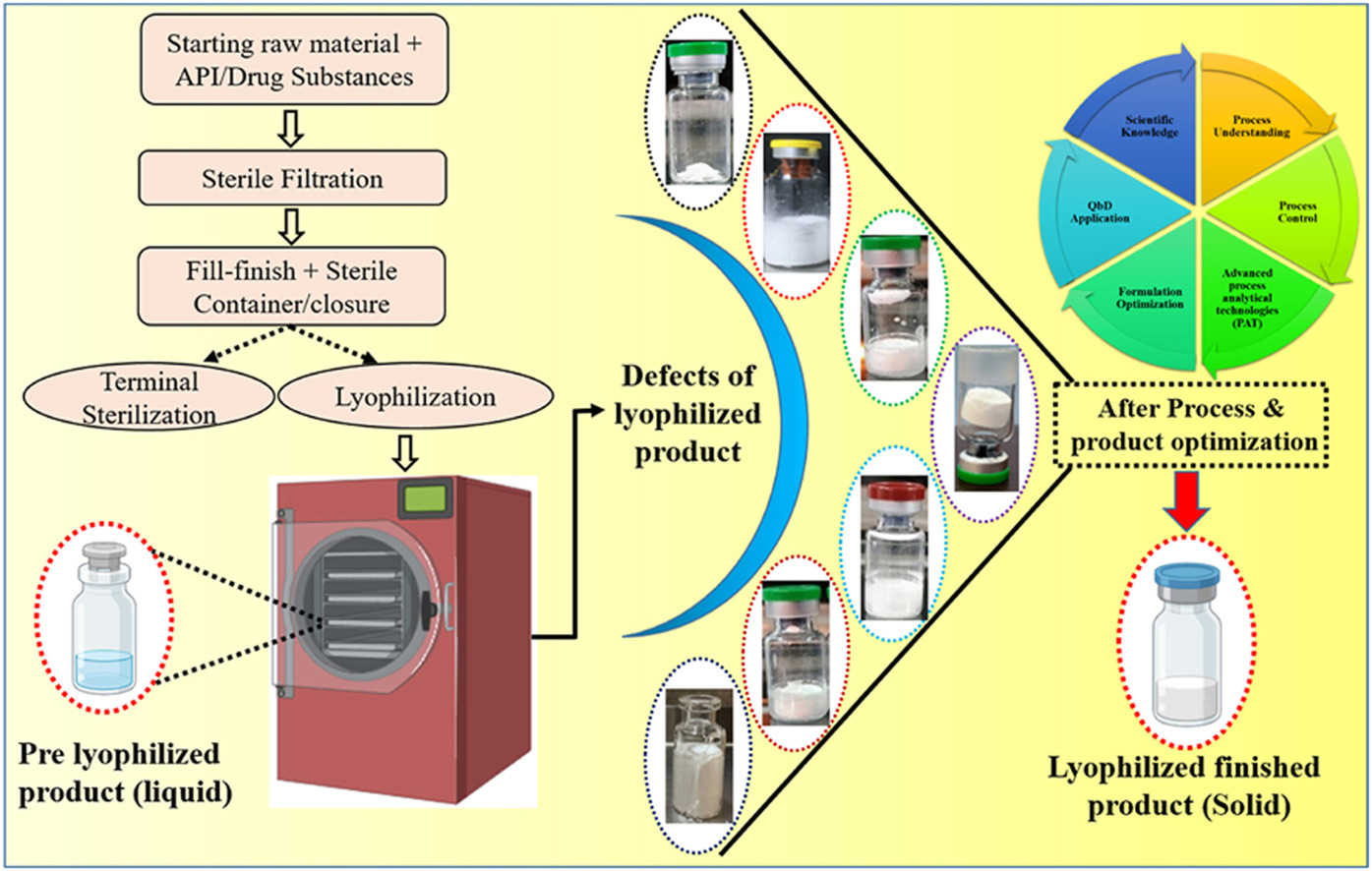 Figure 1. The lyophilisation process for pharmaceutical reagents. (Kumar et al., 2024)
At this stage, Set the storage claim, fill format, reconstitution volume, assay use, allowable preparation time, shipment exposure, and critical performance endpoints before screening protectants. A misleading result can arise because A formulation optimized only for residual enzyme activity may fail because the complete diagnostic reaction loses kinetics, blank control, linearity, or low-positive detection. A defensible experiment should address the issue directly: Document a liquid reference, post-freeze sample, post-dry sample, and aged dry sample so losses can be localized.
In a freeze-drying program, compare the formulation before freezing, after freezing, immediately after drying, and after storage. This sequence separates protection against process stress from protection during the shelf period. Relate every change to cycle records, product temperature, fill position, moisture, rehydration, and complete-assay behavior.
The governing consideration is that Freezing creates ice and a concentrated unfrozen phase; solutes may crystallize, buffer components may partition differently, and local pH or ionic strength can move far from the starting solution. The practical hazard is that During primary drying the product must remain below its relevant collapse or eutectic limit, while secondary drying removes more tightly associated water and can impose additional thermal stress. The most useful confirmation is to Use thermal characterization and product-temperature data to connect cycle settings with the formulation rather than copying a cycle from another enzyme.
In a freeze-drying program, compare the formulation before freezing, after freezing, immediately after drying, and after storage. This sequence separates protection against process stress from protection during the shelf period. Relate every change to cycle records, product temperature, fill position, moisture, rehydration, and complete-assay behavior.
A robust approach recognizes that Sugars may support water replacement and glass formation, polymers can provide bulk or modify mobility, surfactants can reduce interfacial damage, and salts control post-reconstitution function. Development can fail when A favorable excipient in one enzyme system can inhibit another enzyme, alter coupled-reaction stoichiometry, change color chemistry, or prolong dissolution. To reduce that uncertainty, Screen excipients at their final reaction concentrations and include the intended substrate, cofactor, reporter, and matrix where practical.
In a freeze-drying program, compare the formulation before freezing, after freezing, immediately after drying, and after storage. This sequence separates protection against process stress from protection during the shelf period. Relate every change to cycle records, product temperature, fill position, moisture, rehydration, and complete-assay behavior.
The process question is whether Freezing rate, nucleation, fill depth, shelf temperature, chamber pressure, vial geometry, and load configuration influence ice structure and mass transfer. One concern is that An excessively conservative cycle may be uneconomic, whereas aggressive primary drying can produce collapse, uneven moisture, or activity loss that is not visible across every vial. The decision should be supported by this action: Confirm edge and center positions, record product temperature, and evaluate scale-dependent heat transfer before fixing the manufacturing cycle.
In a freeze-drying program, compare the formulation before freezing, after freezing, immediately after drying, and after storage. This sequence separates protection against process stress from protection during the shelf period. Relate every change to cycle records, product temperature, fill position, moisture, rehydration, and complete-assay behavior.
The final design must account for the fact that A dried cake or pellet must wet rapidly and uniformly at the volume and mixing energy available to the user or instrument. The claim becomes vulnerable if Incomplete dissolution creates local concentration gradients; vigorous shaking can foam a surfactant-containing reagent; and a large reconstitution volume error can change enzyme dose and buffer strength. The appropriate evidence is to Measure dissolution time, visible particles, concentration uniformity, activity recovery, and assay response after realistic waiting and mixing intervals.
In a freeze-drying program, compare the formulation before freezing, after freezing, immediately after drying, and after storage. This sequence separates protection against process stress from protection during the shelf period. Relate every change to cycle records, product temperature, fill position, moisture, rehydration, and complete-assay behavior.
The technical starting point is straightforward: Residual moisture is meaningful only together with product composition, glass transition behavior, container closure, headspace, desiccant, and moisture ingress over time. The principal development risk is that Accelerated storage is useful for ranking candidates, but elevated temperature or humidity may introduce mechanisms that do not dominate under the labeled condition. Evidence should therefore be collected deliberately: Place representative lots in final packaging on real-time studies and include transport, temperature excursion, and in-use challenges when relevant.
In a freeze-drying program, compare the formulation before freezing, after freezing, immediately after drying, and after storage. This sequence separates protection against process stress from protection during the shelf period. Relate every change to cycle records, product temperature, fill position, moisture, rehydration, and complete-assay behavior.
| Variable | Question to answer | Development implication |
|---|---|---|
| Enzyme loading | Does activity loss accelerate at low protein concentration? | Low loads may need carrier or surface protection. |
| Buffer species | Does freezing shift the effective pH? | Select buffers using frozen-state behavior and assay compatibility. |
| Sugar ratio | Is there enough amorphous protectant relative to solids and protein? | Optimize molar or mass ratios rather than using a universal percentage. |
| Bulking agent | Will it crystallize and exclude sensitive components? | Confirm solid-state behavior, cake structure, and recovery. |
| Surfactant | Does it reduce interface stress without inhibiting the assay? | Test before and after drying at final use concentration. |
| Residual moisture | What range supports stability and rehydration? | Define a process-linked range instead of assuming drier is always better. |
| Container | Does the vial, tube, or cartridge support heat and mass transfer? | Cycle development must use the intended presentation. |
| Oxygen and light | Are cofactors, dyes, or residues oxidation-sensitive? | Evaluate headspace, barrier, and light protection. |
| Reconstitution water | Who supplies its volume and quality? | Model ionic content, temperature, and user error. |
| Release assay | Can it detect partial functional loss? | Include kinetics and low-positive performance, not activity alone. |
| Scale-up | Do load and equipment changes alter drying uniformity? | Bridge laboratory and manufacturing cycles. |
| Change control | Which material or process changes require comparability? | Predefine risk-based bridging studies. |
The matrix should be converted into a protocol with named methods, sample numbers, lots, controls, timepoints, and acceptance rules. Not every variable needs an independent full-factor study, but an omitted variable should be omitted because the risk is understood—not because it is difficult to measure.
For lyophilized enzymes, report separately the loss during freezing, drying, storage, and reconstitution. A good-looking cake and low moisture are process observations, not proof of preserved assay performance. The strongest conclusion links cycle and solid-state results with recovery kinetics, low-positive samples, blanks, and real-time final-package data.
Monitor whether drying recovery, moisture, reconstitution, and low-end assay function move together across vial positions and lots. Trend direction can be informative before a specification is crossed, but method noise, sampling, and environmental records must be considered before assigning cause.
