
Colorimetric substrates
Enzymatic conversion creates an absorbance change for plate, membrane, strip, or visual instrument readout.

Enzyme substrates convert catalytic activity into colorimetric, fluorescent, luminescent, or electrochemical output. The correct substrate must match the reporter enzyme, instrument, assay timing, matrix, surface, and required balance between signal gain and background.
A substrate is part of a reaction system, not an interchangeable signal additive. Reporter concentration, substrate affinity, turnover rate, optical or electrochemical properties, solvent, pH, cofactors, and stopping chemistry all affect the measured response. A formulation that is bright in solution may behave differently on a membrane, bead, or high-binding plate.
Signal amplification can improve low-level detection, but it also magnifies nonspecific binding, endogenous enzyme activity, spontaneous substrate conversion, and timing variation. Development should optimize the signal-to-background relationship across the required analytical range rather than maximize endpoint intensity alone.
Enzymatic conversion creates an absorbance change for plate, membrane, strip, or visual instrument readout.
The reaction releases or forms a fluorophore for sensitive optical measurement with defined excitation and emission settings.
Chemical energy from the reporter reaction produces light without external excitation.
Coupled enzymes, polymers, deposited products, or turnover cascades increase the number or persistence of reporter molecules.
Select the signal mode first, then compare kinetic profile, background chemistry, surface behavior, stability, and instrument compatibility.
Peroxide-dependent chromogenic, fluorogenic, and chemiluminescent systems convert HRP activity into optical signal.
Check: peroxide stability, preservatives, light, and stop conditions.
Phosphatase substrates provide colorimetric, fluorescent, or luminescent readouts.
Check: metal ions, phosphate contamination, endogenous phosphatase, and pH.
Defined cleavage releases a fluorophore for kinetic or endpoint measurement.
Check: enzyme specificity, spectral overlap, quenching, and matrix fluorescence.
Redox-active components transfer enzyme turnover to an electrode current or potential.
Check: mediator potential, nonspecific oxidation, diffusion, and electrode surface.
Enzyme chains or deposition reactions increase reporter generation after a binding event.
Check: background propagation, reaction order, stopping, and lot consistency.
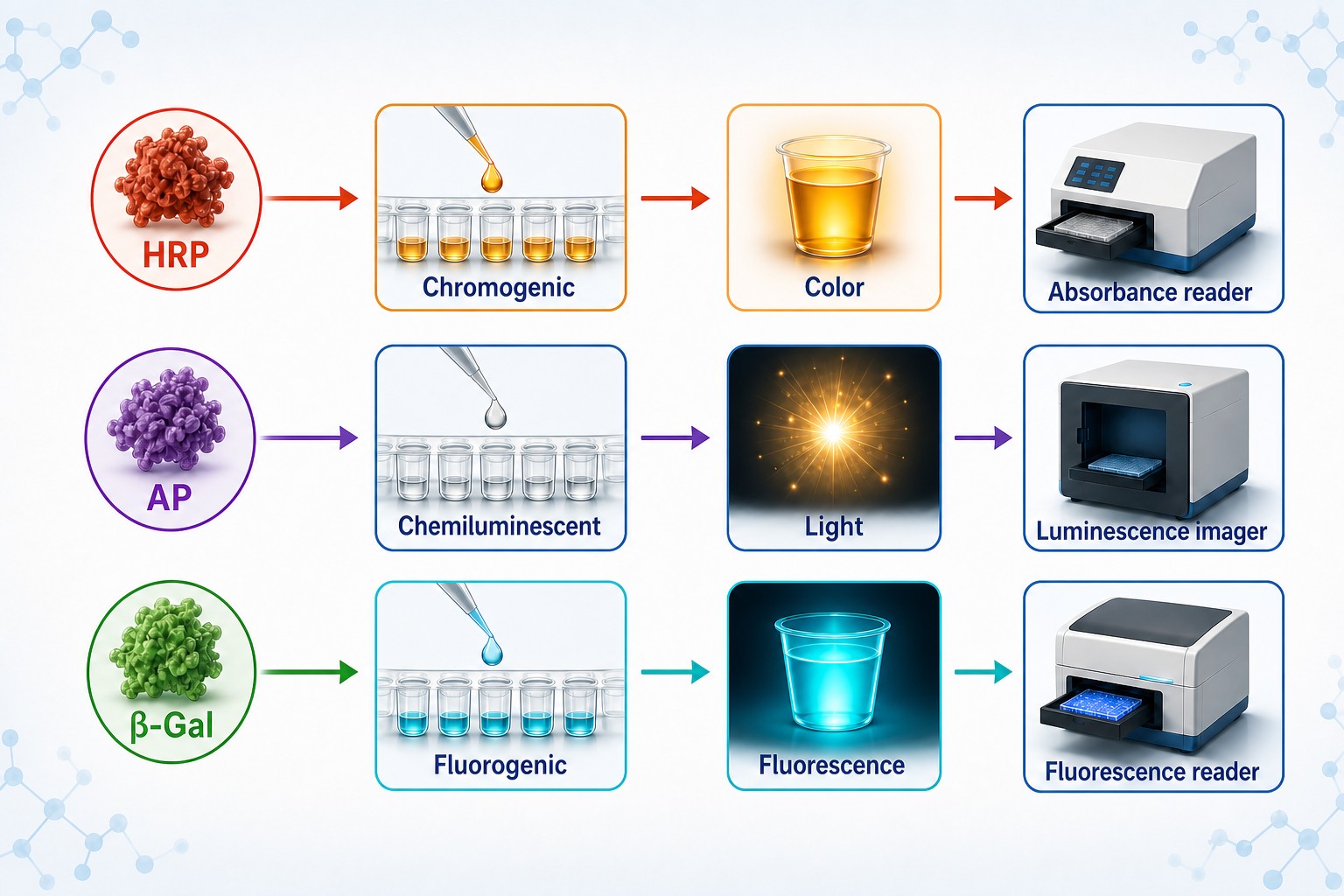 Fig 1. Reporter enzyme to substrate and reader map.
(Creative Enzymes Diagnostic)
Evaluate candidates with the final enzyme label, surface, matrix, timing, and reader settings. Use both low-signal and high-signal samples so the test captures blank behavior and saturation.
| Selection factor | How to evaluate it | Why it matters |
|---|---|---|
| Reporter-enzyme compatibility | Confirm substrate specificity, pH, cofactors, and usable reporter concentration. | A substrate optimized for one enzyme or isoform may show poor turnover or high background with another. |
| Signal mode and instrument | Match absorbance, fluorescence, luminescence, or electrochemistry to the available reader and detection range. | Spectral channels, sensitivity, integration time, and detector saturation set practical limits. |
| Kinetic or endpoint read | Measure signal development, linear interval, stopping behavior, and post-stop stability. | Timing variation can create bias when the signal changes rapidly or continues after the intended endpoint. |
| Blank and matrix effects | Test reagent blanks, negative matrices, endogenous enzymes, autofluorescence, absorbance, and redox interferents. | Background chemistry can reduce useful discrimination even when absolute signal is high. |
| Surface and transport | Evaluate the substrate on the intended plate, membrane, particle, or device geometry. | Diffusion, adsorption, deposition, and local enzyme density alter reaction kinetics. |
| Formulation stability | Assess stock, working solution, light exposure, temperature, freeze–thaw, dry format, and open-vial hold time. | Spontaneous conversion or component degradation can increase blank and reduce signal over shelf life. |
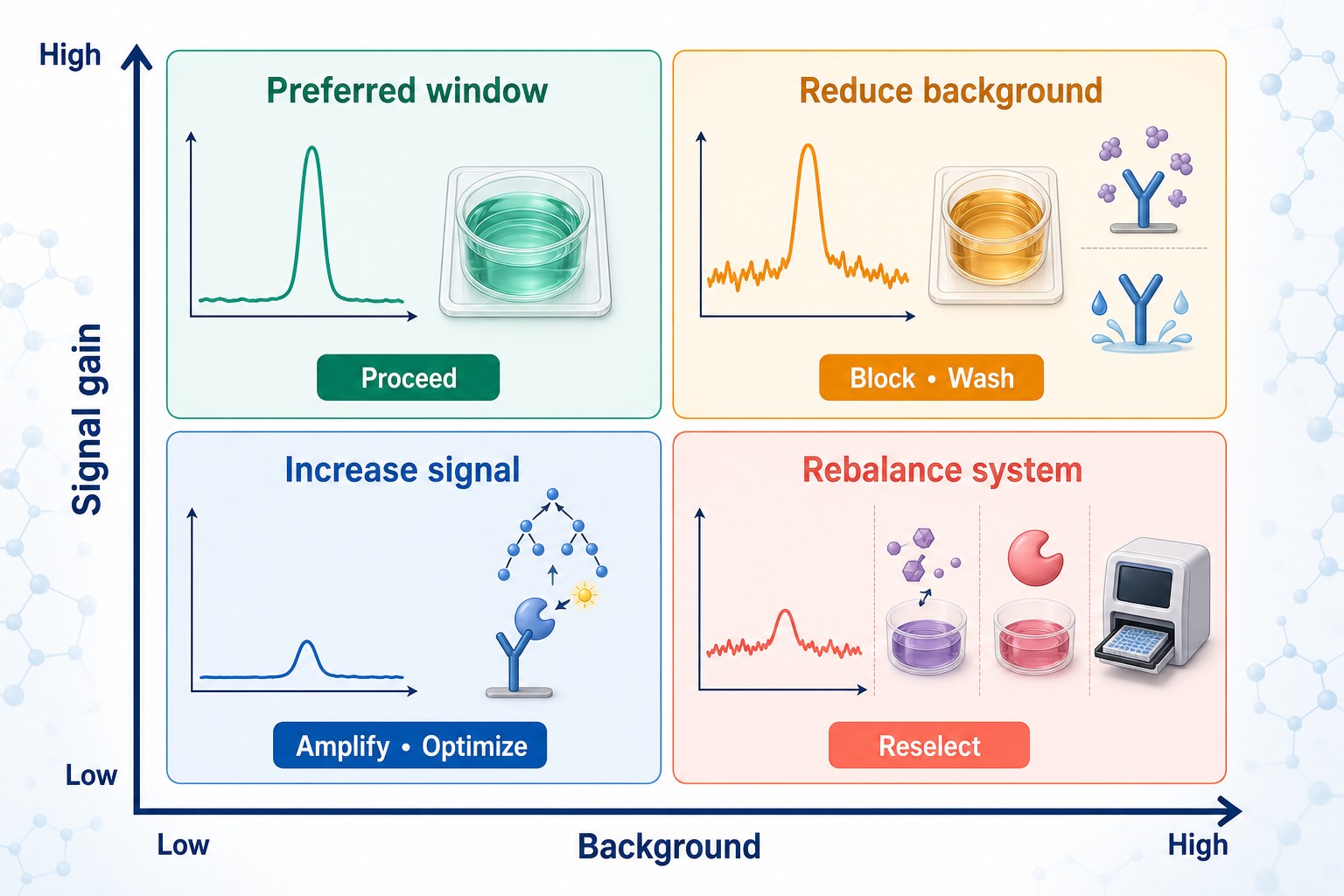 Fig 2. Signal gain versus background decision matrix.
(Creative Enzymes Diagnostic)
Product selection depends on reporter enzyme, signal mode, matrix, surface, instrument, and reagent format. Contact Creative Enzymes with the intended assay and performance requirements so that suitable substrate or amplification options can be discussed.
Qualification should define the useful signal window, not only the maximum response. Blank drift, timing sensitivity, saturation, lot variation, and storage must remain controlled.
Define reporter enzyme, signal mode, reader, read time, required range, blank limit, and stopping method.
Compare substrate systems with the final buffer, enzyme label, surface, matrix, and wash conditions.
Measure low and high signal, kinetics, saturation, timing variation, interference, and post-stop stability.
Set specifications for appearance, blank, functional response, storage, open-vial hold, lot bridging, and packaging.
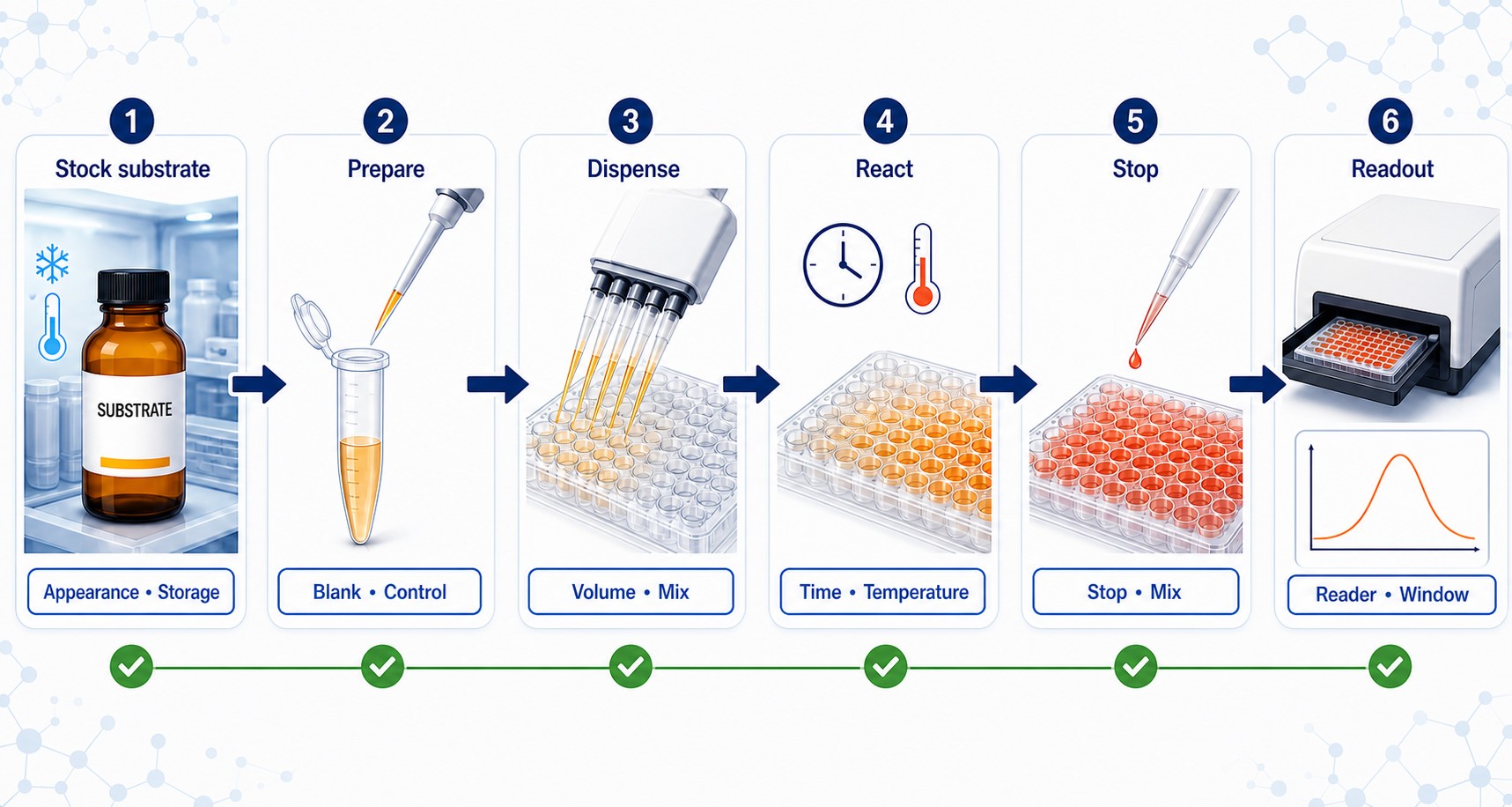 Fig 3. Substrate qualification from stock to stopped readout.
(Creative Enzymes Diagnostic)
Provide the reporter enzyme, desired signal mode, reader and wavelength or channel, assay surface, matrix, timing, stopping method, signal and blank targets, final format, storage, scale, and documentation requirements.
Begin with reporter compatibility, instrument, timing, matrix, and required analytical range. Sensitivity is meaningful only with acceptable blank and precision.
Rapid turnover may amplify nonspecific binding or spontaneous conversion, raising the blank and compressing discrimination near the lower range.
A kinetic read can reduce dependence on exact stopping time and identify rate differences, provided that the reader and workflow support repeated measurements.
Diffusion, local enzyme density, deposition, washing, and optical scattering can differ substantially from a solution or plate assay.
Track appearance, blank signal, functional response, light and temperature exposure, working-solution hold, and post-stop stability.
Provide the binding architecture, reporter enzyme, baseline signal, desired gain, blank limit, assay timing, surface, matrix, reader, and manufacturing format.
These sources support the scientific classification and technical selection criteria. Product specifications must be confirmed in current Creative Enzymes documentation.