
Programmable target cleavage
Guide-directed cleavage can create a defined molecular event for research, sample processing, or sequence confirmation.

| Catalog | Product Name | EC No. | CAS No. | Source | Price |
|---|---|---|---|---|---|
| CAS-0901 | Cas9 Nuclease from Streptococcus pyogenes | E. coli | Inquiry | ||
| CAS-0902 | Cas9 Nuclease from Streptococcus pyogenes, GMP | E. coli | Inquiry | ||
| CAS-0903 | Cas9 D10A Nickase from Streptococcus pyogenes | E. coli | Inquiry | ||
| CAS-0904 | Cas9 Nuclease from Streptococcus pyogenes, GFP tag | Recombinant | Inquiry | ||
| CAS-0905 | Cytosine Base Editor | E. coli | Inquiry | ||
| CAS-0906 | Cytosine Base Editor, GMP | E. coli | Inquiry | ||
| CAS-0907 | Cytosine Base Editor, GMP and Mutating | E.coli | Inquiry | ||
| CAS-1201 | High-Fidelity Cas12 Nuclease | E.coli | Inquiry | ||
| CAS-1202 | Cas12a Nuclease from Acidaminococcus | E. coli | Inquiry |
CRISPR-associated nucleases combine guide-directed target recognition with programmable cleavage. Diagnostic designs may use target cleavage, collateral reporter cleavage, or a CRISPR step coupled to amplification, but each enzyme requires a compatible target, guide, buffer, and control strategy.
Cas9, Cas12, Cas13, and smaller CRISPR-associated nucleases differ in target type, protospacer-adjacent motif or related sequence constraints, guide architecture, cleavage products, and collateral activity. Cas9 is primarily a programmable double-stranded DNA nuclease; Cas12 enzymes target DNA and can produce collateral single-stranded DNA cleavage after activation; Cas13 targets RNA and may cleave RNA reporters. These distinctions determine assay architecture.
Target recognition does not by itself establish diagnostic specificity. Guide sequence, target variation, amplification primers, reaction temperature, sample matrix, and contamination controls all contribute to the final result. Inclusivity and exclusivity panels should test the complete assay rather than the CRISPR reaction in isolation.
Guide-directed cleavage can create a defined molecular event for research, sample processing, or sequence confirmation.
Selected Cas12 and Cas13 enzymes cleave separate reporter substrates after recognizing the correct target.
A CRISPR reaction can add sequence discrimination after PCR, RPA, LAMP, or another amplification method.
Guide and reaction design can distinguish sequence differences when mismatch position, temperature, and target abundance are validated.
The target nucleic acid and desired cleavage behavior provide the primary division. Guide requirements, sequence constraints, temperature, and reporter design then determine product fit.
Cas9 uses a guide RNA to recognize and cleave double-stranded DNA near a compatible PAM sequence.
Check: PAM, guide format, cleavage position, and off-target panel.
Nickase variants cleave one DNA strand and can support paired-nick or specialized molecular designs.
Check: strand choice, paired-guide geometry, and nick repair or detection.
Cas12 enzymes recognize DNA targets and selected members activate collateral single-stranded DNA cleavage.
Check: PAM, guide structure, reporter sequence, and activation kinetics.
Cas13 enzymes recognize RNA and can activate collateral RNA cleavage for reporter-based detection.
Check: target RNA structure, guide design, RNase control, and reporter stability.
Smaller effectors such as Cas14-related proteins may support specialized designs with distinct substrate and sequence requirements.
Check: validated target constraints, guide format, and cleavage assay.
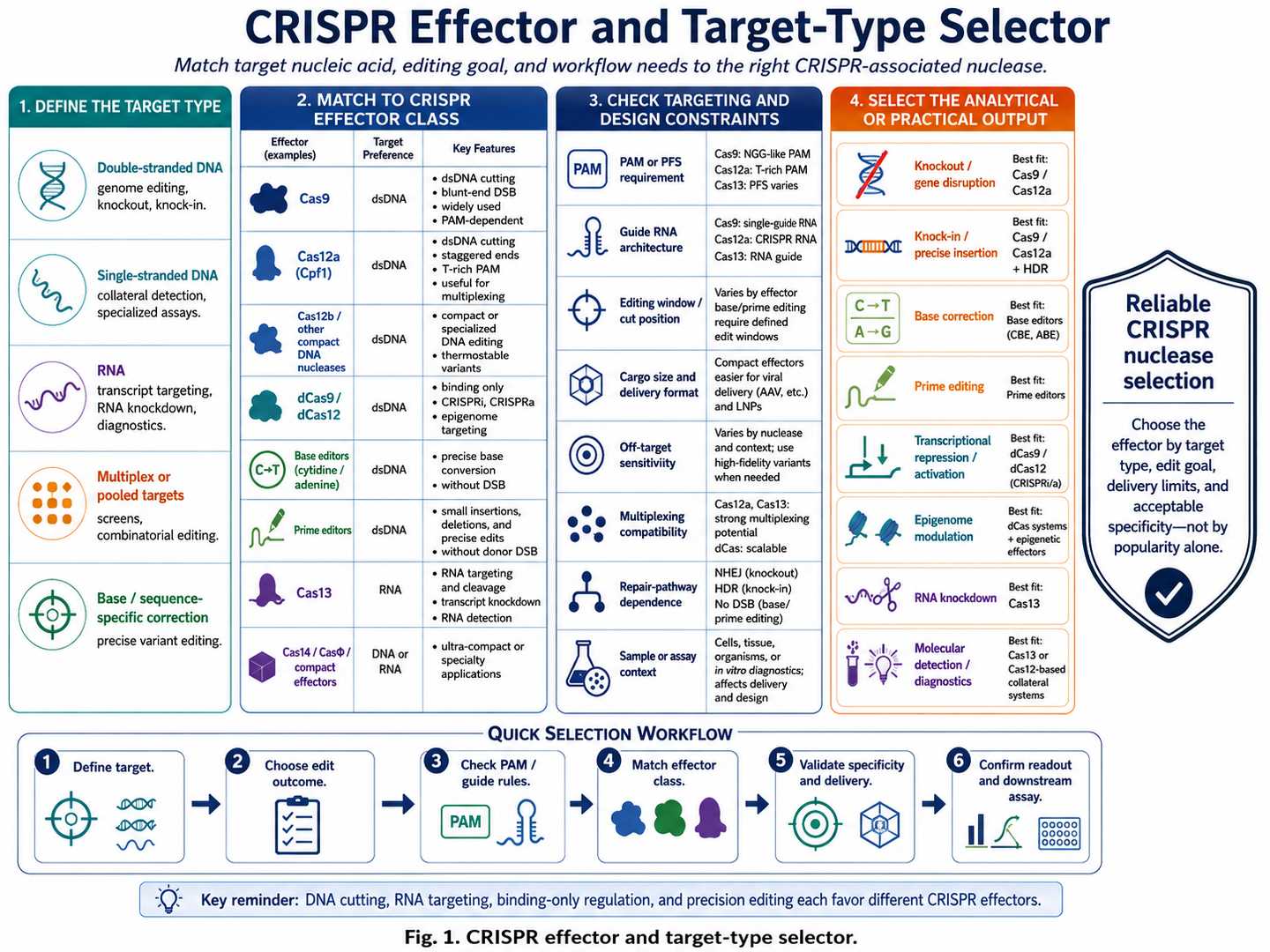 Fig 1. CRISPR effector and target-type selector.
(Creative Enzymes Diagnostic)
Use the complete target sequence and guide, including expected variants. Measure target-dependent signal, no-target background, off-target response, and compatibility with amplification products and sample matrices.
| Selection factor | How to evaluate it | Why it matters |
|---|---|---|
| Target type and sequence constraint | Define DNA or RNA, strand, PAM or related motif, target conservation, and expected variants. | The enzyme cannot recognize targets that do not meet its sequence and structural requirements. |
| Guide architecture | Optimize guide sequence, length, chemical format, concentration, and folding with the chosen nuclease. | Guide quality affects complex formation, on-target kinetics, and mismatch response. |
| Cleavage and reporter mode | Distinguish target cleavage from collateral reporter cleavage and select the appropriate reporter chemistry. | Signal kinetics and background depend on the activated cleavage mechanism. |
| Amplification compatibility | Test amplicon composition, carryover buffer, temperature, primer products, and closed-tube timing. | Amplification can improve sensitivity but also introduce contamination and nonspecific products. |
| Inclusivity and exclusivity | Use intended target variants, near neighbors, mismatches at several positions, and representative matrix controls. | Specificity is a property of the complete guide–target–reaction system. |
| Reagent format and stability | Assess guide integrity, nuclease recovery, reporter stability, and partner-enzyme compatibility in liquid or dry formats. | RNA components and multi-enzyme systems may lose function through storage, drying, or reconstitution. |
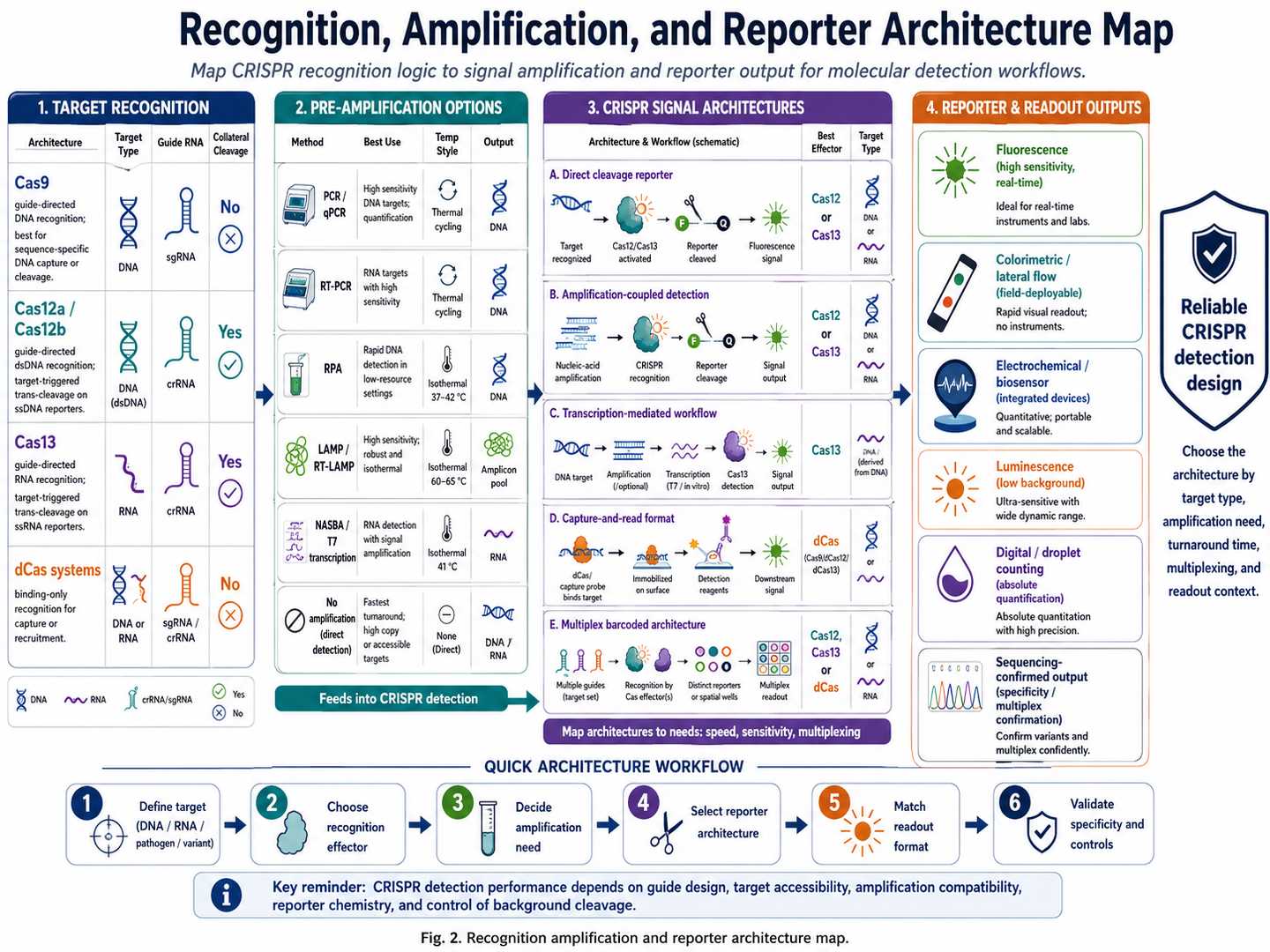 Fig 2. Recognition amplification and reporter architecture map.
(Creative Enzymes Diagnostic)
Creative Enzymes supplies Cas9, Cas12, Cas13, Cas14-related, and nickase products for molecular assay research and diagnostic reagent development. Select a product name to review its available information.
| Product | Catalog | EC number | Source | Activity |
|---|---|---|---|---|
| Cas9 Nuclease from Streptococcus pyogenes | CAS-0901 | E. coli | ||
| Cas9 D10A Nickase from Streptococcus pyogenes | CAS-0903 | E. coli | ||
| High-Fidelity Cas12 Nuclease | CAS-1201 | E.coli | ||
| Cas12a Nuclease from Acidaminococcus | CAS-1202 | E. coli | ||
| Cas13a Nuclease from Leptotrichia wadei | CAS-1301 | Recombinant | ||
| Cas14a CRISPR Nuclease | CAS-1401 | E. coli |
Activity values use product-specific assay definitions. Review the stated method and test conditions before comparing unit values across materials.
Qualification should connect target recognition to the final signal and separate CRISPR specificity from amplification specificity. Controls are needed for both stages when they are combined.
Map conserved regions, variants, near-neighbor sequences, PAM constraints, and the guide and reporter architecture.
Measure on-target kinetics, no-target background, mismatch response, and reporter behavior under final conditions.
Evaluate amplification carryover, sample matrix, closed-tube timing, contamination controls, and instrument settings.
Set specifications for nuclease activity, guide and reporter quality, formulation, storage, lot bridging, and functional release.
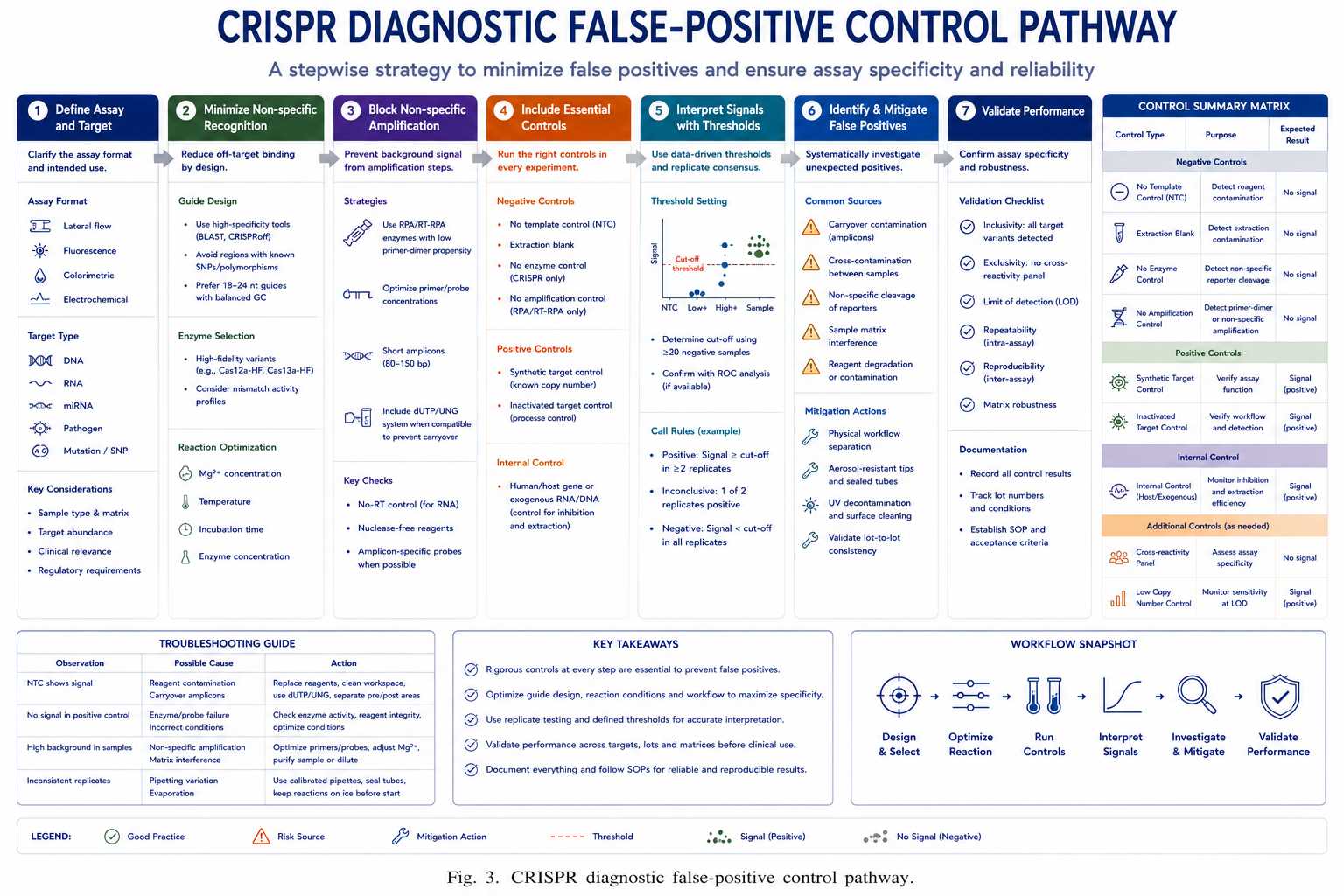 Fig 3. CRISPR diagnostic false-positive control pathway.
(Creative Enzymes Diagnostic)
Provide the target nucleic acid and sequence, expected variants, PAM or motif constraints, guide format, reporter design, amplification method, matrix, temperature, desired format, scale, and documentation requirements.
Target type is the first decision, but sequence constraints, guide architecture, reporter, amplification, temperature, multiplexing, and controls also determine fit.
After target recognition, selected CRISPR effectors cleave separate reporter substrates. The rate depends on the enzyme, guide, target, buffer, reporter, and temperature.
No. Specificity must be demonstrated with the selected guide, target variants, near neighbors, amplification system, and sample matrix.
Use physical workflow separation or closed-tube designs where appropriate, contamination-control chemistry, and process controls that detect carryover.
Potentially, but nuclease activity, guide integrity, reporter stability, reconstitution, moisture, and partner-enzyme compatibility require formulation studies.
Confirm target type, sequence constraint, guide format, activity definition, temperature, cleavage mode, reporter design, and upstream amplification compatibility.
These sources support the scientific classification and technical selection criteria. Product specifications must be confirmed in current Creative Enzymes documentation.