
Companion diagnostics and traditional diagnostic tests can use similar laboratory technologies, specimens, and quality controls, yet they serve different clinical purposes. A traditional diagnostic generally helps detect, classify, or monitor a disease or physiological condition. A companion diagnostic provides information that is essential for the safe and effective use of a corresponding therapeutic product. The distinction lies primarily in intended use and the evidence linking the result to a treatment decision—not simply in whether the assay uses PCR, sequencing, immunochemistry, or an enzyme reporter.
This guide compares the two categories across purpose, development, validation, regulation, reporting, and lifecycle management. It is a practical framework rather than a substitute for product-specific regulatory advice.
Traditional diagnostic: asks a disease-centered question such as “Is the condition present?” or “How is it changing?” Companion diagnostic: asks a therapy-linked question such as “Does this patient have the biomarker needed to use this corresponding therapy safely and effectively?”
The categories can overlap in technology and analyte. For example, a molecular test may detect the same variant in two settings. When used to characterize a tumor generally, it may function as a diagnostic or profiling test. When its specific result is essential to selection of a corresponding drug under a defined intended use, it functions as a CDx. Classification cannot be inferred from the platform or biomarker name alone.
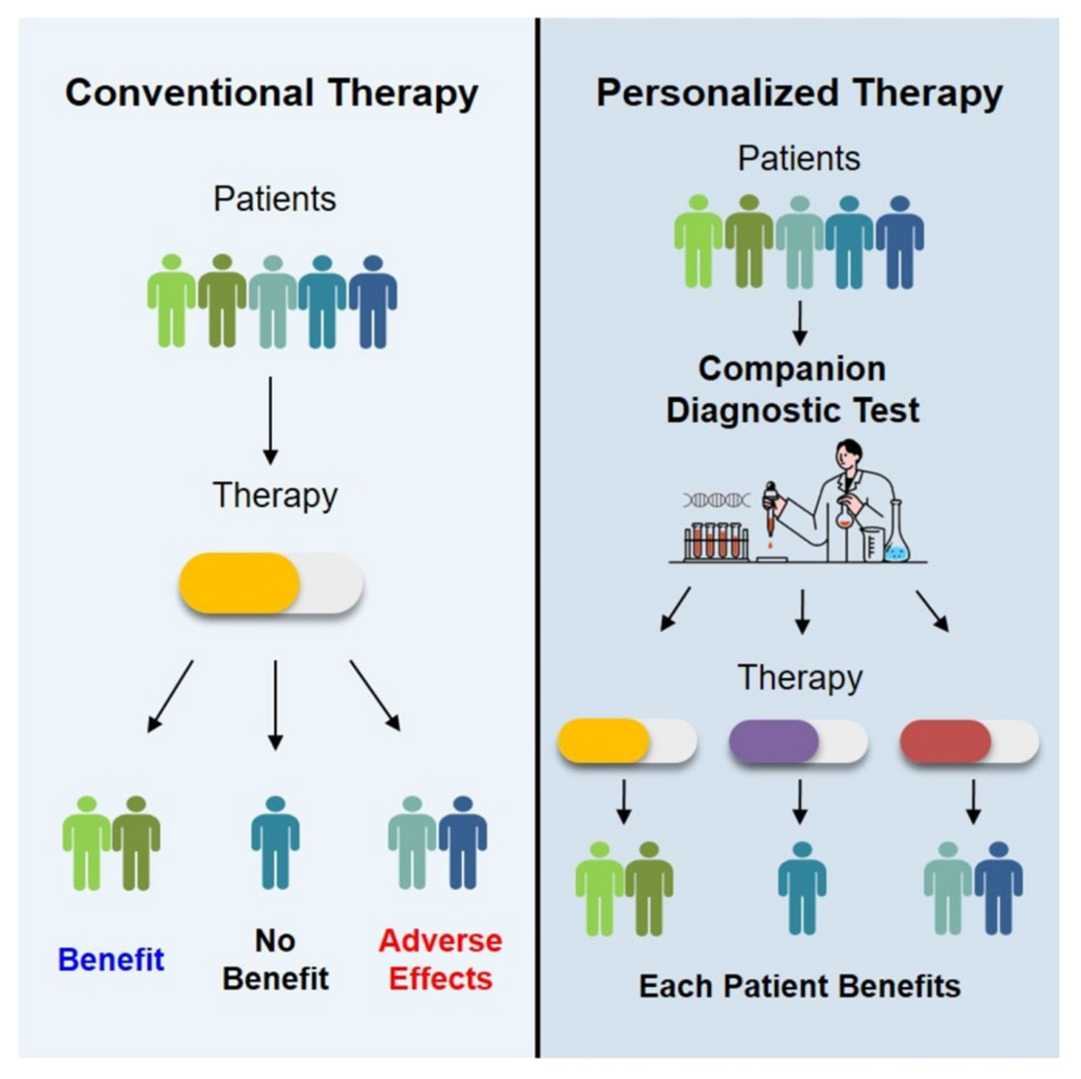
Figure 1. Principles of CDx testing. (Kang et al., 2024)
| Dimension | Traditional diagnostic | Companion diagnostic |
|---|---|---|
| Primary purpose | Detect, classify, stage, assess risk, or monitor a condition | Provide information essential to safe and effective use of a corresponding therapy |
| Decision link | May inform broad clinical management | Explicitly linked to a therapeutic selection, risk, or essential monitoring decision |
| Development partner | Can be developed independently of a specific drug | Often coordinated with a therapeutic sponsor and clinical program |
| Evidence emphasis | Performance for the stated diagnostic claim | Analytical performance plus evidence supporting the therapy-linked intended use |
| Cutoff | Separates disease states or supports reference interpretation | Often separates treatment-eligible and noneligible groups or defined risk groups |
| Lifecycle dependency | Changes managed against the diagnostic claim | Changes may affect alignment with therapeutic labeling and clinical evidence |
These descriptions are deliberately general. Traditional diagnostics include many types of test, and not every CDx uses a binary positive/negative threshold. Some methods use multiple variants, continuous scores, or algorithms. The correct comparison must be based on the exact intended use and reporting rule.
A conventional test program usually begins with a diagnostic need: establish infection, quantify an analyte, classify pathology, or monitor a condition. Developers select a technology and performance targets that suit that claim. A CDx program begins with an additional dependency—the therapeutic mechanism and the population for whom the test result matters. Biomarker hypothesis, drug trial design, sample acquisition, assay cutoff, and development schedule must therefore be coordinated.
If a CDx assay is introduced late, archived specimens may be inadequate, enrollment may have used a different test, or a cutoff may be difficult to justify prospectively. Early biomarker assay feasibility work assesses prevalence, matrix behavior, input requirements, and technical separability. Integrated companion diagnostic development support can connect this work with enzyme selection, assay optimization, transfer, and documentation.
Why should the biomarker predict benefit, risk, or a necessary response measure?
Can the marker be measured in the intended specimen with adequate reliability?
Does the interpretation rule identify groups for whom the therapeutic decision differs?
Both categories may require studies of precision, analytical sensitivity, analytical specificity, accuracy or agreement, interference, cross-reactivity, stability, carryover, and robustness. The study set depends on the technology and claim. What changes for a CDx is the consequence of an error in relation to therapy. A false-positive result may expose a patient to an ineffective or inappropriate treatment; a false-negative result may deny access to a beneficial therapy. Invalid and indeterminate results can delay care or exclude patients from a trial.
Validation should therefore examine performance around clinically meaningful boundaries. Contrived samples can help cover rare concentrations, but they should not replace representative clinical specimens without a justified bridging strategy. The team should document sources of uncertainty from specimen collection through reporting and determine which can change classification. Services such as precision, linearity, and recovery evaluation, interference resistance optimization, and instrument platform adaptation address different parts of this evidence chain.
Practical rule: validation is not a generic checklist. Each experiment should show that a defined failure mode is acceptably controlled for the decision the assay supports.
PCR, qPCR, digital PCR, NGS, immunoassays, in situ hybridization, and biosensors can all be used in either traditional or companion diagnostic contexts. Enzymes may extract or process analytes, copy DNA, synthesize cDNA, prepare sequencing libraries, or generate reporter signals. Their functional requirements follow the assay architecture and specimen, not the regulatory label alone.
| Technology | Traditional diagnostic example | Possible CDx use | Enzyme-related risk |
|---|---|---|---|
| qPCR | Detection of a pathogen | Detection of a therapy-linked variant or transcript | Inhibition, nonspecific amplification, lot shift |
| NGS | Broad genetic characterization | Identification of variants associated with a corresponding targeted therapy | Coverage bias, polymerase errors, library loss |
| Immunoassay | Measurement of a disease-associated protein | Protein classification linked to therapy selection | Reporter instability, conjugate variation, background |
| POCT biosensor | Rapid analyte measurement | Decentralized testing if supported by intended use and evidence | Temperature, timing and matrix sensitivity |
For molecular formats, developers may screen PCR enzymes and premixes and components such as Taq HS DNA Polymerase. The selection should be verified in the complete assay rather than inferred from isolated activity data.
A traditional diagnostic report may provide a concentration, detected/not-detected call, reference interval, pattern, or pathology classification. A CDx report must present the result in a way that is consistent with its therapy-linked intended use. This does not mean the laboratory should make the treatment decision; it means the result, limitations, invalid criteria, and interpretation are sufficiently clear for the qualified healthcare professional to apply them correctly.
Terminology should remain consistent across assay instructions, software, clinical protocols, and therapeutic documentation. If the assay has categories such as positive, negative, indeterminate, and invalid, each needs a reproducible rule. Retest conditions should be explicit. Complex algorithms require version control and locked input definitions. A change in software threshold, variant database, or normalization method can be as consequential as a change in wet-lab reagent.
Research prototypes can tolerate manual tuning that commercial diagnostics cannot. Both traditional tests and CDx assays need controlled manufacturing, but the drug–diagnostic relationship makes comparability especially visible for CDx. Raw-material changes, enzyme lots, conjugation conditions, container systems, software revisions, and manufacturing scale may shift signal distributions or cutoff behavior. Risk-based change control should determine whether a change requires verification, bridging, or broader revalidation.
Enzyme stability, impurity profiles, and activity assignment deserve attention because they can create gradual rather than catastrophic changes. A reagent may still pass a broad activity specification while generating a meaningful shift in the final assay. Developers should connect incoming material specifications with assay-level acceptance criteria and use representative lots during validation. Batch-to-batch consistency validation and CDx manufacturability assessment help test whether the method remains reproducible outside the original development setting.
Stability protocols should reflect expected shipping, storage, open-vial, freeze-thaw, and on-board exposure. An expiration date or transport condition is a claim about the final configuration, not a property that can be transferred automatically from an individual enzyme datasheet.
The name chosen during early research is less important than this disciplined description. Teams should avoid calling every predictive biomarker assay a CDx before its therapy linkage and intended use are established. They should also avoid assuming that a familiar traditional diagnostic platform can become a CDx without additional evidence.
A platform may support several claims, but each intended use must be defined and supported. A broadly validated profiling test does not automatically become a companion diagnostic when a therapy name is added to a report. Conversely, a CDx may generate information that is also relevant to disease characterization, but the additional interpretation should not obscure the validated therapy-linked result.
When developers plan multiple uses, they should map which specimen types, analytes, cutoffs, instruments, software functions, and populations are shared and which are claim-specific. Controls and validation samples must challenge each claimed decision. Reporting should keep the outputs distinct. This modular approach can reuse technology without implying that evidence for one claim establishes another. It also supports clearer lifecycle management: a change may be neutral for a general profiling output while materially affecting a low-frequency therapy-selection call.
CDx and traditional diagnostics share many technologies and quality principles, but they are distinguished by the decision they are designed and evidenced to support. Traditional diagnostics primarily characterize disease or physiology; companion diagnostics are explicitly tied to the safe and effective use of a corresponding therapy. Recognizing this distinction early changes biomarker planning, cutoff development, error analysis, co-development, reporting, manufacturing, and lifecycle control.
Our CDx platform connects enzyme and reagent selection with feasibility, analytical optimization, transfer, and therapy-linked assay development.
