
Enzymes perform much of the hidden work inside companion diagnostic assays. They can release analytes from clinical specimens, convert RNA into cDNA, copy target sequences, edit or ligate nucleic acids, prepare sequencing libraries, remove carryover contamination, and transform an antibody-binding event into a measurable optical or electrochemical signal. Their performance can therefore influence whether a biomarker is detected, quantified, or classified correctly.
This article examines enzymes as functional assay components rather than isolated catalog reagents. It explains where they enter CDx workflows, which attributes matter, how interactions with matrices and other reagents create risk, and how developers can translate enzyme specifications into assay-level performance.
A biomarker does not produce a useful diagnostic result simply because it is present. The assay must make it accessible, recognize it, generate a signal, and interpret that signal against controls and decision rules. Enzymes often provide the chemical transformations that connect these stages. In molecular CDx, polymerases and reverse transcriptases create detectable copies of nucleic acid targets. In immunoassays, reporter enzymes convert substrates into colored, fluorescent, chemiluminescent, or electrochemical outputs.
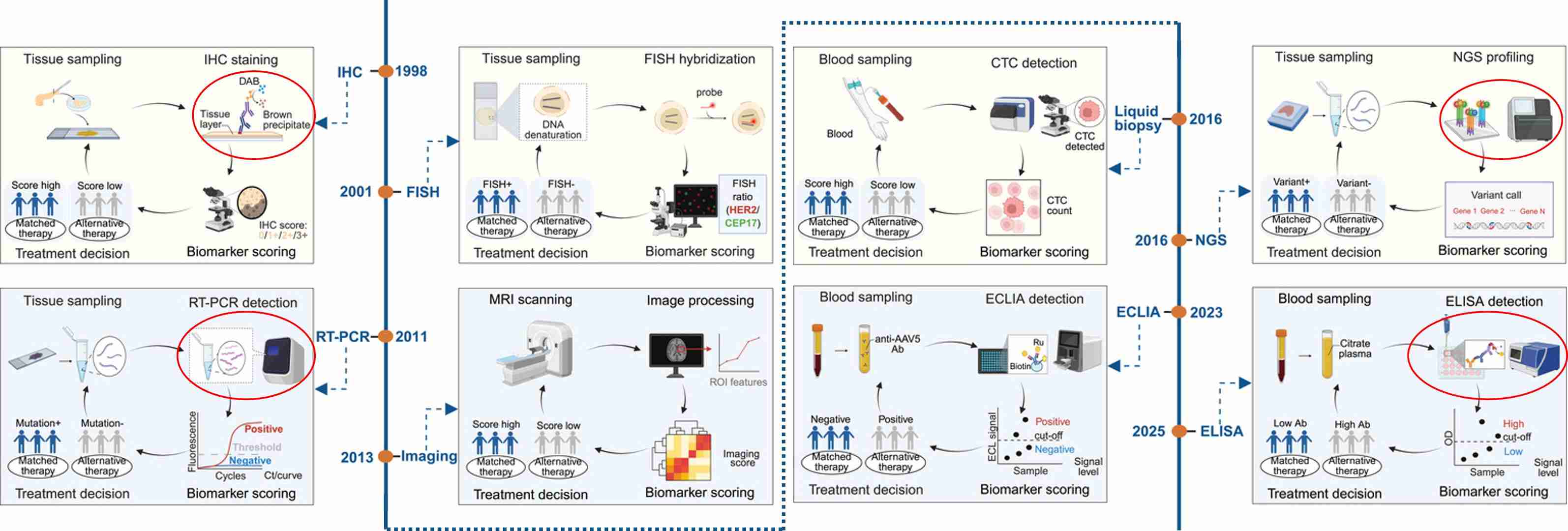
Figure 1. Analytical approaches used in CDx development. The approaches requiring enzyme raw materials are marked with red circles. (Adapted from Wu et al., 2026)
| Workflow stage | Representative enzymes | Primary function | Performance concerns |
|---|---|---|---|
| Sample preparation | Proteases, nucleases, lysozyme and other processing enzymes | Release targets, reduce viscosity, remove unwanted material | Incomplete recovery, target damage, residual activity |
| RNA analysis | Reverse transcriptase and RNase inhibitor | Preserve RNA and synthesize cDNA | Secondary structure, degradation, inhibitor tolerance |
| DNA amplification | DNA polymerases | Copy target sequences for detection | Fidelity, hot-start control, bias, nonspecific products |
| Isothermal amplification | Strand-displacing polymerases and accessory enzymes | Amplify targets without thermal cycling | Primer artifacts, speed, temperature tolerance |
| NGS preparation | Ligases, polymerases, kinases and end-repair enzymes | Convert nucleic acids into sequenceable libraries | Coverage bias, adapter dimers, input loss |
| Immunodetection | HRP, alkaline phosphatase and other reporters | Convert substrate into measurable signal | Conjugate ratio, substrate kinetics, background |
The CDx enzyme portfolio spans several of these functions. Representative molecular components include Taq HS DNA Polymerase, AdvSTART Reverse Transcriptase, and T4 DNA Ligase (Rapid). Product selection should be followed by assay-specific verification.
For a mutation assay, polymerase behavior can affect both whether the target amplifies and whether the sequence or fluorescence result is trustworthy. Relevant attributes include specificity at reaction start, fidelity, processivity, extension rate, GC tolerance, resistance to matrix-derived inhibitors, compatibility with probes or dyes, and performance across multiplex primer sets. More activity is not always better; excess polymerase can increase nonspecific amplification or alter reaction balance.
Hot-start mechanisms help suppress extension before the intended reaction temperature, improving specificity in many PCR workflows. High-fidelity enzymes can reduce introduced errors in workflows where sequence accuracy matters, but their buffer requirements and kinetics must suit the assay. For low-frequency variants, the complete error background—including extraction, polymerase, sequencing, and bioinformatics—should be characterized rather than assigning all error to a single component.
Specification principle: an enzyme attribute matters only when it is connected to an assay performance requirement. A high-fidelity claim is relevant to variant accuracy; inhibitor tolerance is relevant to the actual specimen and extraction method; thermal stability is relevant to the thermal profile and storage workflow.
Developers working with complex amplification designs may benefit from PCR and qPCR enzyme/premix development or multiplex qPCR system optimization.
RNA biomarkers include fusion transcripts, splice variants, gene-expression signatures, and transcripts associated with pathway activity. RNA is vulnerable to degradation, and clinical samples may contain short or chemically modified fragments. Reverse transcriptase must generate cDNA that represents the available RNA without introducing unacceptable dropout or bias. Reaction temperature, template secondary structure, priming strategy, RNase H activity, and inhibitor tolerance can all affect recovery.
A high cDNA yield does not guarantee faithful measurement. If one transcript region is copied more efficiently than another, a multiplex expression score may shift. If reverse transcription efficiency differs between calibrators and clinical samples, normalization may not correct the bias. Experiments should therefore use representative RNA integrity levels and relevant endogenous targets, not only clean synthetic templates. An RNase inhibitor can protect samples during preparation, but it cannot reverse damage that occurred during collection or storage.
One-step RT-qPCR simplifies handling and reduces opportunities for contamination, while two-step formats offer flexibility and stored cDNA. The choice should reflect throughput, target number, input availability, and control strategy. One-step RT-qPCR master mix development can address enzyme compatibility within a combined reaction.
Reporter enzymes such as horseradish peroxidase and alkaline phosphatase create repeated substrate turnover after a target-recognition event. This catalytic gain makes low-abundance proteins measurable, but it also amplifies nonspecific binding and background. Signal quality depends on the enzyme, conjugation chemistry, label density, antibody affinity, substrate, reaction time, temperature, wash efficiency, and readout instrument.
Too little enzyme can limit sensitivity; excessive or heterogeneous labeling can reduce antibody binding, increase aggregation, or complicate lot control.
Turnover rate, signal stability, spectral properties, and stop conditions must match the assay format and instrument.
Reporter reactions continue until substrate is depleted, the enzyme is stopped, or the read occurs. Timing variation can become measurement variation.
Developers can evaluate enzyme–antibody conjugates, HRP conjugation support, and enzyme–substrate signal system optimization when reporter performance is limiting sensitivity or precision.
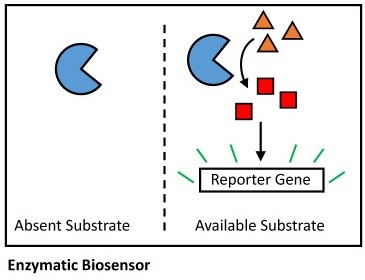
Figure 2. Reporter enzyme signal generation in a biosensor. (Adapted from Miller et al., 2022)
| Attribute | Possible assay effect | How to evaluate it |
|---|---|---|
| Specific activity | Reaction speed and signal magnitude | Compare dose-response behavior in the final reaction matrix |
| Purity and contaminants | Background, inhibition, degradation or false signals | Combine biochemical tests with functional blank and interference studies |
| Specificity or fidelity | Off-target signal or incorrect variant calls | Challenge related targets, wild-type background and difficult sequences |
| Stability | Drift across storage, shipping or on-board use | Use real-time and justified accelerated studies in final packaging |
| Matrix tolerance | Variable recovery among specimen types | Test representative endogenous and exogenous interferents |
| Lot consistency | Shifted calibration, cutoff or invalid rate | Bridge multiple production lots with assay-level acceptance criteria |
Purity by electrophoresis does not reveal every functional impurity, and a generic activity unit may not predict performance under the assay’s pH, cofactors, temperature, or substrate concentration. Incoming specifications should combine identity, purity, concentration, activity, contaminant limits, and functional suitability. The appropriate balance depends on risk and intended use.
Enzymes are conformationally sensitive molecules. Temperature excursions, interfaces, oxidation, repeated freezing, pH shifts, adsorption, and incompatible excipients can reduce functional activity. In multicomponent mixes, one stabilizer may protect the enzyme but inhibit amplification, alter reporter kinetics, or affect downstream fluorescence. Formulation is therefore a multivariable optimization problem.
Clinical matrices add another layer. Hemoglobin, heparin, lipids, immunoglobulins, salts, extraction reagents, and endogenous enzymes can inhibit reactions or create optical interference. Dilution may reduce inhibition but also lower target concentration. The best response may involve sample cleanup, enzyme engineering, buffer changes, internal controls, or a different assay architecture. Matrix and inhibitor tolerance optimization and diagnostic enzyme stability testing can be integrated with assay-level studies.
For dried reagents, recovery after reconstitution is as important as storage survival. Dissolution, local concentration gradients, mixing, and rehydration time can influence activity. Lyophilization compatibility must be shown in the intended formulation and container, not assumed from a glycerol-free format alone.
An enzyme that performs best in an isolated biochemical assay may not be the best component for a CDx. The preferred material is the one that delivers adequate performance with a practical margin across the complete workflow and can be produced consistently at the required scale. When an available enzyme does not meet the profile, enzyme engineering for CDx can target the limiting property while monitoring tradeoffs.
Formulation and assay optimization should usually be explored before engineering a new enzyme, because many apparent enzyme limitations originate in buffer chemistry, sample preparation, substrate choice, or reaction timing. Engineering becomes attractive when the limiting attribute is intrinsic and cannot be addressed with an acceptable workflow—for example, insufficient inhibitor tolerance, poor thermostability, unwanted substrate activity, low expression, or inadequate hot-start behavior.
The design target should include tradeoffs. A mutation that increases stability may reduce catalytic rate; improved activity may increase nonspecific turnover; altered surface properties may affect purification or conjugation. Candidate variants should therefore be screened using assay-relevant responses, including background and near-cutoff performance. Manufacturability, purity, lot consistency, and storage behavior must be evaluated alongside the headline improvement. Directed evolution and mutant library screening can support this evidence-driven approach.
Enzymes are not passive ingredients in companion diagnostics. They shape analyte recovery, amplification, sequence accuracy, reporter intensity, background, stability, and lot-to-lot behavior. Effective development begins by defining each enzyme’s system-level role, evaluating it in representative matrices, and connecting material specifications to clinically meaningful assay performance. This approach turns enzyme selection from a catalog exercise into a controlled part of CDx risk management.
Creative Enzymes provides diagnostic enzymes, custom engineering, conjugation, formulation, analytical evaluation, and scale-up support for molecular and immunoassay CDx workflows.
