Background
Many diagnostic enzymes are traditionally formulated in glycerol-containing buffers to maintain stability during storage and freeze-thaw cycles. While effective for laboratory use, glycerol introduces significant limitations for commercial diagnostic products: it increases shipping weight and cost, complicates cold-chain logistics, interferes with certain detection chemistries, and is incompatible with lyophilization workflows. For point-of-care (POC) diagnostics, home testing kits, and resource-limited settings, the requirement for frozen or refrigerated storage of glycerol-stabilized enzymes creates a critical barrier to deployment.
Lyophilization offers an elegant solution—transforming liquid enzyme formulations into stable, dry products that can be stored and shipped at ambient temperature. However, not all enzymes tolerate freeze-drying without significant activity loss, and the transition from glycerol-based liquid formulations to lyo-ready, glycerol-free formats requires systematic optimization of buffer composition, stabilizer selection, and lyophilization cycle parameters. An enzyme that loses 50% of its activity during lyophilization, or that requires complex reconstitution procedures, is unsuitable for diagnostic kit integration.
Creative Enzymes Diagnostic offers a dedicated Glycerol-Free and Lyo-Ready Enzyme Development service that engineers and formulates diagnostic enzymes for stable, ambient-temperature storage in dry format. Our integrated approach combines protein engineering, formulation science, and lyophilization expertise to deliver enzymes that retain full activity after freeze-drying, reconstitute rapidly, and maintain stability for extended periods without glycerol or refrigeration.
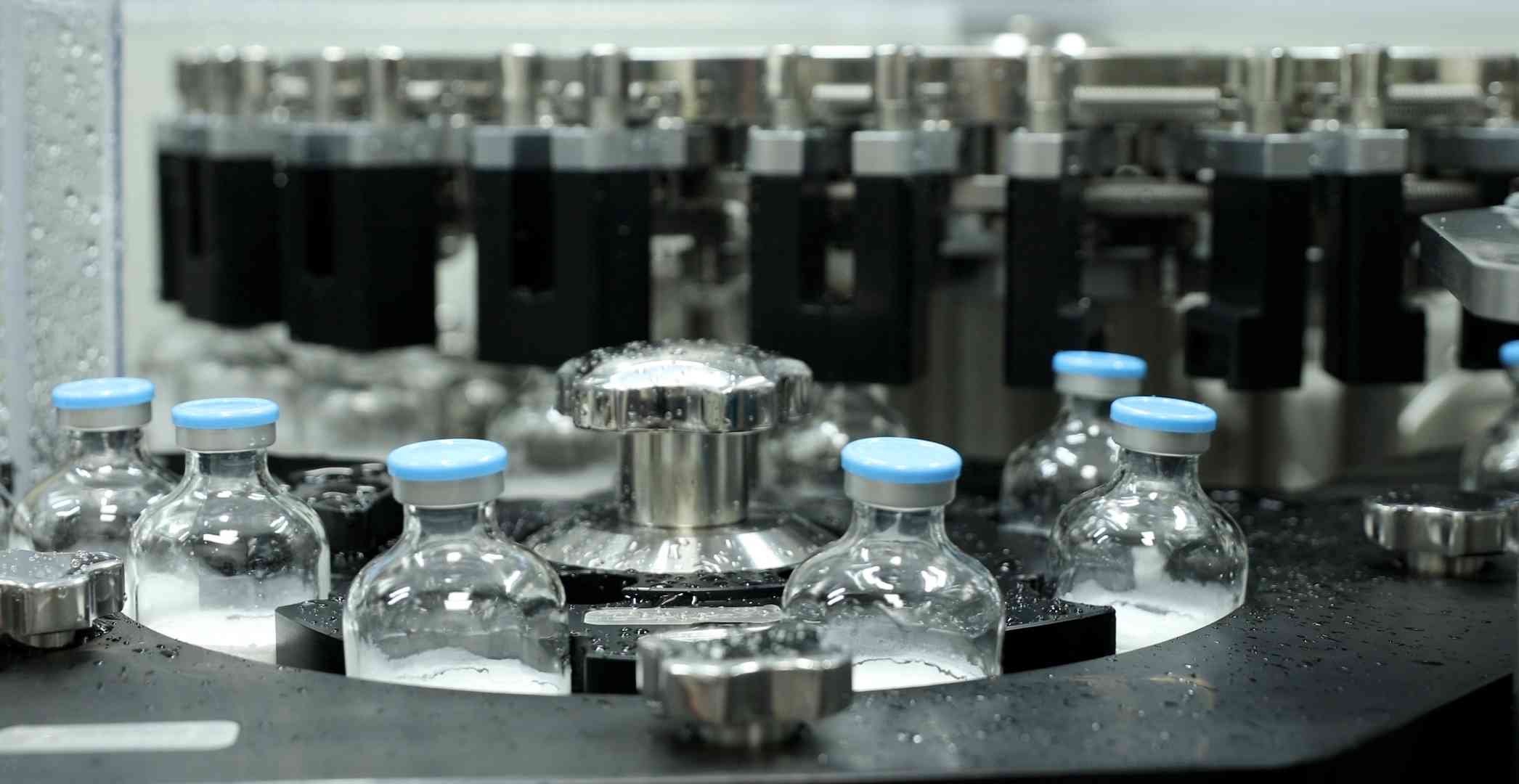
Formulation Development
Our formulation development process systematically replaces glycerol with optimized stabilizer systems that protect the enzyme during liquid storage, freezing, drying, and reconstitution. Each component is selected based on its mechanism of stabilization, compatibility with the target assay, and regulatory acceptability for IVD applications.
Glycerol-free Buffer
- Development of glycerol-free buffer systems that maintain enzyme structural integrity and catalytic activity through alternative stabilization mechanisms, including preferential exclusion, surface tension modulation, and water replacement
- Optimization of buffer pH and ionic strength to match the enzyme's stability optimum while ensuring compatibility with downstream assay components and detection chemistries
- Evaluation of non-viscous alternatives to glycerol (sugars, polyols, amino acids, polymers) that provide equivalent or superior stabilization without the logistical and analytical drawbacks of high-viscosity formulations
- Validation of glycerol-free formulation performance in real-time and accelerated stability studies to confirm that shelf-life claims are maintained or extended relative to glycerol-containing controls
Stabilizer Screening
- High-throughput screening of stabilizer libraries including disaccharides (trehalose, sucrose, maltose), sugar alcohols (mannitol, sorbitol), amino acids (proline, glycine, glutamate), and synthetic polymers (PEG, PVP, dextran) to identify optimal protective combinations
- Mechanism-based selection of stabilizers: preferential hydration agents for surface protection, water replacement molecules for hydrogen bonding in the dry state, and glass-forming excipients for matrix rigidity
- Assessment of stabilizer impact on enzyme kinetics, substrate accessibility, and detection signal to ensure that formulation additives do not interfere with assay performance
- Evaluation of stabilizer compatibility with common IVD preservatives (sodium azide, ProClin, gentamicin) and surfactants (Tween-20, Triton X-100) used in diagnostic reagents
Excipient Optimization
- Systematic optimization of excipient ratios and total solids content to achieve the optimal balance between enzyme protection, cake morphology, reconstitution speed, and residual moisture in the final lyophilized product
- Design of dual-function excipient systems where a single component provides both stabilization (during processing) and bulking (during drying), reducing formulation complexity and raw material count
- Optimization of excipient compatibility with enzyme surface properties, including hydrophobicity, charge distribution, and metal ion requirements, to prevent excipient-induced denaturation or aggregation
- Regulatory-focused excipient selection prioritizing compendial-grade materials (EP, USP, JP) with established safety profiles and supply chain security for IVD commercialization
Cryoprotectant Selection
- Evaluation of cryoprotectant efficacy in preventing ice-crystal-induced denaturation during freezing, with emphasis on agents that suppress eutectic crystallization and promote amorphous (glass) solidification of the enzyme microenvironment
- Screening of cryoprotectant combinations that protect against multiple freeze-thaw stressors: pH shifts from buffer crystallization, concentration effects from ice formation, and mechanical stress from ice crystal growth
- Assessment of cryoprotectant impact on glass transition temperature (Tg') of the maximally freeze-concentrated solution to ensure that storage temperatures remain well below Tg' for long-term stability
- Selection of cryoprotectants that maintain enzyme activity after rapid freezing (for bulk storage) and controlled-rate freezing (for lyophilization) to support both intermediate bulk and final product manufacturing workflows
Lyophilization Optimization
Our lyophilization development program optimizes every phase of the freeze-drying cycle to maximize enzyme activity recovery, minimize residual moisture, and ensure long-term stability of the dried product. We employ process analytical technology (PAT) and design-of-experiments (DoE) approaches to define robust, reproducible lyophilization cycles.
Freeze-drying Cycle
- DoE-driven optimization of freezing rate, shelf temperature, and annealing protocols to control ice crystal morphology, maximize surface area for sublimation, and minimize freeze-concentration stress on the enzyme
- Primary drying optimization through controlled reduction of chamber pressure and gradual shelf temperature ramping to ensure efficient sublimation without collapse, melt-back, or protein aggregation at the drying front
- Secondary drying optimization with precisely controlled temperature and vacuum profiles to remove residual bound water without exceeding the glass transition temperature (Tg) of the amorphous matrix
- Integration of in-line process analytical tools (manometric temperature measurement, tunable diode laser absorption spectroscopy) for real-time cycle monitoring and endpoint determination
Residual Moisture
- Targeted residual moisture specification development (typically 1–3% w/w) based on enzyme-specific stability requirements, with validation that moisture levels above or below this range compromise activity or accelerate degradation
- Implementation of Karl Fischer titration and thermogravimetric analysis (TGA) for accurate, reproducible residual moisture determination with defined acceptance criteria for batch release
- Correlation of residual moisture with enzyme activity retention, aggregation propensity, and long-term stability to establish the optimal moisture window for each enzyme product
- Assessment of moisture sorption isotherms to predict shelf-life under different packaging and storage humidity conditions, informing primary packaging selection (vials with desiccants, blister packs, foil pouches)
Activity Recovery
- Quantitative activity recovery assessment by comparing post-lyophilization activity to pre-lyophilization activity under standardized assay conditions, with target recovery rates ≥90% for diagnostic-grade products
- Identification and mitigation of activity loss mechanisms: surface denaturation at the ice-vapor interface, pH shifts during freeze-concentration, oxidation during drying, and structural perturbation upon rehydration
- Optimization of reconstitution conditions (buffer composition, volume, temperature, mixing method) to achieve rapid and complete dissolution with minimal foam formation, aggregation, or activity loss
- Evaluation of activity recovery after multiple lyophilization-reconstitution cycles to confirm robustness for applications requiring re-lyophilization or on-board reconstitution in automated instruments
Long-term Stability
- Accelerated stability studies at elevated temperature (37°C, 45°C, 55°C) and humidity (60%, 75% RH) following ICH Q1A(R2) guidelines to predict real-time shelf-life at ambient storage conditions
- Real-time stability monitoring at 25°C/60% RH and 30°C/75% RH with predefined pull points for activity, purity, moisture, and visual inspection over 12-, 24-, and 36-month intervals
- Statistical modeling of degradation kinetics (Arrhenius, Q10 method) to establish shelf-life claims with defined confidence intervals, supporting regulatory submissions and product labeling
- Evaluation of stability under stress conditions (temperature cycling, light exposure, mechanical vibration) to simulate shipping and handling conditions and validate ambient-temperature distribution claims
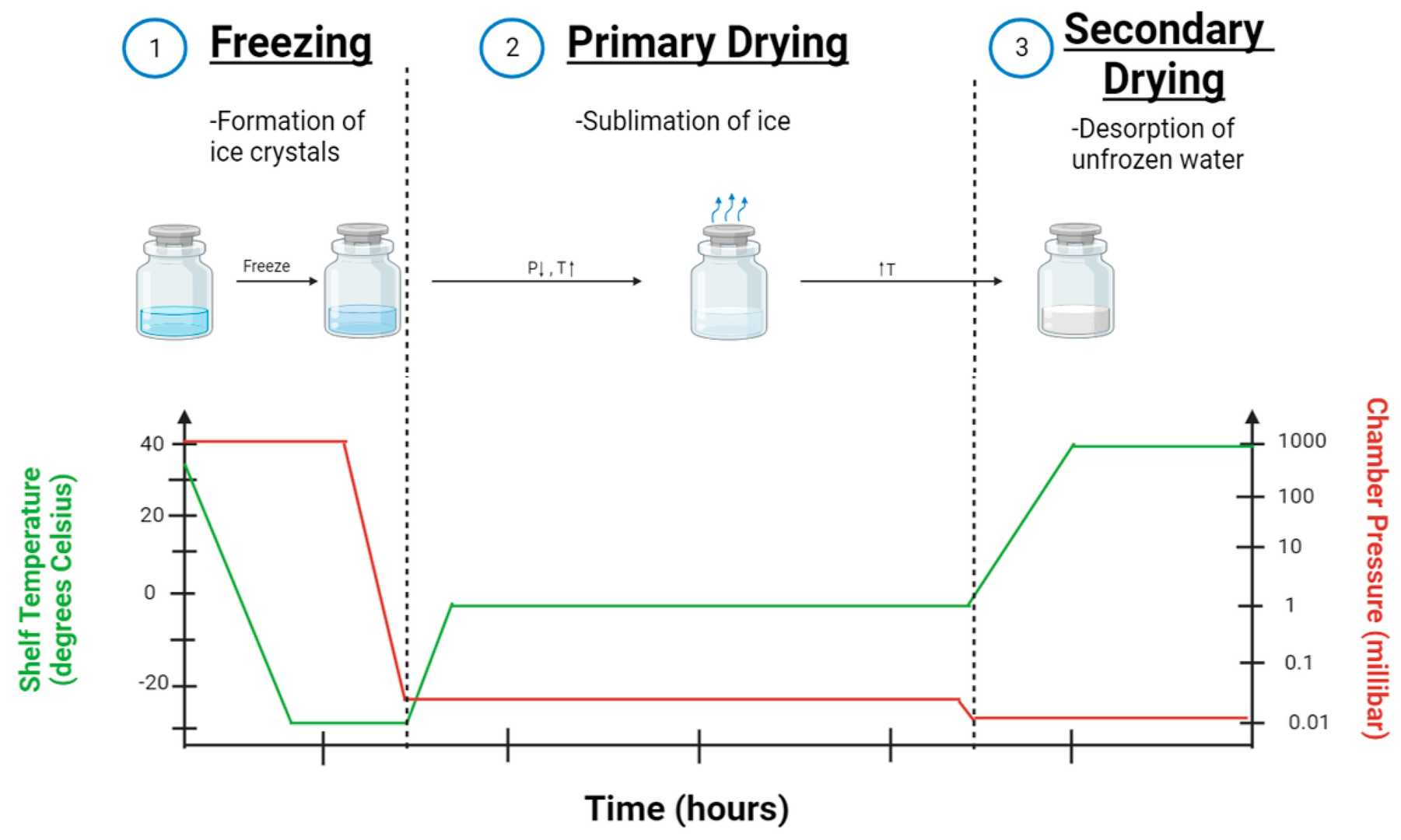 Figure 1. Representative process parameters and sample states throughout the lyophilization cycle. Adapted from Gatto and Najahi-Missaoui (2023).
Creative Enzymes Diagnostic applies Process Analytical Technology (PAT) and Design of Experiments (DoE) methodologies to develop robust, reproducible, and optimized lyophilization cycles tailored to your project.
Applications
Glycerol-free, lyo-ready enzymes enable diagnostic applications that are impractical or impossible with traditional liquid-glycerol formulations. Our stabilized dry enzymes have been successfully integrated across a broad range of diagnostic platforms and deployment scenarios.
- POCT: Lyophilized enzyme reagents in cartridge, cassette, or dipstick formats enable true point-of-care testing without cold-chain infrastructure. Rapid reconstitution by sample addition eliminates manual pipetting and reduces operator error, while ambient-temperature stability extends shelf-life in clinics, pharmacies, and remote settings.
- PCR: Glycerol-free DNA polymerases, reverse transcriptases, and master mix components formulated as lyophilized beads or pellets enable room-temperature shipping and storage of PCR reagents. Pre-aliquoted, lyo-ready reactions reduce setup time, minimize contamination risk, and improve lot-to-lot consistency in both central lab and decentralized testing.
- LAMP: Isothermal amplification enzymes (Bst DNA polymerase, recombinases, single-strand binding proteins) in dry format eliminate the viscosity and pipetting challenges of glycerol-stabilized reagents. Lyo-ready LAMP reagents support field-deployable molecular diagnostics for infectious disease surveillance, veterinary testing, and environmental monitoring.
- Dry Chemistry: Enzyme-integrated dry chemistry strips and cards for blood glucose, cholesterol, liver function, and cardiac marker testing rely on glycerol-free, lyo-stable enzymes that rehydrate and activate upon contact with whole blood, plasma, or serum. Our optimized enzymes maintain activity through the coating, drying, and lamination processes used in strip manufacturing.
FAQs
Q1. Will removing glycerol compromise the enzyme's stability during liquid storage?
A1. No. Our glycerol-free formulations are designed to provide equivalent or superior stability compared to glycerol-containing controls through optimized stabilizer systems. In many cases, the combination of trehalose, specific amino acids, and buffer optimization provides better protection against thermal and oxidative stress than glycerol alone. We validate liquid stability of glycerol-free formulations at 4°C, −20°C, and ambient temperature to confirm that interim liquid storage requirements are met before lyophilization.
Q2. What activity recovery rates can we expect after lyophilization?
A2. Activity recovery depends on the enzyme's intrinsic lyotolerance, the formulation composition, and the lyophilization cycle parameters. For well-optimized enzymes and formulations, we typically achieve ≥90% activity recovery, with many variants showing >95% recovery. For enzymes that are particularly sensitive to freeze-drying stress, we apply protein engineering strategies (surface charge modification, disulfide bond introduction, consensus mutations) to improve intrinsic lyotolerance before formulation optimization.
Q3. How quickly do lyo-ready enzymes reconstitute, and what buffer is required?
A3. Reconstitution time depends on cake morphology, excipient selection, and the reconstitution buffer. Our optimized formulations typically reconstitute within 30 seconds to 2 minutes using standard assay buffer, water, or sample matrix. We design the cake structure (porosity, surface area, disintegration rate) to facilitate rapid wetting and dissolution without requiring vortexing, sonication, or extended incubation. The reconstitution protocol is validated for each product and documented in the instruction for use.
Q4. Can you develop lyo-ready enzymes for multiplexed reactions or pre-mixed master mixes?
A4. Yes. We have extensive experience formulating multi-enzyme lyophilized products including PCR master mixes, LAMP reaction cocktails, and enzyme-antibody conjugate blends. The key challenge is ensuring that all components remain stable and compatible in the same dry matrix. We optimize excipient ratios, pH, and ionic strength to accommodate the stability requirements of all enzymes in the mixture, and validate that no component is compromised by the presence of others during lyophilization or storage.
Q5. What is the typical timeline for glycerol-free and lyo-ready enzyme development?
A5. A standard program, from formulation screening through stability validation, typically spans 8 to 12 weeks. This includes 3–4 weeks for glycerol-free formulation development and liquid stability confirmation, 3–4 weeks for lyophilization cycle optimization and activity recovery validation, and 2–4 weeks for accelerated stability studies and documentation. Projects requiring protein engineering for intrinsic lyotolerance improvement may extend to 14–18 weeks. Expedited timelines are available for urgent POC diagnostic development programs.
Q6. Can you support manufacturing scale-up and technology transfer for lyo-ready enzyme production?
A6. Yes. Our integrated platform provides seamless scale-up from research-scale lyophilization (bench-top freeze-dryers) to manufacturing-scale production (pilot and commercial freeze-dryers). We develop and transfer the complete manufacturing process including bulk formulation, filling, lyophilization cycle, stoppering, capping, and packaging. Technology transfer documentation includes batch records, SOPs, validated analytical methods, and stability data formatted for regulatory submission and GMP compliance.
Creative Enzymes Diagnostic combines advanced formulation science, lyophilization expertise, and protein engineering capabilities to deliver diagnostic enzymes that are stable, active, and ready for deployment—without glycerol, without refrigeration, and without compromise. From POC cartridges to dry chemistry strips, our glycerol-free and lyo-ready enzyme development service provides the formulation foundation for next-generation diagnostic products.
Contact our business development team today to discuss your specific project needs!
References
- Gatto MS, Najahi-Missaoui W. Lyophilization of nanoparticles, does it really work? Overview of the current status and challenges. IJMS. 2023;24(18):14041. doi:10.3390/ijms241814041
Related Services

