
Total bile acids (TBA) represent a chemically diverse pool of primary, secondary, conjugated, and unconjugated bile acids. Enzymatic TBA assays convert the shared structural features of many bile acids into a measurable cofactor signal, providing an aggregate result rather than a profile of individual molecular species.
3α-Hydroxysteroid dehydrogenase (3α-HSD; EC 1.1.1.50) is the central biocatalyst in many TBA reagent systems. Its reversible oxidation of a 3α-hydroxyl group can be used in a direct cofactor assay or incorporated into an enzyme-cycling design for signal amplification.
Creative Enzymes supplies 3α-HSD products and assay-development support for total bile acid reagent systems. Enzyme selection should be based on substrate coverage, cofactor preference, activity in the intended formulation, matrix tolerance, and stability throughout the proposed product lifecycle.
Bile acids are synthesized from cholesterol in the liver, conjugated mainly with glycine or taurine, secreted into bile, modified by intestinal microorganisms, and returned to the liver through enterohepatic circulation. The circulating pool therefore contains multiple structures whose relative abundance can change with physiology, specimen collection conditions, and hepatobiliary function.
A TBA assay is intended to estimate the combined response of bile acid species recognized by the selected analytical system. Changes in the result may reflect altered synthesis, hepatic uptake, biliary secretion, or enterohepatic circulation, but the result should be interpreted with other laboratory and clinical information.
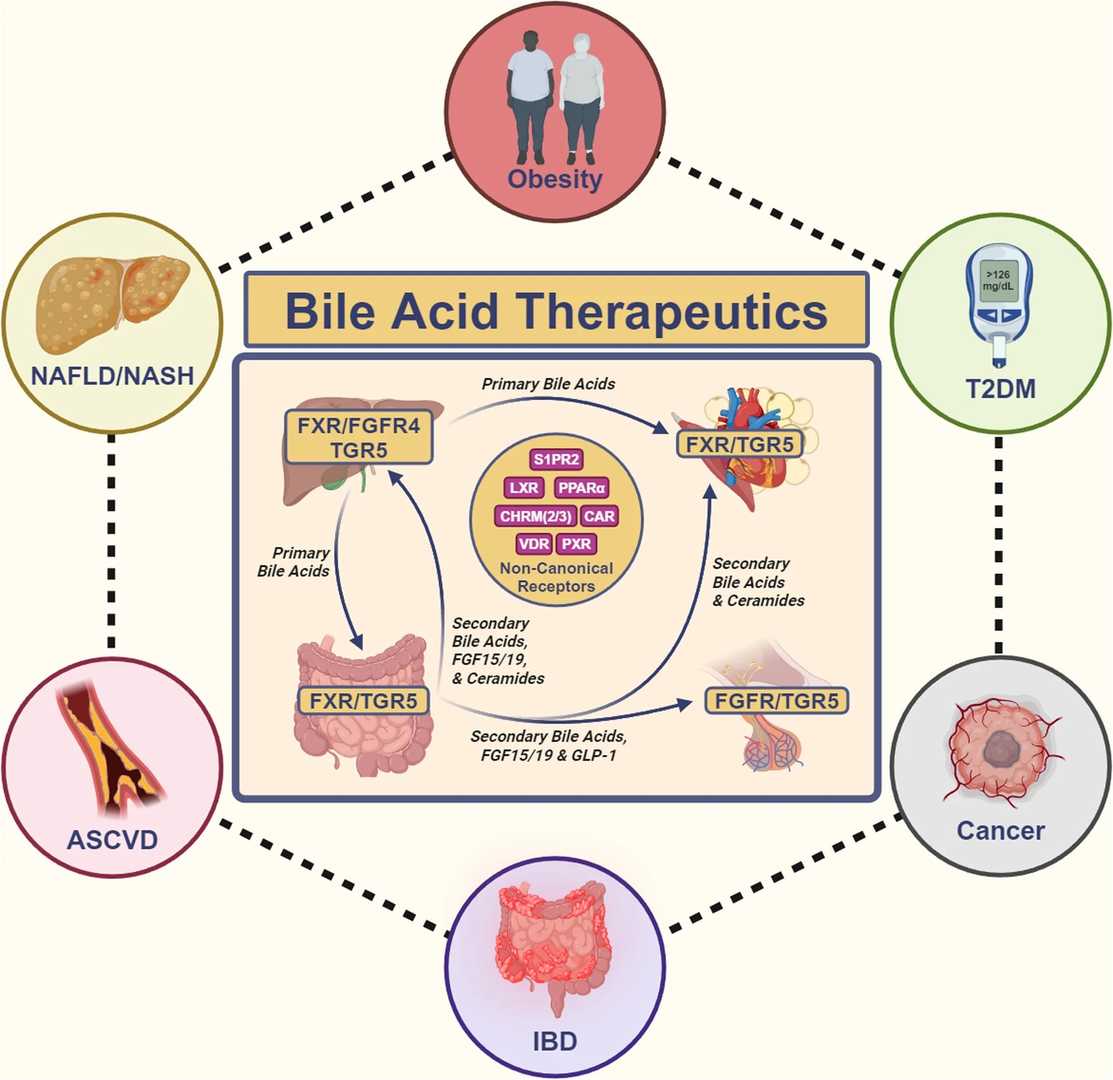 Figure 1. Bile acid signaling in health and disease. (Fleishman and Kumar, 2024)
The measurand is operationally defined by the enzyme, cofactors, reaction conditions, calibrator, and detection strategy. Many common bile acids contain a 3α-hydroxyl group and can participate in a 3α-HSD reaction, but different species may not produce identical reaction rates or endpoint responses.
A TBA result does not identify or quantify individual bile acids. When molecular-species information is required, a validated chromatographic or mass-spectrometric profiling method is more appropriate.
| Strategy | Signal Principle | Development Focus |
|---|---|---|
| Direct cofactor method | Oxidation of 3α-hydroxy bile acids generates a reduced nicotinamide cofactor that can be monitored by absorbance. | Cofactor background, enzyme loading, optical path, reaction completion, and sensitivity at the low end of the measuring interval. |
| Enzyme-cycling method | 3α-HSD repeatedly interconverts 3α-hydroxy and 3-keto forms using paired cofactors, allowing a detectable cofactor product to accumulate over multiple cycles. | Forward and reverse reaction balance, cofactor purity, cycling rate, blank drift, timing, and temperature control. |
| Bile acid profiling | Individual bile acid species are separated and measured by an appropriate analytical platform. | Species-level identification and quantitation; this is a different measurand and is not interchangeable with an enzymatic TBA result. |
The core reversible reaction can be represented in general form:
3α-Hydroxy bile acid + NAD(P)+ ⇌ 3-keto bile acid + NAD(P)H + H+
In a direct method, formation of the reduced cofactor provides the analytical signal. In a cycling method, the oxidized bile acid is converted back to its 3α-hydroxy form while a second cofactor participates in the reverse reaction. Repeated turnover amplifies the response without requiring a stoichiometric increase in the bile acid concentration.
Useful performance depends on more than the nominal EC classification. The enzyme must provide suitable activity across the intended mixture of conjugated and unconjugated bile acids under the reagent system's pH, ionic strength, detergent, cofactor, and temperature conditions.
Cofactor preference and reversibility should be characterized using the intended assay chemistry. Activity values obtained with a reference steroid substrate are useful for material characterization, but they do not by themselves predict cycling efficiency in a TBA formulation.
| Product | Source / Form | Listed Activity | Development Relevance |
|---|---|---|---|
| Native 3α-Hydroxysteroid Dehydrogenase (3α-HSD) from Microorganism | Microbial; lyophilized powder | ≥55 U/mg | Listed for total bile acid assay systems using enzymatic cyclic amplification. |
| 3α-Hydroxysteroid Dehydrogenase, Recombinant | Recombinant; freeze-dried powder | About 50 U/mg powder | Recombinant 3α-HSD for evaluation in total bile acid assay development. |
A mixed bile acid pool cannot be represented adequately by testing only one convenient substrate. Method development should use a panel selected to reflect the intended specimen population and analytical claim. The goal is not necessarily identical kinetic behavior for every species; it is a controlled and understood aggregate response.
| Panel Dimension | Why It Matters | Evaluation Question |
|---|---|---|
| Primary versus secondary bile acids | Differences in hydroxylation pattern can affect binding and turnover. | Does the enzyme provide an acceptable relative response across representative structures? |
| Conjugated versus unconjugated forms | Glycine or taurine conjugation changes charge, solubility, and enzyme accessibility. | Does conjugation introduce a systematic response bias under the proposed conditions? |
| Low- and high-abundance mixtures | Competitive substrate behavior may differ from single-analyte experiments. | Is recovery maintained when the composition of the bile acid pool changes? |
| Related steroids | Other compounds with a compatible 3α-hydroxysteroid structure may be recognized. | Is cross-reactivity acceptable for the intended sample type and use? |
Bile acids vary in hydrophobicity and interactions with proteins and formulation components. Surfactants may improve accessibility, but they can also alter enzyme activity, optical background, and reagent stability. Candidate additives should therefore be assessed in the complete reaction rather than selected solely from solubility tests.
Cycling improves analytical response but can also amplify reagent impurities, cofactor degradation, or non-analyte turnover. Blank behavior must be controlled across reagent age, analyzer temperature, and read timing.
Because bile acid species can differ in enzymatic response, calibrator composition influences the assigned TBA result. A calibrator prepared with one bile acid is not automatically commutable with specimens containing a changing mixture of conjugated and unconjugated species. Calibration design should be considered together with enzyme selection and substrate-response studies.
Request Total Bile Acid Assay Development Support
Creative Enzymes can support projects from enzyme selection through reagent-system evaluation. Work may include activity and stability characterization, representative-substrate screening, matrix and interference studies, formulation development, and calibration or control-material planning. Project scope, acceptance criteria, and intended use should be defined before experimental work begins.
Q1. What does an enzymatic total bile acid assay measure?
Q2. Does a TBA result identify individual bile acids?
Q3. Why is 3α-HSD used in total bile acid assays?
Q4. What is the difference between a direct cofactor method and an enzyme-cycling method?
Q5. Do all bile acid species respond equally in a 3α-HSD assay?
Q6. Can related steroids interfere with a TBA assay?
Q7. How should a 3α-HSD product be selected for assay development?
Q8. Why do specimen-collection conditions matter for TBA testing?
Q9. Can Creative Enzymes support custom TBA reagent development?
