
Companion diagnostics are moving beyond single-analyte, single-tissue tests toward broader molecular profiling, liquid biopsy, integrated algorithms, and more flexible therapy labeling. At the same time, the foundational requirements remain unchanged: a clinically relevant biomarker, a controlled assay, representative specimens, reliable manufacturing, and evidence that the result supports a defined treatment decision.
This article examines major trends shaping CDx and precision medicine in 2026, with emphasis on the enzyme and reagent implications behind them. It separates established directions visible in current regulatory activity from emerging approaches that still require clinical and regulatory evidence.
Early CDx strategies often focused on one mutation or protein. Current assays may assess multiple genes, variant classes, genomic signatures, homologous-recombination deficiency, expression patterns, or combined molecular and protein features. Broader profiling can conserve tissue and identify several therapeutic options, but it introduces more validation dimensions and more complex interpretation.
Panel expansion is not only a software change. New targets may have different GC content, fragment length, abundance, and sequence context. PCR competition, library-preparation bias, coverage, reference materials, and bioinformatics all require evaluation. Composite scores additionally require locked algorithms, missing-data rules, and evidence that the cutoff transfers across sites and populations.
| Trend | Opportunity | Enzyme/reagent implication |
|---|---|---|
| Comprehensive genomic profiling | Multiple biomarkers from limited tissue | High-fidelity, low-bias library preparation and multiplex robustness |
| Liquid biopsy | Less invasive sampling and longitudinal access | Efficient recovery of short, low-abundance cell-free DNA and stringent error control |
| RNA biomarkers | Fusion and expression detection | Reverse-transcriptase performance with degraded, structured RNA |
| Group labeling | Potential association with a therapeutic group | Stable assay claims and evidence across relevant drugs/biomarkers |
| Decentralized testing | Shorter pathways to results | Robust dry reagents, simpler controls, temperature and matrix tolerance |
| Digital and single-molecule methods | Precise rare-target counting | Partition compatibility, low background, stable endpoint chemistry |
| Integrated algorithms | Combine multiple signals and context | Controlled data pipelines, calibration, versioning, and traceability |
Plasma cell-free DNA can provide a minimally invasive view of tumor-derived variants and may support testing when tissue is unavailable. Current FDA activity includes plasma-based CDx indications and ctDNA applications. However, low tumor fraction, fragmentation, biological shedding, and clonal hematopoiesis can complicate interpretation.
Negative plasma results may not exclude a tumor alteration in every intended use. Test-specific labeling and clinical context determine whether tissue follow-up is appropriate. Enzyme systems must preserve scarce molecules and suppress damage- or polymerase-derived errors.
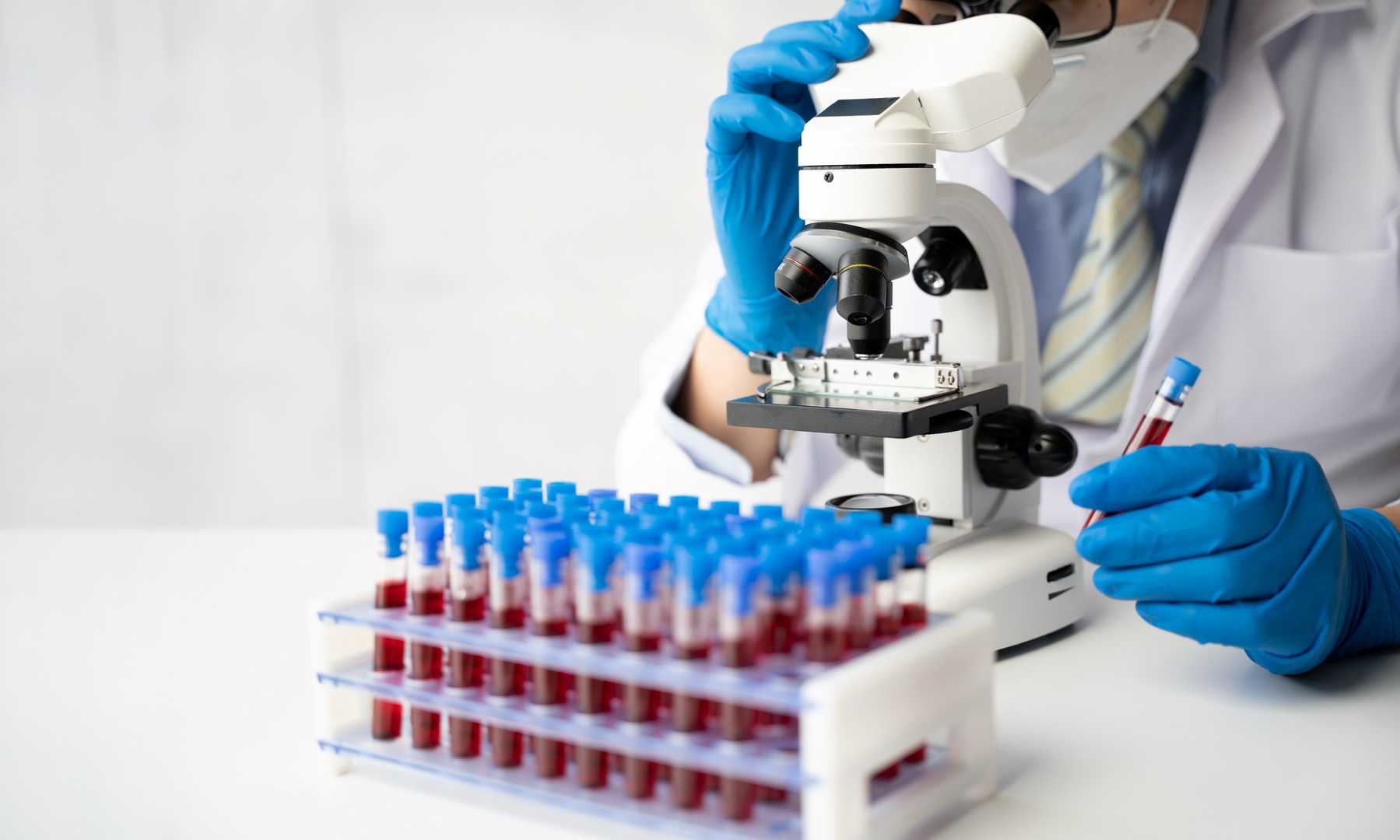
Figure 1. Tissue and liquid biopsy provide complementary biological and practical information.
NGS can measure substitutions, insertions, deletions, copy-number changes, fusions, and genomic signatures in one workflow. This breadth supports tissue conservation and multiple therapy associations. It also makes validation more complex: representative variants, difficult regions, input levels, bioinformatics, coverage, and database content must be addressed.
Low-input library construction depends on coordinated end repair, ligation, amplification, and cleanup. NGS library-preparation enzyme-system development can target yield and bias, while enzyme scale-up addresses supply consistency. Broader panels should not be assumed to outperform targeted assays for every treatment decision; depth, turnaround, cost, tissue, and interpretive needs still matter.
Integrated cartridges, isothermal amplification, and compact readers aim to reduce hands-on time and central-laboratory delay.
Lyophilized or ambient-stable reagents may simplify shipping and device integration, but rehydration and shelf life require validation.
Digital ordering, result delivery, and decision support can reduce friction while adding cybersecurity and data-governance responsibilities.
Decentralization is not appropriate for every complex CDx. User steps, environmental conditions, quality oversight, and confirmatory pathways must match the risk. Glycerol-free and lyo-ready enzyme development, LAMP/RT-LAMP development, and instrument-platform adaptation support feasibility assessment.
Partition-based methods can count target-positive reactions and improve precision for selected low-frequency variants. Circulating tumor DNA and molecular residual disease applications push assays toward very low molecule counts, where preanalytical loss, sampling statistics, contamination, and biological variability become dominant. A highly sensitive analytical method cannot detect molecules that were absent from the collected aliquot.
Unique molecular identifiers, duplex strategies, replicate sampling, and background models can reduce certain errors. Enzymes need high specificity and compatibility with partitions, fluorophores, and endpoint conditions. Digital PCR and digital LAMP reagent development addresses partitioned amplification, but clinical utility and a therapy-linked claim still require separate evidence.
Algorithms can combine variants, expression, pathology images, clinical features, or quality metrics. Machine learning may improve pattern recognition, but it introduces questions about training-data representativeness, explainability, locked versus adaptive behavior, bias, missing data, and performance drift. The algorithm is part of the device when it determines the CDx result.
Analytical errors propagate into computational outputs. Poor library complexity, staining drift, or batch effects can be mistaken for biology. Data pipelines need version control, verification, traceability, cybersecurity, and change assessment. Prospective evidence and external validation are especially important when an algorithm moves from discovery to patient selection.
FDA’s current list of authorized companion diagnostic devices includes tissue and plasma molecular tests, immunohistochemistry, in situ hybridization, and imaging tools. Recent entries illustrate continued activity in liquid biopsy, genomic profiling, PD-L1 testing, HRD, HER2, and ctDNA. The list is dynamic and should be consulted directly for current indications.
Group labeling may allow an IVD companion diagnostic to be associated with a specified group of oncology therapeutic products when supported. FDA’s voluntary oncology pilot also addresses publicly available performance information for certain tests used with oncology drugs. Neither approach eliminates the need for adequate device evidence or careful labeling.
Trend adoption should solve a defined patient or workflow problem. A biomarker assay feasibility program can test whether an emerging platform adds meaningful value before pivotal commitments are made.
Whatever platform or specimen is selected, development should begin with a written link between intended use and analytical requirements. Define the patient population, biomarker, specimen, treatment decision, reportable result, turnaround expectation, and use environment. Then identify the failure modes that could change classification: target loss, nonspecific signal, amplification bias, reagent drift, interference, software error, or an invalid result that delays therapy. This risk map determines which enzyme attributes and assay controls deserve the most attention.
Feasibility experiments should include representative clinical material as early as possible. Purified templates and synthetic controls are valuable for isolating variables, but they do not reproduce fixation damage, low tumor fraction, endogenous inhibitors, sample heterogeneity, or extraction carryover. A staged study can begin with controlled materials, add individual challenges, and then confirm performance in specimens spanning the intended range. Samples near the cutoff are especially informative because small shifts in recovery, background, or signal can change the treatment category.
Critical enzymes should be specified by more than catalog activity. Identity, purity, concentration, specific activity, contaminating nuclease or protease limits, formulation, storage, and functional performance may all be relevant. The release method should use conditions that predict performance in the diagnostic reaction. When the vendor activity assay and CDx chemistry differ substantially, an assay-level incoming or bridging test can provide a more direct control. Multiple lots should be evaluated before pivotal use so the acceptance range reflects manufacturing variation rather than one favored batch.
Robustness studies intentionally vary parameters that will move in practice: reaction time and temperature, pipetting, sample input, operator, instrument, reagent lot, shipping excursion, and storage duration. Interference studies should use justified concentrations and combinations of endogenous substances, collection additives, medications, and process residuals. Controls must fail when the vulnerable step fails; an abundant control target may remain positive even when a low-copy clinical target is lost.
Finally, document changes across the full measurement system. A new enzyme lot, buffer, primer pool, conjugation process, extraction kit, instrument, or software version can alter analytical performance even if the intended use is unchanged. Risk-based comparability should focus on the attributes most likely to affect the cutoff and claimed range. Preserving retained samples, reference materials, version history, and a predefined bridging strategy makes lifecycle improvements possible without breaking the connection to the clinical evidence.
These questions keep development centered on the treatment decision rather than isolated technical metrics. They also create a common language for biomarker, clinical, regulatory, quality, manufacturing, and supplier teams.
The direction of precision medicine is broader, less invasive, more quantitative, and more connected. Yet innovation increases rather than removes the need for enzyme control, representative validation, disciplined algorithms, and aligned therapeutic evidence. The most useful trend is not the newest platform; it is the one that measurably improves access to a reliable treatment decision.
Creative Enzymes supports diagnostic enzyme selection, engineering, formulation, conjugation, analytical evaluation, and scale-up for molecular and immunoassay CDx workflows.
