
Separable catalysis
Immobilization allows enzyme removal after reaction, reducing soluble carryover into later steps.

Immobilized enzymes and magnetic bead components localize catalytic or binding functions on a solid support. They can simplify separation, washing, reuse, automation, and controlled reaction stopping, but performance depends on coupling chemistry, orientation, loading, mass transfer, leaching, and bead handling.
Attaching an enzyme to a bead or surface changes its local environment. Reactive groups used for coupling can modify residues near the active site; dense loading can restrict substrate access; surfaces can alter conformation; and diffusion can limit the observed rate. The activity of the soluble starting enzyme therefore cannot be transferred directly to the immobilized reagent.
Magnetic particles add operational variables such as collection time, residual bead loss, resuspension, aggregation, wash efficiency, and carryover into the readout. These factors may dominate reproducibility in automated extraction, capture, biosensor, or multi-step diagnostic workflows.
Immobilization allows enzyme removal after reaction, reducing soluble carryover into later steps.
Magnetic beads support automated capture, washing, concentration, and transfer of target material.
Enzymes or affinity reagents on particles and sensors provide localized reaction or signal generation.
A retained enzyme phase may support repeated or flow-through processing when activity and leaching remain controlled.
Choose the support and coupling route from the workflow, then optimize accessible activity, stability, separation, and compatibility with the sample and instrument.
Stable covalent attachment reduces desorption and supports repeated washing or use.
Check: reactive group, orientation, modification of the active site, and leaching.
Tag- or ligand-based capture can provide more controlled orientation and reversible assembly.
Check: ligand stability, competing sample components, and dissociation.
Physical adsorption and entrapment can simplify preparation but may increase desorption or diffusion limits.
Check: binding strength, pore access, release, and batch reproducibility.
Functionalized magnetic particles combine target binding with rapid external separation.
Check: particle size, binding capacity, collection time, resuspension, and carryover.
Pre-dosed particles can integrate immobilized or soluble components into device-ready reagent formats.
Check: drying recovery, dose uniformity, rehydration, aggregation, and release kinetics.
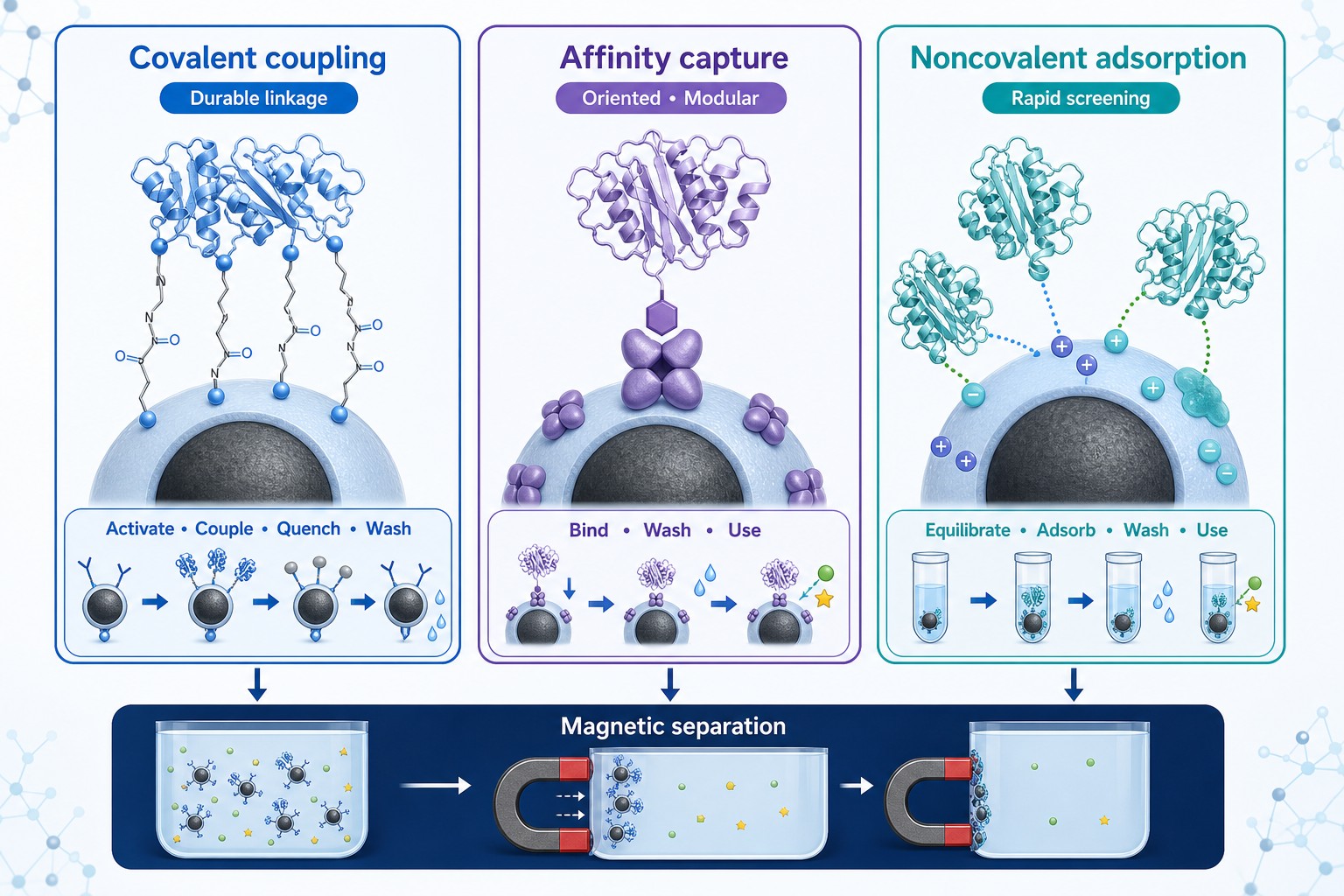 Fig 1. Immobilization chemistry and workflow selector.
(Creative Enzymes Diagnostic)
Evaluate the assembled particle reagent under the intended mixing, timing, magnet, wash, matrix, and device conditions. Soluble enzyme activity and nominal bead capacity are only starting inputs.
| Selection factor | How to evaluate it | Why it matters |
|---|---|---|
| Support and surface chemistry | Define material, size, porosity, charge, coating, reactive group, and nonspecific-binding controls. | Surface properties affect coupling, conformation, adsorption, transport, and matrix compatibility. |
| Coupling and orientation | Measure attached protein, accessible active sites, retained activity or binding, and coupling distribution. | High total loading may still provide low functional loading when orientation or crowding blocks access. |
| Mass transfer and mixing | Test substrate concentration, particle concentration, mixing, viscosity, volume, and reaction time. | Diffusion to and within the particle can limit the observed rate. |
| Magnetic separation | Measure collection time, residual beads, resuspension, aggregation, and performance with the intended magnet and vessel. | Incomplete recovery or poor resuspension creates volume and carryover variability. |
| Leaching and carryover | Quantify released enzyme, ligand, particle, and process reagents after each wash or use cycle. | Leached components can continue reacting or interfere with downstream detection. |
| Storage and reuse | Assess liquid or dry storage, cycling, wash exposure, microbial control, and functional recovery over the intended use pattern. | Surface-bound materials may fail through aggregation, desorption, denaturation, or loss of magnetic handling. |
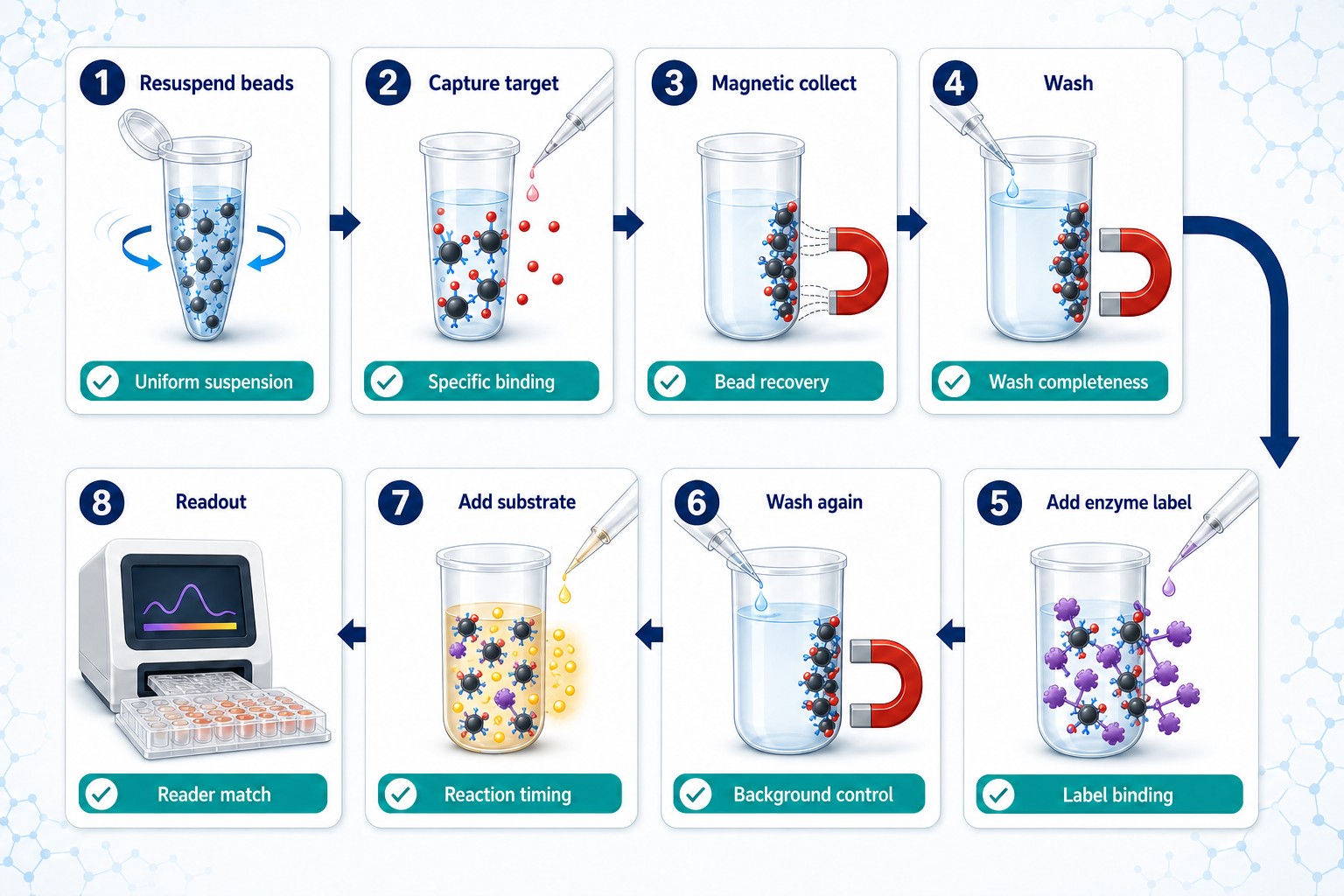 Fig 2. Magnetic-bead assay operations map.
(Creative Enzymes Diagnostic)
Requirements depend on the enzyme or affinity reagent, support chemistry, loading, sample matrix, separation hardware, process sequence, and final format. Contact Creative Enzymes with the intended workflow so that suitable component options can be discussed.
Qualification should cover both biochemical function and unit operation. The particle must perform the intended reaction or capture and then separate, wash, and transfer reproducibly.
Specify reaction or capture objective, sample, volume, mixing, timing, magnet, washes, transfer, and downstream assay.
Balance coupling density, orientation, accessible activity, nonspecific binding, and particle concentration.
Test viscosity, aggregation, collection time, resuspension, bead loss, leaching, and carryover across instruments and operators.
Set release criteria for loading, activity or binding, particle properties, storage, drying, reuse if applicable, lot bridging, and packaging.
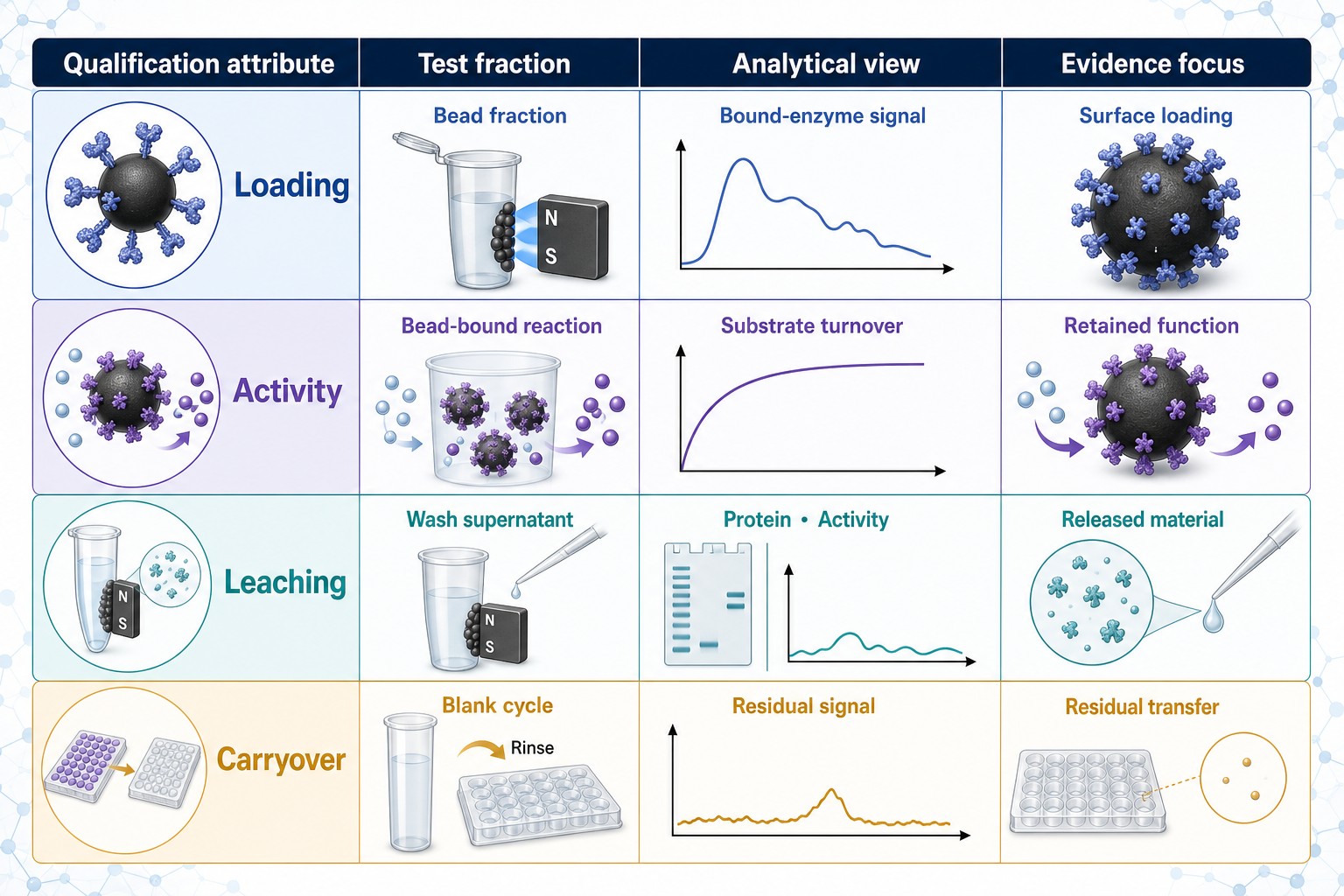 Fig 3. Loading activity leaching and carryover qualification matrix.
(Creative Enzymes Diagnostic)
Provide the enzyme or affinity reagent, support and coupling preference, sample matrix, loading and activity target, volume, mixing and magnetic hardware, wash sequence, downstream assay, format, scale, and documentation needs.
No. Orientation, crowding, surface modification, pore access, and partial denaturation can reduce the fraction of attached enzyme that remains accessible and active.
Diffusion, local pH and ionic strength, substrate partitioning, surface interactions, and restricted enzyme motion can change the observed response.
Measure collection time, residual particles, recovered volume, resuspension, aggregation, wash efficiency, and carryover into the next step.
Test released enzyme, affinity ligand, particle coating, and process reagents after realistic incubation, washing, storage, and reuse conditions.
It is useful when strong retention through washing or reuse is required, provided that coupling preserves sufficient active-site access and functional recovery.
Drying recovery, dose uniformity, aggregation, rehydration time, component release, moisture, and device handling become additional critical attributes.
These sources support the scientific classification and technical selection criteria. Product specifications must be confirmed in current Creative Enzymes documentation.