
Biomarker discovery for companion diagnostics begins with a biological question but succeeds only when the resulting marker can be measured reliably and linked to a defined treatment decision. Genomic variants, RNA signatures, protein expression, pathway activity, and other molecular features may correlate with therapeutic response or risk. Most discovery signals, however, do not become deployable CDx assays. Attrition often occurs because the association is not reproducible, the specimen is impractical, the marker is heterogeneous, the assay lacks a stable cutoff, or the clinical context is poorly defined.
This article presents a translational framework from biomarker hypothesis through analytical feasibility and clinical validation, with emphasis on decisions that reduce late-stage risk.
Large datasets can reveal statistically striking associations, but a companion diagnostic requires more than association. The team should define the therapeutic mechanism, disease setting, patient population, treatment decision, and expected biomarker role before selecting a measurement platform. A predictive biomarker indicates differential likelihood of treatment effect; a prognostic biomarker relates to outcome independent of a particular treatment. A marker may be both, but the evidence must distinguish these roles.
Discovery question: “Which biological feature is associated with outcome?” CDx translation question: “Can that feature be measured with a controlled assay and interpreted to support the safe and effective use of a corresponding therapy?”
A clear context of use narrows the search. It guides specimen selection, comparator groups, sampling time, endpoints, prevalence estimates, and acceptable error. It also reduces the temptation to optimize a marker against a convenient dataset that does not represent the intended population.
| Biomarker type | Representative signal | Potential technology | Translation challenge |
|---|---|---|---|
| Genomic | Single-nucleotide variant, indel, copy-number change, rearrangement | qPCR, digital PCR, targeted sequencing, NGS | Low allele fraction, heterogeneity, reference definition |
| Transcriptomic | Fusion transcript, splice form, expression signature | RT-qPCR, RNA sequencing | RNA degradation, normalization, tissue composition |
| Proteomic | Protein abundance, modification, localization | Immunoassay, tissue staining, mass spectrometry | Antibody specificity, isoforms, spatial heterogeneity |
| Functional | Enzyme activity, pathway response, cellular phenotype | Activity assay, biosensor, cell-based method | Preanalytical sensitivity and complex controls |
| Composite | Multigene or multimodal score | Multiplex assay plus algorithm | Overfitting, missing inputs, software version control |
The same biological pathway may be measured at different levels. DNA can be stable but may not show whether a pathway is active. RNA can capture expression but is vulnerable to degradation. Protein can be closer to function but may be spatially heterogeneous. Functional assays can reflect activity but often have demanding specimen requirements. Selection should balance biological relevance with measurement feasibility.
Discovery may use sequencing, transcriptomics, proteomics, spatial profiling, high-content imaging, or functional screens. Technology breadth is useful, but study design determines whether the signal can be trusted. Cohorts should reflect disease subtype, prior therapy, demographics, specimen quality, and relevant confounders. Batch, collection site, processing time, and storage condition must not be aligned with outcome groups, because technical variation can masquerade as biology.
Independent patients or models show whether a signal generalizes beyond one sample set.
Repeated preparation or measurement estimates platform and processing variation.
An orthogonal method or separate cohort tests whether the association survives a different measurement path.
For nucleic-acid discovery, library preparation and amplification can introduce coverage and composition bias. Enzyme lot, input mass, fragment size, GC content, and cycle number should be controlled. Researchers can review NGS enzymes and reagents and HiFi Amplification Mix when constructing targeted workflows, while recognizing that discovery-grade performance must later be translated into an intended-use assay.
A biomarker exists within a specimen history. Tissue can contain variable tumor fraction, necrosis, stromal cells, or fixation damage. Plasma contains low-abundance, fragmented nucleic acids influenced by collection tubes, processing delay, and storage. RNA expression can change with ischemia or handling. Protein measurements can be affected by proteolysis, adsorption, hemolysis, and repeated freezing.
Developers should write a preanalytical map covering collection, transport, processing, stabilization, storage, extraction, input quality, and rejection criteria. Pilot studies can compare realistic variations and identify which must be controlled. If the intended clinical specimen is scarce, paired model systems may support method development, but bridging to representative clinical material remains essential.
Prioritization should combine effect size, reproducibility, biological plausibility, prevalence, measurability, specimen access, therapeutic relevance, and development feasibility. Statistical significance alone is inadequate, especially when thousands of features are tested. Multiple-testing control, prespecified analysis, internal validation, and independent replication reduce false discovery. Machine-learning models require careful separation of training and validation data and protection against leakage.
| Criterion | Strong candidate | Warning sign |
|---|---|---|
| Therapeutic relevance | Coherent mechanism or replicated response association | Correlation without plausible connection or independent evidence |
| Prevalence | Sufficient population and identifiable subgroup | So rare that development and validation are impractical |
| Analytical separability | Signal exceeds biological and technical variability | Heavy overlap near any proposed cutoff |
| Specimen feasibility | Accessible material with controllable preanalytics | Marker detectable only in ideal or unavailable samples |
| Assay scalability | Transferable reagents, instruments and analysis | Dependence on manual interpretation or unstable inputs |
A portfolio approach may retain several candidates until orthogonal confirmation and assay feasibility provide enough evidence to narrow the field. Premature commitment can force a weak marker forward; indefinite exploration can delay the therapeutic program.
Translation begins by converting the research measurement into a defined measurand and prototype. Teams specify the molecular feature, units or classification, sample input, controls, instrument, data processing, and preliminary cutoff. Assay feasibility assesses sensitivity, specificity, precision, matrix behavior, dynamic range, and robustness using increasingly representative materials.
Research platforms often use normalized or relative signals that depend on batch-specific processing. A CDx needs controlled calibration or classification. Antibody reagents must distinguish relevant protein forms. Primers and probes must cover intended variants without cross-reacting. Enzymes must tolerate the matrix and maintain performance across lots. Algorithms must have fixed inputs and quality rules.
Biomarker assay feasibility and prototype development bridges discovery and formal assay development. Depending on the format, supporting capabilities may include CDx enzyme engineering, matrix and inhibitor tolerance optimization, or enzyme–antibody conjugate development.
Translational checkpoint: if the biomarker cannot be measured reproducibly in the intended specimen at clinically relevant levels, additional association analysis will not solve the assay problem.
A cutoff should reflect the intended treatment decision and the distribution of biomarker values, not simply the point that maximizes separation in one discovery cohort. Analytical variation near the boundary, prevalence, missing data, disease heterogeneity, and consequences of false classification should be considered. Continuous biomarkers may lose information when forced into categories, but a clear action rule is often necessary; the statistical and clinical rationale should be documented.
Clinical validation asks whether the test-defined result is associated with the therapeutic outcome or risk in the intended context. Study design should distinguish predictive from prognostic effects, ideally through data that support treatment-by-biomarker evaluation where appropriate. The assay used in clinical testing should be sufficiently controlled, and differences between the clinical trial assay and final design need bridging.
Failure is not always caused by poor biology. Some candidates can be rescued through a better specimen, alternate analyte, improved enzyme system, stronger control, or revised assay architecture. Root-cause experiments should distinguish biological weakness from measurement weakness before the candidate is abandoned.
The end-to-end CDx technology platform connects molecular profiling with protein expression, enzyme production, assay development, and system integration. This continuity is valuable because information can be lost when discovery, assay, clinical, and manufacturing teams use different definitions of the biomarker.
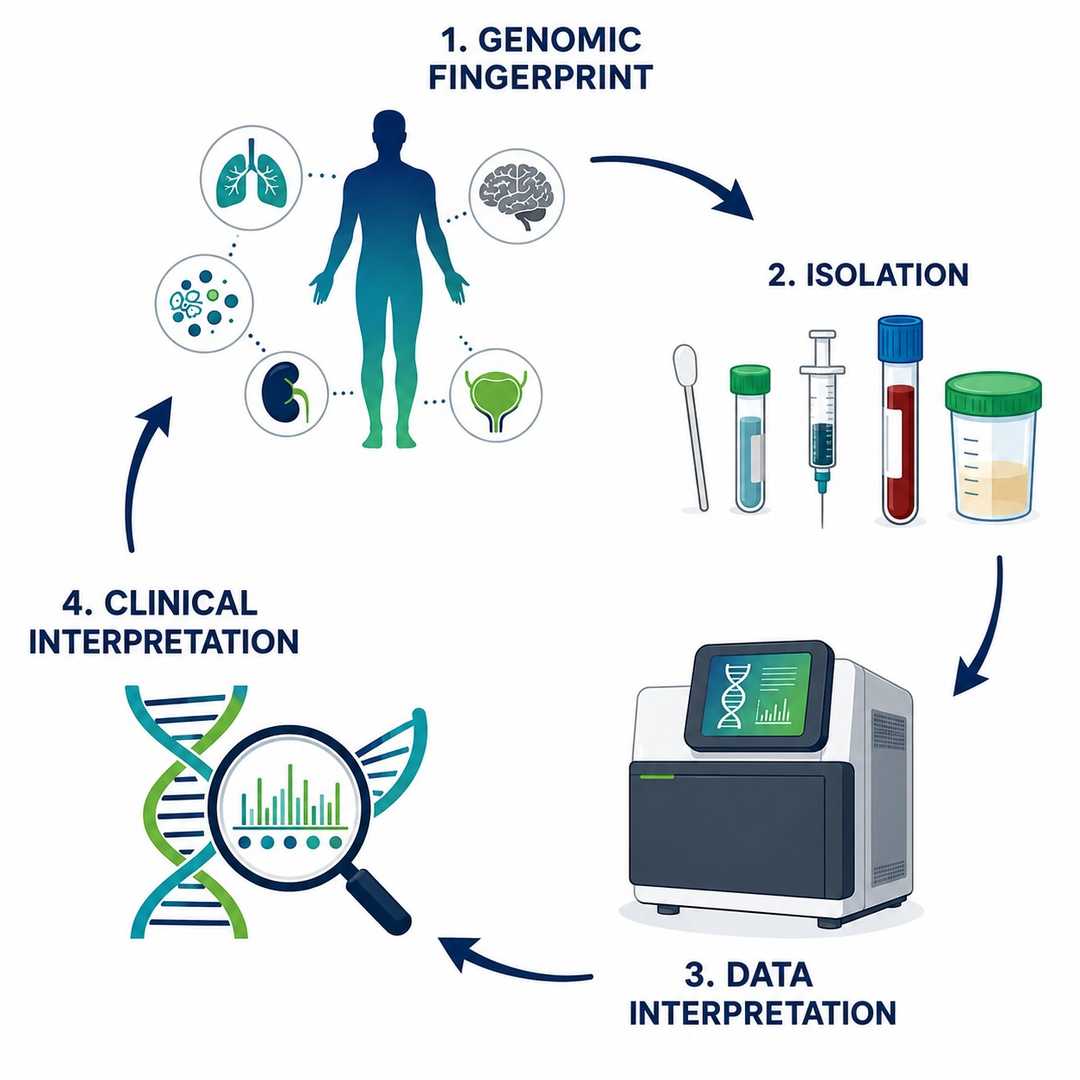
Figure 1. Workflow for biomarker discovery and companion diagnostics.
Biomarker discovery becomes CDx development when a reproducible biological signal is translated into a defined, measurable, and clinically interpretable treatment-selection tool. Strong programs begin with context, control discovery bias, plan specimens early, confirm candidates independently, test analytical feasibility before overcommitting, and align cutoff and clinical validation with the therapeutic program. The goal is not the largest candidate list; it is a marker and assay combination that can survive real-world measurement and decision requirements.
Creative Enzymes supports biomarker-to-CDx translation through molecular profiling, feasibility studies, enzyme and reagent development, analytical optimization, assay transfer, and technical documentation.
