
Metabolite phosphorylation
Kinases can convert metabolites into phosphorylated products that enter a selective downstream reaction.

| Catalog | Product Name | EC No. | CAS No. | Source | Price |
|---|---|---|---|---|---|
| DIA-617 | Alpha1, 3-Fucosyltransferase (Alpha1, 3FucT) | EC 2.4.1.65 | 37277-69-3 | Inquiry | |
| DIA-618 | Alpha1, 3-Galactosyltransferase (Alpha1, 3GalT) | EC 2.4.1.87 | 62213-42-7 | Inquiry | |
| DIA-619 | Alpha1, 2-Fucosyltransferase (a1, 2FucT) | EC 2.4.1.69 | 124-1-69 | Inquiry | |
| DIA-620 | Alpha1, 3-Galactosyltransferase (GTB) | EC 2.4.1.37 | 124-1-37 | Inquiry | |
| DIA-621 | Alpha1, 3-N-acetyl-Galactosaminyltransferase (BgtA) | EC 2.4.1.40 | 24-1-401 | Inquiry | |
| DIA-622 | Alpha1, 3-N-Acetyl-Galactosaminyltransferase (Pm1138) | EC 2.4.1.40 | 124-1-40 | Inquiry | |
| DIA-623 | Alpha1, 3/4-Fucosyltransferase (Alpha1, 3/4FucT) | EC 2.4.1.65 | 124-1-65 | Inquiry | |
| DIA-624 | Alpha2 6-Sialyltransferase (Pd26ST) | EC 2.4.99.1 | 9075-81-4 | Inquiry | |
| DIA-625 | Alpha2, 3-Sialyltransferase (PmST1) | EC 2.4.99.4 | 71124-51-1 | Inquiry |
Transferases move a defined chemical group from a donor molecule to an acceptor. Diagnostic applications use these reactions to phosphorylate metabolites, transfer amino or methyl groups, modify molecular targets, and generate products that can be measured by a coupled system.
A transferase reaction is defined by three elements: the group being transferred, the donor that carries it, and the acceptor that receives it. Kinases transfer phosphate groups, glycosyltransferases transfer sugars, aminotransferases transfer amino groups, and methyltransferases transfer methyl groups. Enzymes from these groups are not interchangeable even when they act on related acceptors.
The donor and coproduct often affect the measurement as much as the target substrate. ATP consumption produces ADP, aminotransferases depend on pyridoxal phosphate and a paired keto acid, and methyltransferases produce S-adenosylhomocysteine. A diagnostic reaction must distinguish the intended transfer from donor hydrolysis, endogenous transfer activity, and inhibition by accumulated products.
Kinases can convert metabolites into phosphorylated products that enter a selective downstream reaction.
Group transfer can be quantified through nucleotide consumption or formation when background nucleotide reactions are controlled.
Aminotransferase systems connect amino-acid or keto-acid conversion to cofactor-linked indicator reactions.
Glycosylation, methylation, and other transfers can prepare defined research substrates or support sequence- and structure-sensitive assays.
Begin with the transferred group and exact donor–acceptor pair. The required cofactor system, reaction direction, and analytical readout then determine practical fit.
These enzymes transfer phosphate, commonly from ATP, to metabolites, proteins, or other acceptors.
Check: acceptor specificity, magnesium, ATP quality, and ADP background.
Glycosyltransferases build defined glycosidic linkages using activated sugar donors.
Check: donor sugar, acceptor structure, linkage position, and neighboring groups.
These enzymes transfer amino groups between amino acids and keto acids, usually with pyridoxal phosphate.
Check: reaction direction, PLP state, paired substrate, and endogenous activity.
Acyltransferases move acyl groups from activated donors to specific acceptors in metabolic or analytical reactions.
Check: donor stability, hydrolysis, and competing acceptors.
These enzymes modify nucleic acids, proteins, or small molecules with methyl or nucleotide-derived groups.
Check: sequence context, donor purity, product inhibition, and downstream recognition.
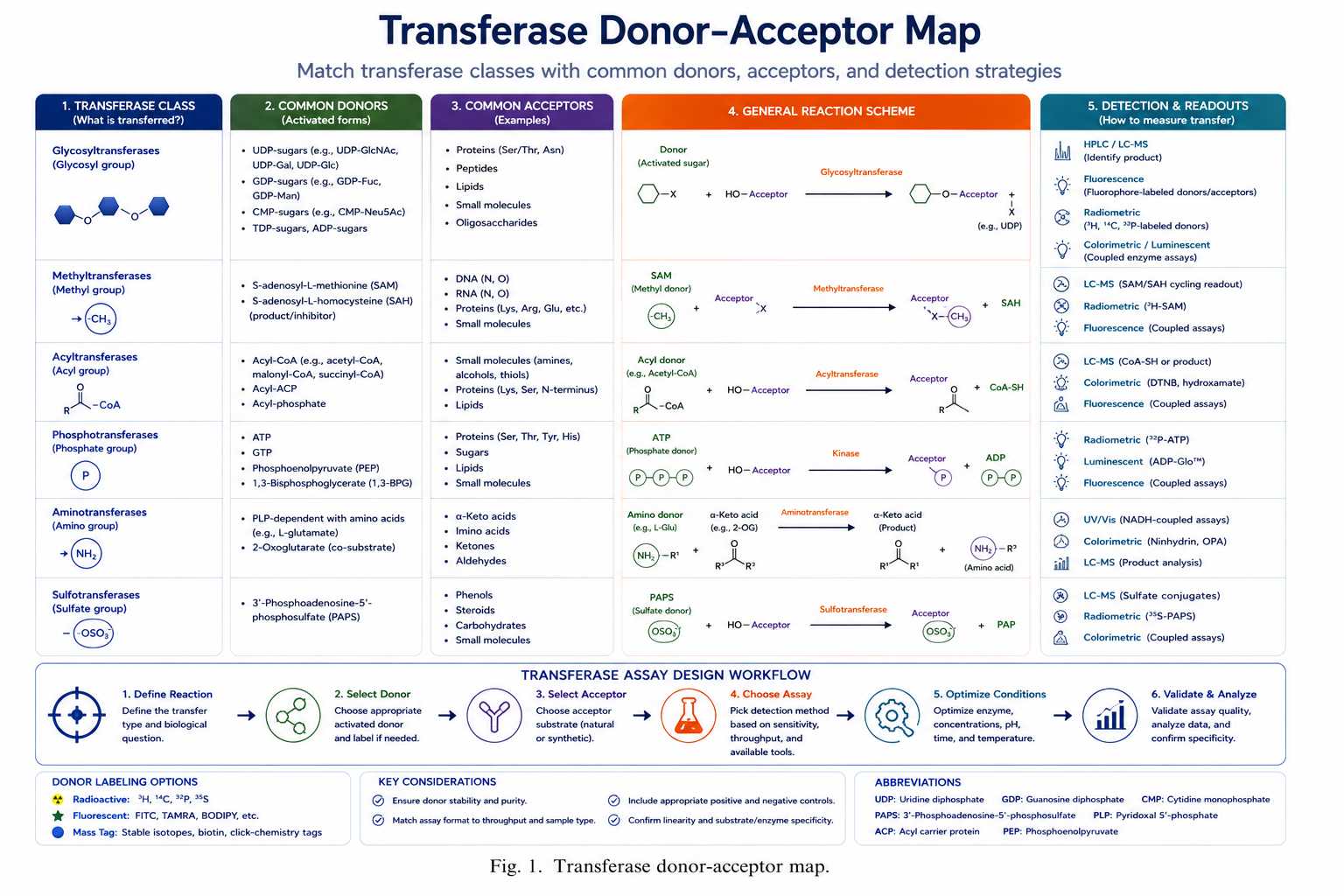 Fig 1. Transferase donor-acceptor map.
(Creative Enzymes Diagnostic)
Test the complete donor–acceptor pair. Activity measured with a different donor, acceptor, or coupling system may not predict the conversion needed in the final reagent.
| Selection factor | How to evaluate it | Why it matters |
|---|---|---|
| Transferred group and donor | Specify the chemical group and exact donor, including nucleotide, coenzyme, or activated intermediate. | Donor specificity determines whether transfer occurs and which coproduct enters the assay. |
| Acceptor specificity | Define acceptor structure, concentration, stereochemistry, sequence context, and desired linkage. | Closely related acceptors may differ in conversion or produce analytically distinct products. |
| Cofactors and metal ions | Confirm magnesium, PLP, reducing agents, and other requirements in the complete buffer. | Cofactor availability can control catalysis and interfere with downstream detection. |
| Donor hydrolysis and side transfer | Measure donor loss and products formed without the intended acceptor or with likely alternative acceptors. | Background consumption can inflate signal, reduce reagent stability, and change apparent conversion. |
| Reaction direction and product inhibition | Run time courses and vary donor, acceptor, and coproduct concentrations. | Reversibility or accumulated products can limit conversion before the desired endpoint. |
| Coupled detection | Titrate the transferase with the nucleotide, cofactor, or product-detection reaction under common conditions. | The readout should represent group transfer rather than a limiting indicator step. |
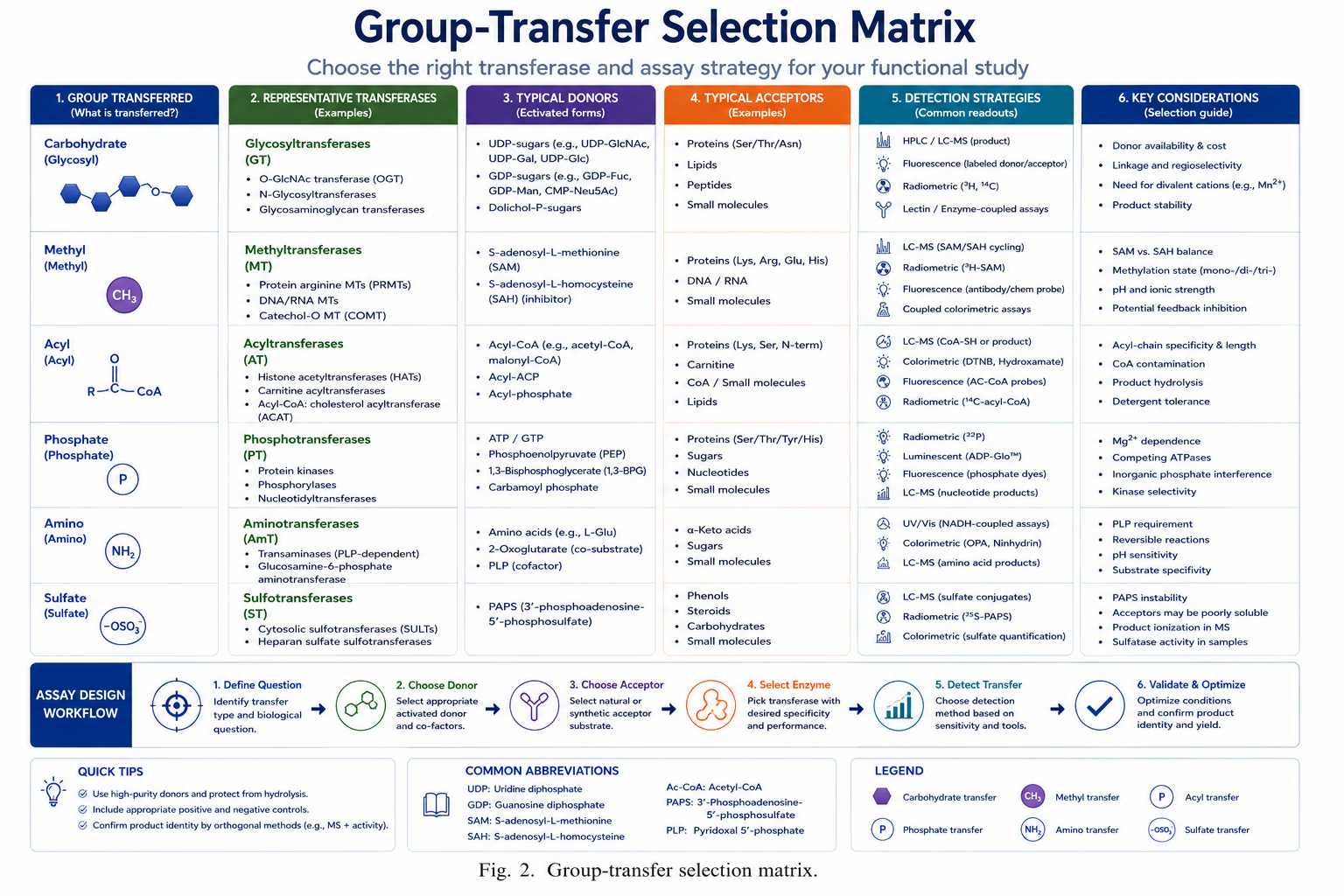 Fig 2. Group-transfer selection matrix.
(Creative Enzymes Diagnostic)
Creative Enzymes supplies kinases, phosphotransferases, glutathione transferase, methyltransferase, and related materials for analytical research and diagnostic reagent development. Select a product name to review its available information.
| Product | Catalog | EC number | Source | Activity |
|---|---|---|---|---|
| Glycerokinase from Cellulomonas sp. | NATE-0287 | EC 2.7.1.30 | Cellulomonas sp. | 20 U/mg-solid or more |
| Glycerokinase from Microorganism | DIA-149 | EC 2.7.1.30 | Microorganism | 30 U/mg-solid or more |
| Native Microorganism Hexokinase | DIA-202 | EC 2.7.1.1 | Microorganism | 150U/mg-solid or more |
| Pyruvate Kinase from Microorganism | NATE-1720 | EC 2.7.1.40 | Microorganism | >300U/mg |
| Glutathione S-Transferase, Recombinant | NATE-1141 | EC 2.5.1.18 | 30 u/mg | |
| Homocysteine Methyltransferase, Recombinant | NATE-1149 | EC 2.1.1.10 | >70U/mg |
Activity values use product-specific assay definitions. Review the stated method and test conditions before comparing unit values across materials.
Qualification should account for donor consumption, acceptor conversion, coproduct formation, and indicator response. Measuring only one of these quantities can conceal side reactions or a limiting coupled step.
Document molecular identity, concentration range, desired linkage or product, cofactors, and expected coproducts.
Use controls without donor, acceptor, or enzyme and quantify unwanted donor hydrolysis or alternative products.
Show that the downstream reaction remains responsive across the required conversion and sample-matrix range.
Establish incoming activity, cofactor and formulation limits, storage, lot bridging, and an application-relevant release test.
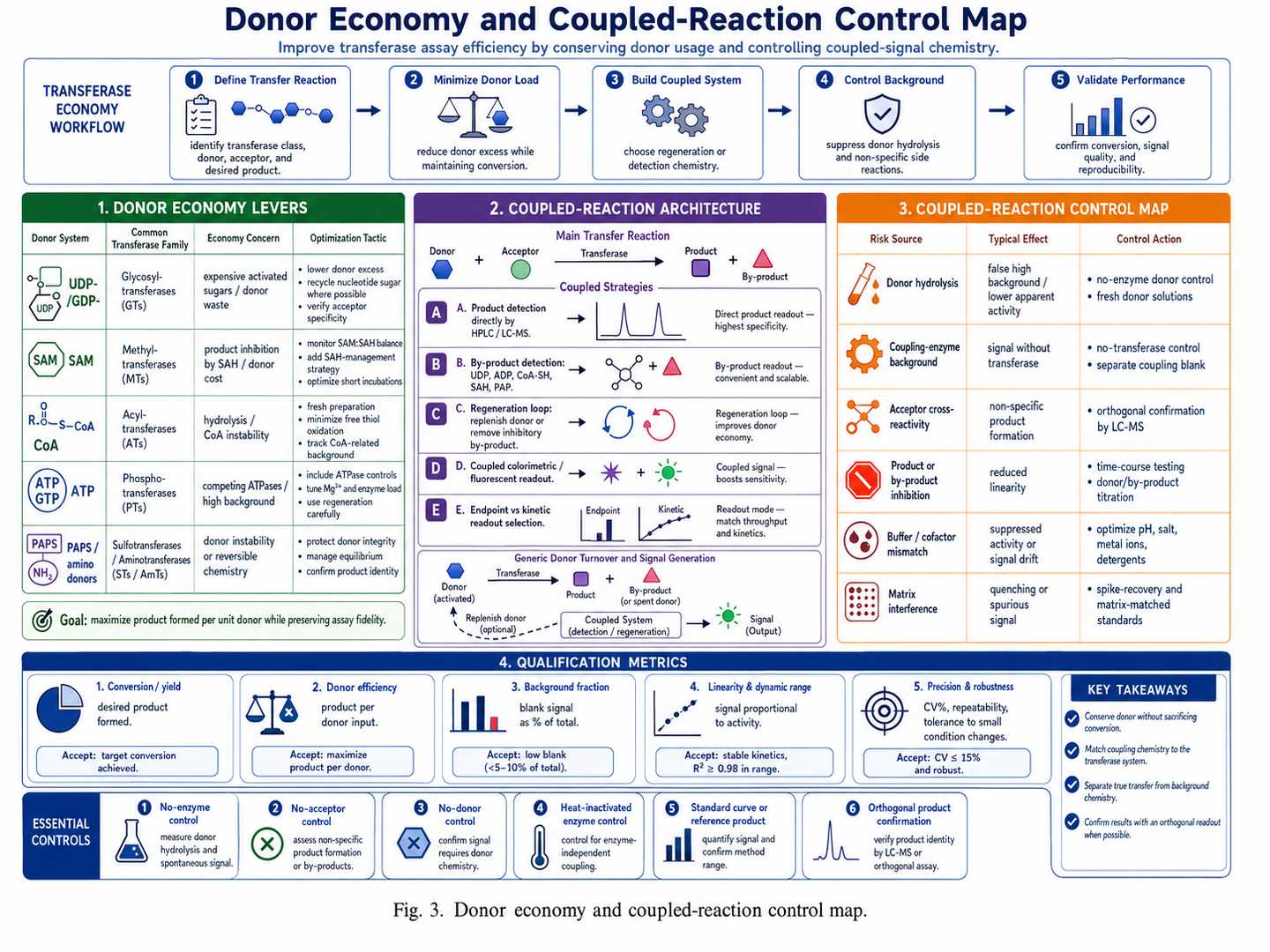 Fig 3. Donor economy and coupled-reaction control map.
(Creative Enzymes Diagnostic)
Provide the transferred group, donor, acceptor, desired product or linkage, cofactor system, matrix, indicator reaction, analytical range, final format, scale, and quality-documentation needs.
Name the transferred group, donor, acceptor, product linkage, cofactors, and coproducts. The enzyme-class name alone does not define the analytical reaction.
Transferases may recognize one nucleotide, coenzyme, or activated donor selectively. The donor also determines the coproduct and possible background reactions.
Control ATP quality, ADP background, magnesium, acceptor specificity, competing ATPases, and the capacity of the nucleotide-detection reaction.
Not directly. Acceptor structure and concentration can change kinetics substantially. Use a common application-relevant donor–acceptor assay.
Hydrolysis consumes donor and may form the same coproduct used for detection, creating signal without the intended transfer.
Include donor and acceptor identity, activity method, cofactor requirements, formulation limits, storage, and a functional acceptance test tied to the intended reaction.
These sources support the scientific classification and technical selection criteria. Product specifications must be confirmed in current Creative Enzymes documentation.