
| Catalog | Product Name | EC No. | CAS No. | Source | Price |
|---|---|---|---|---|---|
| NATE-1885 | Native Human Creatine Kinase BB | EC 2.7.3.2 | 9001-15-4 | Human Brain | Inquiry |
| TRA-013 | Creatine Phosphokinase from Rabbit Muscle | 9001-15-4 | Inquiry | ||
| TRA-014 | Creatine Phosphokinase from Porcine Heart | 9001-15-4 | Inquiry | ||
| TRA-051 | Creatine Kinase, from Rabbit Muscle | Rabbit muscle | Inquiry |
Cardiac and skeletal muscle injury can release intracellular proteins and enzymes into the circulation. Laboratory testing may therefore measure enzyme activity, enzyme isoforms, structural proteins, or other tissue-associated biomarkers to support the evaluation of myocardial injury, skeletal muscle damage, neuromuscular disorders, or rhabdomyolysis.
Cardiac troponin I and cardiac troponin T are the standard biomarkers for detecting myocardial injury. Creatine kinase-MB, myoglobin, lactate dehydrogenase, and other markers may still be used in assay development, research, or selected testing workflows. For skeletal muscle injury, total creatine kinase is one of the most commonly measured enzyme markers, while CK isoenzymes, lactate dehydrogenase, aldolase, myoglobin, and aspartate aminotransferase may provide complementary information.
Creative Enzymes supplies enzyme standards, isoenzyme preparations, antigens, coupling enzymes, reporter enzymes, and customized assay reagents for clinical chemistry, immunoassay, biosensor, and research diagnostic development.
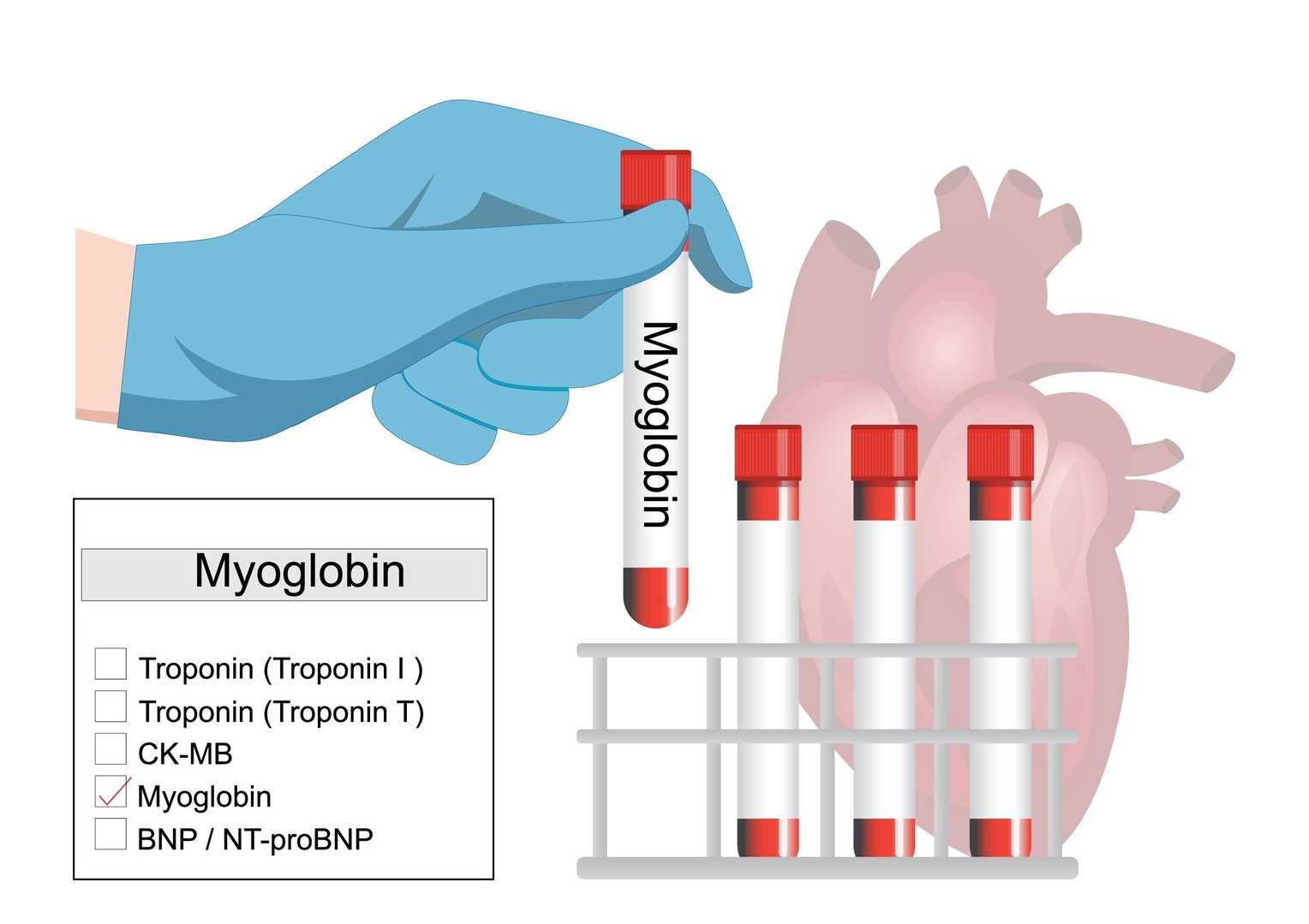
Cardiac troponins are structural proteins rather than enzymes, but they are central to contemporary myocardial injury testing. High-sensitivity cardiac troponin assays require carefully characterized antigens, antibodies, calibrator materials, controls, and signal-generation reagents. Myocardial infarction is not defined by an elevated troponin result alone; clinical evidence of myocardial ischemia is also required.
Creative Enzymes can support troponin immunoassay development with reporter enzymes and enzyme-dependent signal systems for ELISA, chemiluminescence, lateral flow, and biosensor platforms.
Creatine kinase catalyzes the reversible transfer of a phosphate group between phosphocreatine and ADP. Total CK is primarily associated with skeletal muscle, although CK is also present in cardiac muscle and brain tissue.
Three major cytosolic isoenzyme forms are commonly recognized:
CK products may be used as activity standards, calibrator components, controls, isoenzyme reference materials, or assay development reagents. CK-MB testing has largely been replaced by cardiac troponin for primary myocardial injury assessment, but it remains relevant in legacy systems, comparative studies, and selected applications.
Lactate dehydrogenase catalyzes the reversible conversion of lactate and pyruvate with the associated oxidation or reduction of NADH and NAD+. Because LDH is widely distributed across tissues, increased total LDH activity is not specific to cardiac or skeletal muscle injury.
LDH and its isoenzyme preparations may nevertheless support:
Total CK is commonly used in the evaluation and monitoring of skeletal muscle injury. Additional markers may include myoglobin, aldolase, LDH, and AST, depending on the testing context. These markers differ in tissue distribution, release kinetics, specificity, and interindividual variability, so they should not be interpreted as interchangeable measurements.
Relevant applications may include assay development for:
| Detection Target | Product Role | Representative Products | Typical Platforms |
|---|---|---|---|
| Total creatine kinase | Analyte, activity standard, calibrator, or control | Creatine kinase, CK-MM | Kinetic clinical chemistry assays |
| CK-MB | Isoenzyme reference, calibrator, antigen, or control | CK-MB isoenzyme preparations | Activity assays, immunoinhibition assays, immunoassays |
| Lactate dehydrogenase | Analyte, activity standard, control, or coupling enzyme | LDH and LDH isoenzymes | Kinetic spectrophotometric and coupled assays |
| Aldolase | Analyte or activity reference | Aldolase preparations | Coupled enzyme activity assays |
| Cardiac troponin I/T | Antigen, calibrator, or control material | Troponin-related reference preparations | ELISA, CLIA, lateral flow, biosensors |
| Myoglobin | Antigen, calibrator, or assay control | Myoglobin preparations | Immunoassays and rapid tests |
| Immunoassay signal | Reporter or signal-generation enzyme | Horseradish peroxidase, alkaline phosphatase, beta-galactosidase | ELISA, CLIA, lateral flow, biosensors |
| Coupled activity reaction | Conversion of reaction intermediates into measurable signals | Hexokinase, glucose-6-phosphate dehydrogenase, pyruvate kinase, LDH | Clinical chemistry and biochemical assays |
The correct product depends on whether the assay measures catalytic activity, isoenzyme concentration, antigen concentration, or an enzyme-generated detection signal.
First determine whether the assay is intended to measure:
The required product may function as:
An active enzyme preparation is not automatically suitable as an immunoassay calibrator, and an immunoreactive antigen may not provide the catalytic activity required for an enzyme activity assay.
Important selection criteria include:
Need Help Selecting an Assay Enzyme?
Share your target marker, assay principle, analytical platform, required product role, and preferred format with our technical team.
Request Product Selection Support →
Q1. Is CK-MB still used as the main marker of myocardial injury?
Q2. What is the difference between total CK and CK-MB?
Q3. Can CK distinguish cardiac injury from skeletal muscle injury?
Q4. Is LDH specific to muscle damage?
Q5. Do you provide reporter enzymes for troponin and myoglobin immunoassays?
Q6. Can enzyme preparations be used directly as calibrators?
Q7. Are customized or second-source enzymes available?
