
| Catalog | Product Name | EC No. | CAS No. | Source | Price |
|---|---|---|---|---|---|
| DIA-427 | Creatinine Amidohydrolase from Microorganism | EC 3.5.2.10 | Microorganism | Inquiry | |
| DIA-593 | Adenosine Deaminase (RnADA) | EC 3.5.4.4 | 35-4-412 | Inquiry | |
| DIA-682 | Cystathionine B-lyase (CBL) | 9055-05-4 | Inquiry | ||
| DIA-733 | Glutamate Dehydrogenase (NADP) | 9029-11-2 | Inquiry | ||
| DIA-739 | Hcyase | EC 4.4.1.2 | 9024-41-3 | Inquiry | |
| EXWM-4568 | adenosine deaminase | EC 3.5.4.4 | 9026-93-1 | Inquiry | |
| Kit-001 | Creatinine Assay Kit (Guanidinase-HMMPS Method) | Inquiry | |||
| NATE-0032 | Adenosine deaminase Bovine, Recombinant | EC 3.5.4.4 | 9026-93-1 | E. coli | Inquiry |
| NATE-1009 | Adenosine deaminase, Recombinant | EC 3.5.4.4 | 9026-93-1 | E. coli | Inquiry |
Electrolytes and small metabolites provide important information about acid-base balance, hydration, energy metabolism, organ function, and metabolic stress. Routine testing may include sodium, potassium, chloride, bicarbonate or total carbon dioxide, lactate, ammonia, ketone bodies, pyruvate, and other low-molecular-weight analytes.
Not all measurements in this category are enzyme based. Sodium, potassium, and chloride are commonly measured by ion-selective electrode technology, whereas enzymes are particularly valuable for bicarbonate, lactate, ammonia, ketone body, pyruvate, and related metabolite assays. FDA-cleared electrolyte analyzers, for example, commonly use ion-selective electrodes for sodium, potassium, and chloride.
Creative Enzymes supplies primary reaction enzymes, coupling enzymes, oxidases, dehydrogenases, and signal-generation enzymes for clinical chemistry analyzers, colorimetric assays, biosensors, dry reagent systems, and point-of-care testing.
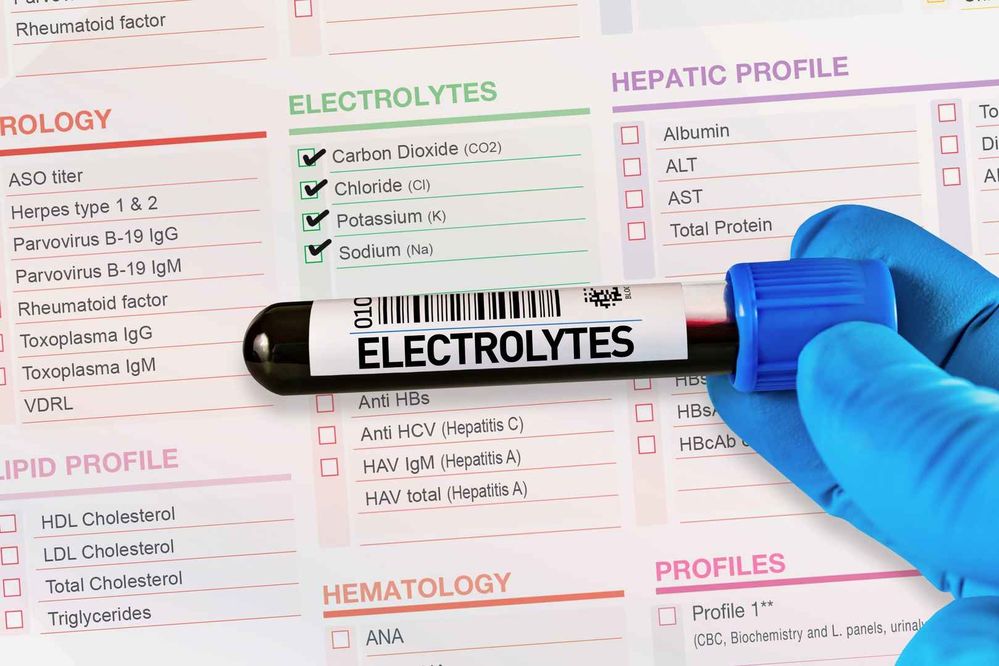
Serum total carbon dioxide largely reflects bicarbonate under routine clinical chemistry conditions and is commonly evaluated as part of electrolyte and acid-base testing.
An enzymatic method can use phosphoenolpyruvate carboxylase to convert bicarbonate and phosphoenolpyruvate into oxaloacetate. Malate dehydrogenase then reduces oxaloacetate to malate while oxidizing NADH, producing a measurable decrease in absorbance. This PEPC–MDH coupled reaction is an established approach for enzymatic bicarbonate or total CO2 determination.
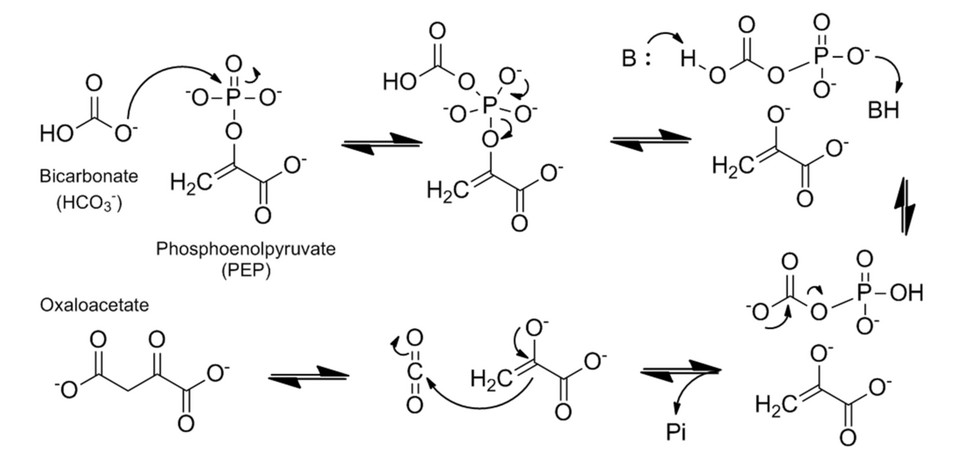 Figure 1. The Phosphoenolpyruvate (PEP) carboxylase enzymatic mechanism converting bicarbonate and PEP to oxaloacetate and phosphate.
Creative Enzymes offers:
Our catalog PEPC and MDH products are available for coupled carbon dioxide detection workflows.
Lactate is an important marker of anaerobic metabolism and altered tissue oxygen utilization. It is measured in laboratory analyzers, blood gas systems, biosensors, test strips, and point-of-care devices.
Two common enzymatic approaches include:
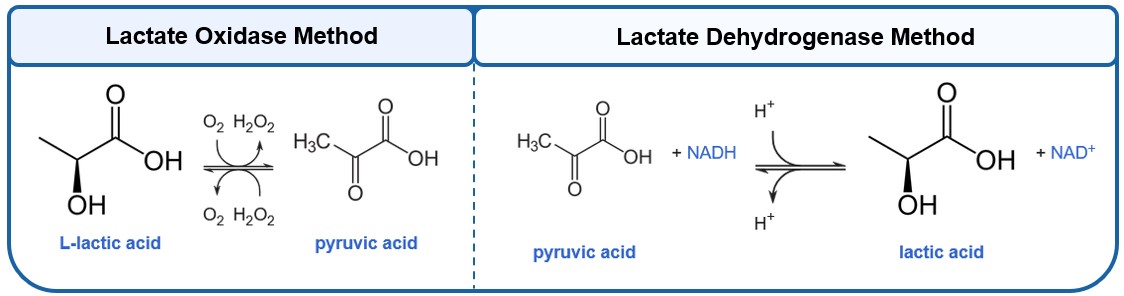 Figure 2. Lactate testing methods.
Lactate oxidase has been used in both whole-blood enzyme electrodes and dry reagent systems.
Available enzyme options may include lactate oxidase, lactate dehydrogenase, peroxidase, and related auxiliary enzymes.
Ammonia testing requires careful control of specimen handling and reagent background because ammonia concentrations can change after sample collection.
A widely used enzymatic approach employs glutamate dehydrogenase. Ammonia reacts with α-ketoglutarate in a GLDH-catalyzed reaction that consumes NADH or NADPH, and the change in absorbance can be related to ammonia concentration.
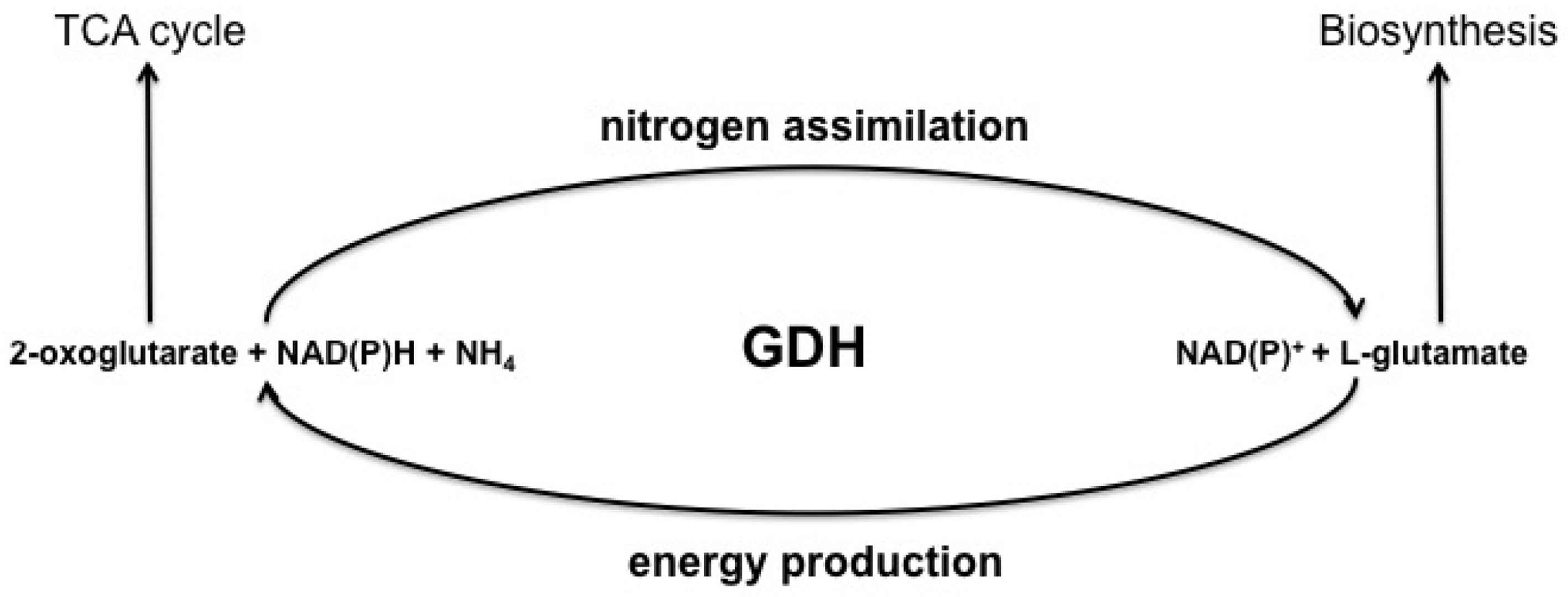 Figure 3. Schematic presentation of the reactions catalyzed by glutamate dehydrogenase and their general metabolic significance. (Bunik et al., 2016)
Important enzyme selection factors include:
Creative Enzymes provides native and recombinant glutamate dehydrogenase options for diagnostic assay development.
The major circulating ketone bodies include β-hydroxybutyrate and acetoacetate. Enzymatic blood ketone assays commonly focus on D-β-hydroxybutyrate because it can be quantified using β-hydroxybutyrate dehydrogenase.
In the presence of NAD+, the enzyme converts D-β-hydroxybutyrate to acetoacetate while generating NADH. The resulting change can be measured photometrically or incorporated into an electrochemical detection system. β-Hydroxybutyrate dehydrogenase has also been used in enzymatic total ketone body methods.
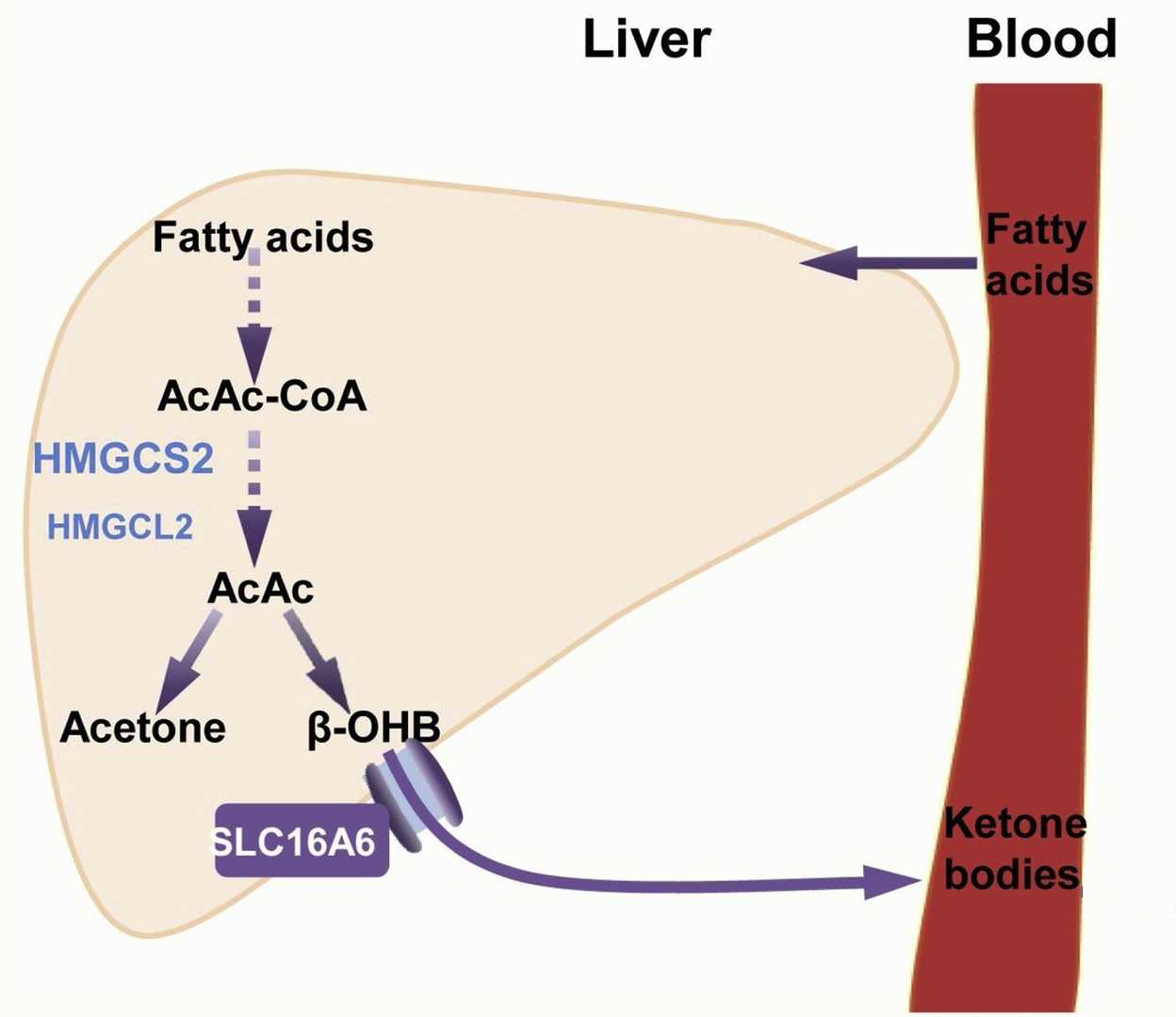 Figure 4. Outline of ketone bodies production. (Adapted from Feng et al., 2019)
Creative Enzymes offers microbial β-hydroxybutyrate dehydrogenase products for ketone body assay development.
Pyruvate is closely connected with lactate and cellular energy metabolism. Enzymatic pyruvate methods may use lactate dehydrogenase to reduce pyruvate to lactate while oxidizing NADH.
Depending on the assay architecture, pyruvate oxidase or other coupling enzymes may also be used to generate a colorimetric, fluorometric, or electrochemical signal.
Assay developers should carefully control interference from endogenous lactate, NADH-consuming enzymes, redox-active compounds, and sample-processing conditions.
Alcohol dehydrogenase is commonly used in enzymatic ethanol assays. It catalyzes the oxidation of ethanol with the reduction of NAD+ to NADH, which can be measured spectrophotometrically. Automated clinical ethanol assays frequently use this reaction principle.
Creative Enzymes offers alcohol dehydrogenase products for alcohol and aldehyde assay development.
| Target Analyte | Typical Enzymatic Principle | Representative Enzymes | Common Platforms |
|---|---|---|---|
| Bicarbonate or total CO2 | Bicarbonate conversion to oxaloacetate followed by NADH-dependent reduction | Phosphoenolpyruvate carboxylase, malate dehydrogenase | Clinical chemistry analyzers, spectrophotometric assays |
| L-lactate | Oxidation with hydrogen peroxide generation or NAD-dependent conversion | Lactate oxidase, lactate dehydrogenase, peroxidase | Clinical chemistry, blood analyzers, POCT, biosensors |
| Pyruvate | NADH-dependent reduction to lactate or oxidase-based detection | Lactate dehydrogenase, pyruvate oxidase | Spectrophotometric assays, biosensors |
| Ammonia | GLDH-catalyzed incorporation into glutamate with NADH or NADPH consumption | Glutamate dehydrogenase | Automated chemistry analyzers, microplate assays |
| D-β-hydroxybutyrate | NAD-dependent conversion to acetoacetate | β-Hydroxybutyrate dehydrogenase | Clinical chemistry, ketone meters, POCT |
| Total ketone bodies | Multi-enzyme conversion of β-hydroxybutyrate and acetoacetate | β-Hydroxybutyrate dehydrogenase and coupling enzymes | Spectrophotometric assays |
| Ethanol | NAD-dependent oxidation to acetaldehyde | Alcohol dehydrogenase | Clinical chemistry and toxicology assays |
| Hydrogen peroxide-generating reactions | Conversion of peroxide into a measurable optical signal | Peroxidase | Colorimetric kits, biosensors, dry reagents |
| Sodium, potassium, and chloride | Usually measured by ion-selective electrodes rather than enzymes | Enzymes generally not required for the primary measurement | ISE analyzers, blood gas systems, POCT |
Determine whether the assay measures:
For sodium, potassium, or chloride testing, confirm whether the required component is an ISE reagent rather than an enzyme.
Common enzyme-based formats include:
The selected principle determines whether an oxidase, dehydrogenase, lyase, or auxiliary enzyme is most appropriate.
Important product specifications may include:
For multi-enzyme assays, the activities of the primary and coupling enzymes should be balanced so that the auxiliary reaction does not limit the analytical response.
Enzyme performance should be evaluated in the intended specimen and instrument format, including:
Need Help Selecting a Metabolite Assay Enzyme?
Share your target analyte, reaction principle, sample type, detection platform, and required product format with our technical team.
Request Product Selection Support →
Q1. Are enzymes used to measure sodium, potassium, and chloride?
Q2. Which enzymes are used in enzymatic bicarbonate assays?
Q3. What is the difference between lactate oxidase and lactate dehydrogenase methods?
Q4. Which enzyme is commonly used for ammonia testing?
Q5. Which enzyme is used to measure β-hydroxybutyrate?
Q6. Can the same enzyme be used in both liquid kits and biosensors?
Q7. Can you provide glycerol-free or lyophilized enzymes?
Q8. Can you optimize an entire multi-enzyme reaction?
