
| Catalog | Product Name | EC No. | CAS No. | Source | Price |
|---|---|---|---|---|---|
| POL-002 | T4 DNA Polymerase | Inquiry | |||
| POL-003 | Pfu DNA Polymerase | Pyrococcus furiosus | Inquiry | ||
| POL-004 | Pfu DNA Polymerase II | Inquiry | |||
| POL-005 | phi29 DNA Polymerase | Bacillus subtilis phage phi29 (Φ29) | Inquiry | ||
| POL-006 | Advanced Hotstart Taq DNA Polymerase | Inquiry | |||
| POL-007 | Hotstart Taq DNA Polymerase | Inquiry | |||
| POL-008 | HotStart Direct Taq DNA Polymerase | Inquiry | |||
| POL-009 | HotStart High Tolerant Taq DNA Polymerase | Inquiry | |||
| POL-010 | HotStart Super Specific Taq DNA Polymerase | Inquiry |
Molecular infectious disease tests detect pathogen-associated DNA or RNA in clinical, environmental, veterinary, or research samples. These assays can support the detection and differentiation of viruses, bacteria, fungi, and parasites through nucleic acid extraction, target amplification, sequence-specific detection, or genomic analysis.
Enzyme performance is critical throughout the molecular testing workflow. Sample preparation enzymes influence nucleic acid recovery, polymerases and reverse transcriptases determine amplification efficiency, and contamination-control enzymes help reduce false-positive risks associated with amplified products.
Creative Enzymes supplies DNA polymerases, reverse transcriptases, strand-displacement polymerases, recombinases, helicases, nucleases, ligases, sample preparation enzymes, and other molecular diagnostic reagents for PCR, RT-qPCR, digital PCR, isothermal amplification, multiplex testing, and sequencing-based pathogen analysis.

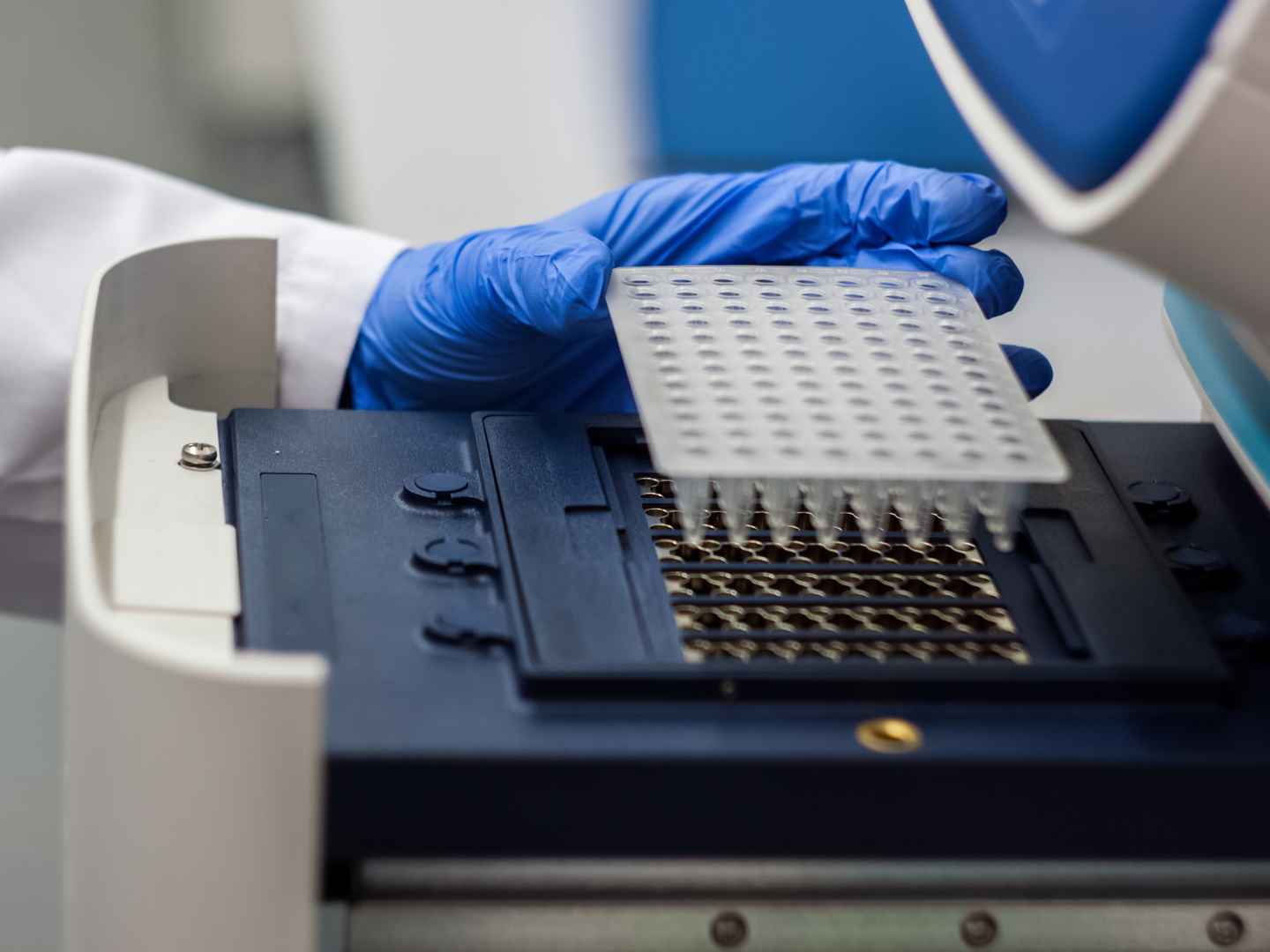
PCR-based assays amplify pathogen-specific DNA targets using thermostable DNA polymerases. Real-time PCR monitors amplification through fluorescent dyes or sequence-specific probes, while digital PCR partitions the reaction to enable endpoint detection and absolute or relative target quantification.
Important enzyme characteristics may include:
Multiplex nucleic acid assays can detect several pathogen targets from a single specimen, but they require careful balancing of polymerase activity, primer interactions, target abundance, and reaction conditions.
RNA viruses and other RNA targets require reverse transcription before or during amplification. Reverse transcriptase synthesizes complementary DNA from an RNA template, after which a thermostable DNA polymerase amplifies the resulting cDNA.
One-step RT-qPCR combines reverse transcription and amplification in a single reaction, while two-step workflows perform cDNA synthesis separately. Enzyme selection may affect:
RT-PCR and other nucleic acid amplification tests are widely used to detect viral RNA in respiratory and other clinical specimens.
Isothermal amplification enables nucleic acid amplification at a constant or limited temperature range, reducing dependence on conventional thermal cycling. Different isothermal technologies require different enzyme systems.
Common approaches include:
LAMP relies on a DNA polymerase with strong strand-displacement activity and specially designed primers to amplify targets under isothermal conditions.
Efficient sample preparation is essential because inadequate lysis or nucleic acid recovery can limit assay sensitivity even when amplification enzymes perform well.
Enzymes used in sample preparation may include:
The appropriate lysis strategy depends on the organism, specimen matrix, target nucleic acid, and downstream amplification method. Enzymes used for selective nucleic acid removal must be carefully controlled so that the intended pathogen target is not degraded.
Nucleic acid amplification generates large quantities of amplicons, creating a risk of carryover contamination if reaction products enter subsequent tests. The dUTP–UDG carryover contamination control system.
In this approach, dUTP is incorporated into amplification products. Before a new amplification reaction begins, UDG or UNG cleaves uracil-containing DNA from previous reactions while leaving natural uracil-free target DNA intact. Heat-labile UDG variants can be useful when rapid enzyme inactivation is required before amplification.
Targeted sequencing, amplicon sequencing, and metagenomic workflows may use molecular enzymes for:
Enzyme requirements depend on whether the workflow targets DNA pathogens, RNA pathogens, antimicrobial resistance markers, strain differentiation, or broad metagenomic identification.
| Workflow Stage | Enzyme Function | Representative Enzymes | Typical Applications |
|---|---|---|---|
| Pathogen lysis | Disrupt cells, capsids, proteins, or cell walls | Proteinase K, lysozyme, lysostaphin, mutanolysin, lyticase | Bacterial, viral, fungal, and parasitic sample preparation |
| DNA amplification | Amplify pathogen-specific DNA targets | Thermostable DNA polymerases, hot-start polymerases | PCR, qPCR, dPCR, multiplex PCR |
| RNA detection | Convert RNA into amplifiable cDNA | Reverse transcriptases, RNase H-related enzymes | RT-PCR, RT-qPCR, RNA sequencing |
| Hydrolysis-probe detection | Cleave probes during amplification | DNA polymerases with 5′ nuclease activity | Probe-based real-time PCR |
| LAMP and RT-LAMP | Amplify DNA or RNA-derived cDNA at a constant temperature | Strand-displacing polymerases, reverse transcriptases | Rapid and point-of-care molecular tests |
| RPA | Initiate primer invasion and strand-displacement synthesis | Recombinase, SSB protein, strand-displacing polymerase | Low-temperature isothermal amplification |
| NASBA | Amplify RNA through coordinated enzymatic reactions | Reverse transcriptase, RNase H, RNA polymerase | RNA pathogen detection |
| Carryover prevention | Degrade uracil-containing amplification products | UDG, UNG, heat-labile UDG | PCR and selected isothermal assays |
| Library preparation | Prepare pathogen nucleic acids for sequencing | DNA polymerase, ligase, transposase, reverse transcriptase | Amplicon sequencing, targeted NGS, metagenomics |
| Probe and signal processing | Modify or cleave sequence-specific probes | Exonucleases, endonucleases, ligases | Fluorescence, lateral flow, and biosensor detection |
Determine whether the assay is intended to detect:
The type of organism influences sample preparation, target selection, reverse transcription requirements, and amplification chemistry.
Identify the intended method:
Different platforms require different polymerase, strand-displacement, nuclease, and formulation characteristics.
Clinical specimens may contain amplification inhibitors or substances that affect enzyme stability. Relevant sample types include:
Enzymes may need tolerance to hemoglobin, mucin, salts, anticoagulants, transport media, detergents, or residual extraction reagents.
Important selection criteria include:
Need Help Selecting a Molecular Diagnostic Enzyme?
Share your pathogen target, sample type, amplification platform, detection chemistry, and formulation requirements with our technical team.
Request Product Selection Support →
Q1. Which enzyme is required for RNA pathogen detection?
Q2. What is the difference between a standard and hot-start DNA polymerase?
Q3. Which enzyme is used for LAMP?
Q4. Can the same polymerase be used for qPCR and digital PCR?
Q5. How does UDG prevent carryover contamination?
Q6. Which enzymes are useful for bacterial sample preparation?
Q7. Can enzymes be supplied for lyophilized molecular tests?
Q8. Can you optimize a complete multi-enzyme amplification system?
