
| Catalog | Product Name | EC No. | CAS No. | Source | Price |
|---|---|---|---|---|---|
| BDE-002 | Native Hexokinase (HK) from Microorganism | EC 2.7.1.1 | 9001-51-8 | Microorganism | Inquiry |
| BDE-029 | 2-Chloro-4-nitrobenzene-α-galactose-maltoside (Gal-G2-CNP) | Inquiry | |||
| BDE-030 | 2-Chloro-4-nitrobenzene-α-D-maltotrioside (Gal-G3-CNP) | Inquiry | |||
| BDE-031 | Ethyliden-4-nitrophenyl-α-D-maltoheptaosid (EPS) | Inquiry | |||
| BDE-032 | Native α-Glucosidase (α-Glu) from Microorganism | EC 3.2.1.20 | Microorganism | Inquiry | |
| BDE-033 | Native Ketoamine Oxidase (KAOD) from Microorganism | EC 1.5.3 | Microorganism | Inquiry | |
| BDE-034 | Native Fructosyl-peptide Oxidase (FPOX) from Microorganism | EC 1.5.3 | Microorganism | Inquiry | |
| BDE-037 | Native Glucose Oxidase (GOD) from Microorganism | EC 1.1.3.4 | 9001-37-0 | Microorganism | Inquiry |
| BDE-038 | Native Glucose Dehydrogenase (GDH) from Microorganism | EC 1.1.5.9 | 81669-60-5 | Microorganism | Inquiry |
Diabetes-related laboratory testing includes several distinct analytical targets. Blood glucose testing provides a measurement of glucose at the time of specimen collection, while HbA1c reflects average glycemic exposure over approximately the previous two to three months. Glycated albumin and fructosamine generally represent a shorter period of approximately two to three weeks, and ketone testing provides information about altered fat metabolism and possible ketoacidosis risk. These measurements are complementary and should not be treated as interchangeable.
Enzymes are central to many of these assays. They may directly convert glucose, generate an electrochemical current, produce hydrogen peroxide for color development, release glycated peptides from proteins, or convert ketone bodies through NAD-dependent reactions.
Creative Enzymes supplies glucose oxidases, glucose dehydrogenases, hexokinases, glucose-6-phosphate dehydrogenases, proteases, fructosyl-peptide oxidases, ketoamine oxidases, β-hydroxybutyrate dehydrogenases, and auxiliary enzymes for clinical chemistry analyzers, glucose meters, biosensors, point-of-care devices, and diagnostic reagent development.
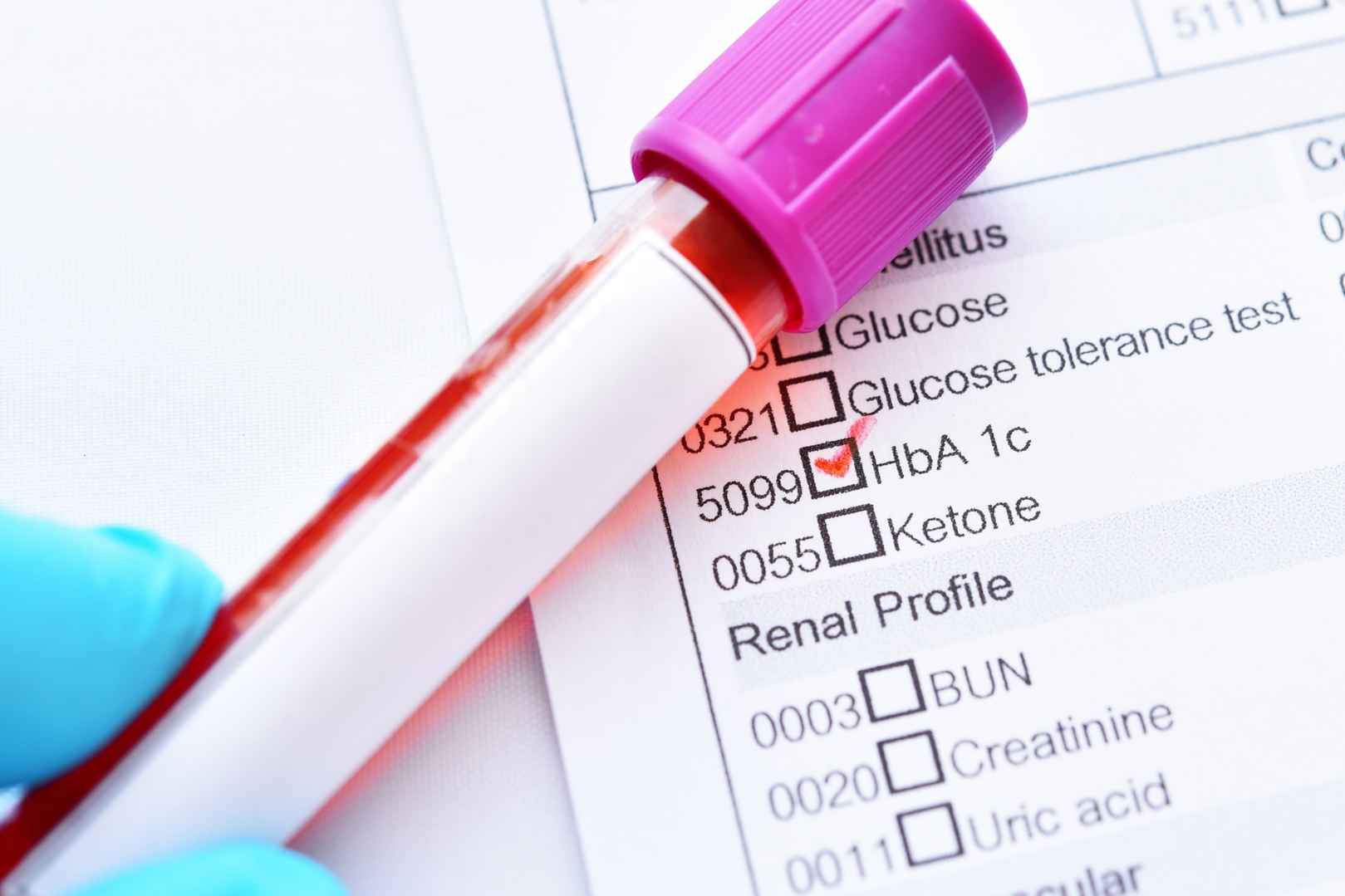
Blood glucose can be measured using several enzymatic systems. The most appropriate enzyme depends on whether the assay is designed for a central laboratory analyzer, a colorimetric kit, a disposable test strip, or an electrochemical biosensor.
Hexokinase-Based Glucose Assays
The hexokinase method uses two linked reactions:
The increase in NADH or NADPH can be measured spectrophotometrically. Hexokinase–G6PDH systems are widely used in laboratory glucose measurement because they provide a direct cofactor-linked analytical response. Central laboratory glucose methods commonly use either hexokinase–G6PDH or glucose oxidase chemistry.
Representative enzymes include:
Glucose Oxidase-Based Assays
Glucose oxidase catalyzes the oxidation of β-D-glucose and generates hydrogen peroxide. The peroxide may be detected through a peroxidase-coupled color reaction or electrochemically at an electrode.
A typical colorimetric system contains:
Glucose oxidase generally provides strong glucose selectivity, but its dependence on molecular oxygen and its compatibility with the signal system should be considered during biosensor and reagent development.
Glucose Dehydrogenase-Based Assays
Glucose dehydrogenases transfer electrons from glucose to a cofactor or electron mediator. Depending on the enzyme, the cofactor may be FAD, PQQ, NAD+, or NADP+.
FAD-dependent glucose dehydrogenase is widely used in electrochemical glucose test strips, where glucose conversion generates an electrical response through an electron mediator.
Important glucose dehydrogenase selection factors include:
Some GDH-PQQ-based systems can react with non-glucose sugars, although modified enzymes with reduced maltose reactivity have also been developed. Substrate selectivity must therefore be confirmed for the specific enzyme and final test-strip formulation.
HbA1c is formed when glucose becomes attached to hemoglobin. Unlike a single glucose result, HbA1c reflects longer-term glycemic exposure and is used in diabetes diagnosis and monitoring under appropriate conditions.
In an enzymatic HbA1c assay, whole blood is first lysed. A protease then digests hemoglobin and releases glycated N-terminal peptides or amino acids from the hemoglobin β-chain. Fructosyl-peptide oxidase or fructosyl-valine oxidase acts on the glycated product and generates hydrogen peroxide, which is measured through a peroxidase-dependent color reaction.
Representative enzyme components include:
The oxidase must provide appropriate selectivity for the glycated peptide generated by the selected protease. Fructosyl-peptide oxidases can differ substantially in their relative activity toward fructosyl-valyl-histidine, fructosyl-glycine, fructosyl-lysine, and other glycated substrates.
Assay development should also consider total hemoglobin measurement, hemolysis efficiency, proteolysis completeness, fetal hemoglobin, hemoglobin variants, altered red-cell turnover, and calibration traceability. The influence of hemoglobin variants is method dependent and can produce falsely high or low HbA1c results in some systems.
Enzymatic Fructosamine Assays
An enzymatic fructosamine method may use a protease to digest glycated proteins into smaller glycated fragments. Fructosaminase, ketoamine oxidase, fructosyl-amino acid oxidase, or a related enzyme then oxidizes the ketoamine group and produces hydrogen peroxide for colorimetric detection.
Representative enzymes include:
Enzymatic Glycated Albumin Assays
A glycated albumin method may first remove or compensate for free glycated amino acids. An albumin-selective protease then releases glycated amino acid fragments from albumin, followed by ketoamine oxidase-dependent hydrogen peroxide generation. Total albumin is measured separately or in a parallel reaction so that the glycated albumin result can be expressed relative to albumin concentration.
For both fructosamine and glycated albumin assays, enzyme selection should consider:
Ketones are produced when fat is used as a major energy source. Excessive ketone production can occur during diabetic ketoacidosis, making ketone measurement an important complementary test in relevant diabetes workflows.
Blood ketone assays commonly focus on D-β-hydroxybutyrate. D-3-hydroxybutyrate dehydrogenase catalyzes its NAD+-dependent conversion to acetoacetate while producing NADH. The resulting change can be measured photometrically or adapted to electrochemical detection.
Representative components include:
| Testing Objective | Typical Reaction Principle | Representative Enzymes | Common Platforms |
|---|---|---|---|
| Plasma or serum glucose | Glucose phosphorylation followed by NAD(P)H generation | Hexokinase, glucose-6-phosphate dehydrogenase | Clinical chemistry analyzers, spectrophotometric assays |
| Colorimetric glucose | Glucose oxidation with peroxide generation | Glucose oxidase, peroxidase, optional mutarotase | Automated chemistry, microplates, reagent kits |
| Electrochemical blood glucose | Glucose oxidation with electron transfer to a mediator | FAD-GDH, PQQ-GDH, glucose oxidase | Test strips, glucose meters, biosensors |
| Enzymatic HbA1c | Proteolysis followed by oxidation of glycated β-chain peptides | Protease, fructosyl-peptide oxidase, fructosyl-valine oxidase, peroxidase | Clinical chemistry analyzers, POCT systems |
| Fructosamine | Glycated protein digestion followed by ketoamine oxidation | Protease, fructosaminase, ketoamine oxidase, peroxidase | Automated chemistry, colorimetric assays |
| Glycated albumin | Albumin-selective digestion and oxidation of glycated fragments | Albumin-specific protease, ketoamine oxidase, peroxidase | Clinical chemistry analyzers |
| D-β-Hydroxybutyrate | NAD-dependent conversion to acetoacetate | D-3-Hydroxybutyrate dehydrogenase | Clinical chemistry, POCT, ketone meters |
| NAD(P)H-linked signal | Transfer of reducing equivalents to a detectable dye | Diaphorase | Colorimetric and electrochemical assays |
| Peroxide-linked signal | Conversion of hydrogen peroxide into an optical response | Peroxidase | Colorimetric, fluorometric, and biosensor systems |
Begin by identifying whether the assay measures:
The marker determines the required sample, reaction pathway, enzyme class, and calibration strategy.
Different platforms place different demands on the enzyme:
| Platform | Key Enzyme Requirements |
|---|---|
| Automated clinical chemistry analyzer | Liquid stability, reaction linearity, low blank, analyzer onboard stability |
| Glucose meter or test strip | Dry stability, rapid kinetics, mediator compatibility, hematocrit tolerance |
| Electrochemical biosensor | Efficient electron transfer, immobilization compatibility, operational stability |
| Microplate assay | Broad instrument compatibility, stable color development, reproducible endpoint |
| Point-of-care HbA1c | Rapid proteolysis, selective glycated peptide oxidation, dry reagent stability |
| Lyophilized diagnostic kit | Freeze-drying compatibility, rapid reconstitution, retained activity |
Potential assay interferents include:
The relevant interference profile depends on the enzyme chemistry, sample type, and detection method.
Important product specifications may include:
Need Help Selecting a Diabetes Testing Enzyme?
Share your target marker, sample type, reaction chemistry, platform, measuring range, and formulation requirements with our technical team.
Request Product Selection Support →
Q1. Which enzymes are commonly used for blood glucose testing?
Q2. What is the difference between glucose oxidase and glucose dehydrogenase?
Q3. Which enzymes are used in the hexokinase glucose method?
Q4. Why does the cofactor type of glucose dehydrogenase matter?
Q5. Which enzymes are required for enzymatic HbA1c testing?
Q6. What is the difference between HbA1c and fructosamine?
Q7. Can fructosyl-peptide oxidase and ketoamine oxidase be used interchangeably?
Q8. Why is D-β-hydroxybutyrate measured in diabetes testing?
Q9. Can the same glucose enzyme be used in a laboratory reagent and a test strip?
Q10. Are glycerol-free and lyophilized enzymes available?
